Medical doctors and nurses inside a London ward with patients.
Browse 641,900+ 19th century stock illustrations and vector graphics available royalty-free, or search for 19th century style or 19th century woman to find more great stock images and vector art.
Medical doctors and nurses inside a London ward with patients.

1850 Aaron Dennsion, David Davis, and Edward Howard set out to start the first fully American watch company - with watches built to have interchangeable parts. Indeed, what would later come to be known as the Waltham Watch Company broke ground on a style of watchmaking that would carry on through the 20th century until today.Dennis, Davis, and Howard set up their first manufacturing facility in 1851. In that year, production on their first watches began. By 1852, their first batch of watches was complete.It was in 1853 that Waltham settled on its first public name: Boston Watch Co.By 1907, American Watch Co. finally changed its name to Waltham Watch Co.Original edition from my own archivesSource : 1887 La ilustración Artistica

Vintage picture Nurse and patients, Medical Ward, Royal Victoria Hospital or Netley Hospital, Nurse, Victorian Healthcare, 1890s, 19th Century. The Royal Victoria Hospital or Netley Hospital was a large military hospital in Netley, near Southampton, Hampshire, England

London : Rainy street at night with people and carriages...Vintage engraving circa late 19th century, Published in ''The illustred London News Diamond Jubilee,1897'' Digital restoration by Pictore.

Illustration published in 1891 in the UK, now out of copyright

Cheapside a street in the City of London. The historic and modern financial centre of London. To the west St. Paul's Cathedral.In the Middle Ages, it was known as Westcheap,

Antique image from University Yearbook (1893)

Vintage engraving from A Midsummer Night's Dream, Silhouette of Helena. 1869

Illustration from Harpers Monthly Magazine LXXIV December-1886-May-1887:- Horse drawn wagons bring bales of goods to a fleet of steamboats waiting at the levee on the Mississippi River in New Orleans.

Vintage calligraphic frames. Ornate calligraphy frame, retro elegant ornamental borders, filigree floral ornaments for framed certificate template. Isolated vector decorative Victorian dividers set.

19th century illustration of Barrow hematite steel works, in Cumbria, England. Published in 'The Practical Magazine, an Illustrated Cyclopedia of Industrial News, Inventions and Improvements, collected from foreign and British sources for the use of those concerned in raw materials, machinery, manufactures, building, and decoration.' (Wedwood, Watt & Co./ W.P. Bennett & Co., London/Birmingham, 1873).
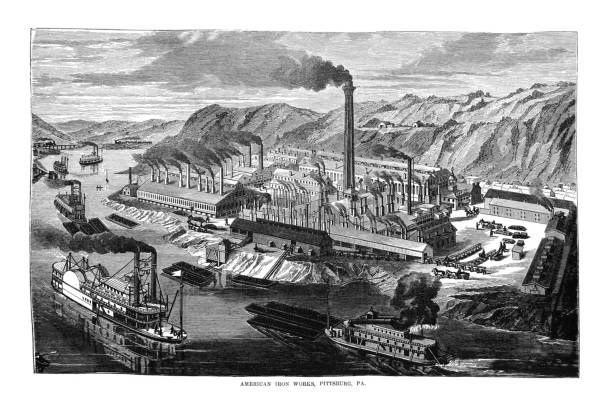
From First Century of National Existence; The United States - 1873
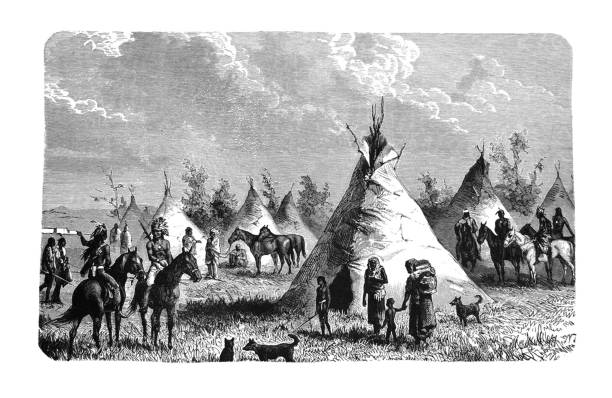
From First Century of National Existence; The United States - 1873

Vintage illustration Fleet Street and St Paul's, Victorian London, 19th Century

From First Century of National Existence; The United States - 1873

Gately’s Universal Educator Educational Cyclopedia - Washington 1886

Portrait of Louis Pasteur (1822-1895)in his laboratory.Vintage etching circa late 19th century

"Antique 19th-century illustration of human hand pointing right (isolated on white). Illustation published by Conner&Son, New York, USA (1860)CLICK ON THE LINKS BELOW FOR HUNDREDS MORE SIMILAR IMAGES:"
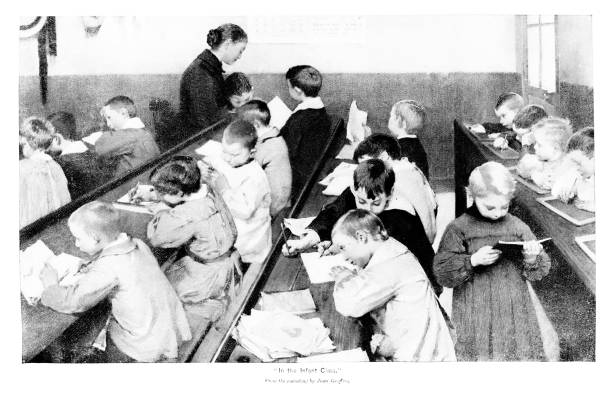
Children learning in an elementary classroom. Engraving published 1896. In the Infant Class by artist Jean Geoffroy Original edition is from my own archives. Copyright has expired and is in Public Domain.

Font The Elixir of Life.Craft retro vintage typeface design. Graphic display alphabet. Fantasy type letters. Latin characters, numbers. Vector illustration. Old badge, label, logo template.

Hands pointing in a Victorian etching style with engraved line details. Each hand has slight variations because a real person drew it. The palm of the hand is facing towards the viewer. Depicted in a detailed and realistic manner the illustration is rich in detail and depth. The style is vintage and turn of the century. The illustration can be used to evoke any period between the 1860s to the 1910s.

A vector illustration of an old fashioned newspaper in a Victorian style of typography. Decorative typefaces are mixed together to create the design. Download includes AI10 EPS and a high resolution JPEG file.

Queen Victoria receives her guests. Vintage engraving circa late 19th century. Digital restoration by Pictore.

Beautifully Illustrated Antique Engraved Victorian Illustration of Immigrants Arriving in New York City, 1887 Engraving. Source: Original edition from my own archives. Copyright has expired on this artwork. Digitally restored.
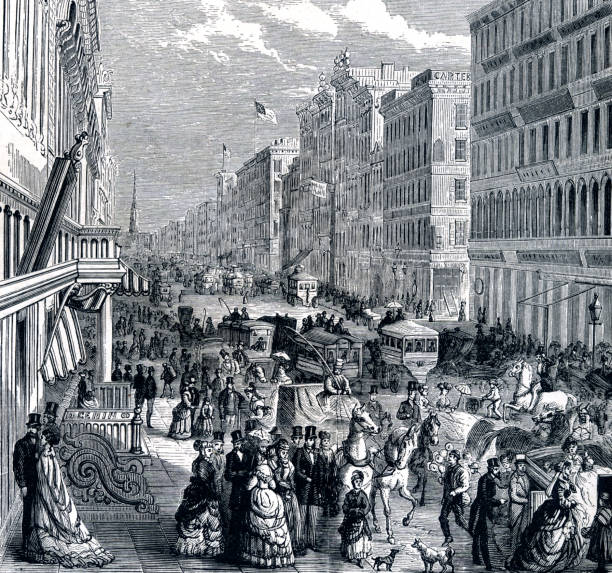
Broadway was the main thoroughfare in New York City, in the 19th century. This lighted street was an important theatre center, with more than 20 theaters by the end of the century. Several of the early skyscrapers were built along Broadway which became a showcase for entrepreneurs. As transportation improved, poverty in New York diminished, and street lighting made for safer travel at night, the number of potential patrons for the growing number of theatres increased enormously. Plays could run longer and still draw in the audiences, leading to better profits and improved production values.

Medical class in Paris, France. Vintage etching circa late 19th century.

Black and White Photograph of the British Empire in the 19th Century: Engineering and Constructions, Canadian Pacific Railway

Vintage engraving of a Ornate victorian style border design element
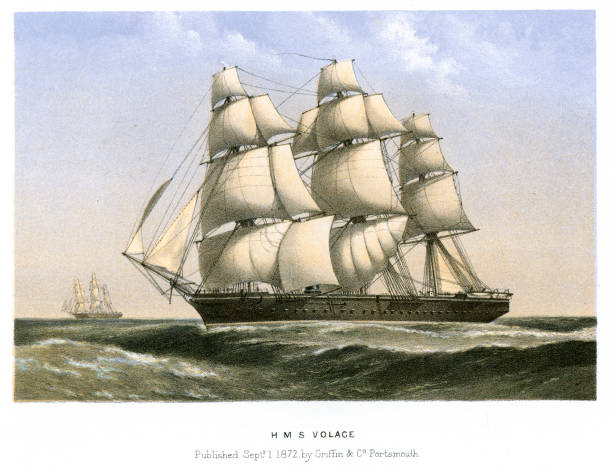
Vintage colour lithograph from 1872 of HMS Volage an iron screw corvette, ordered in 1867 before being launched in 1869. She was broken up in 1904.
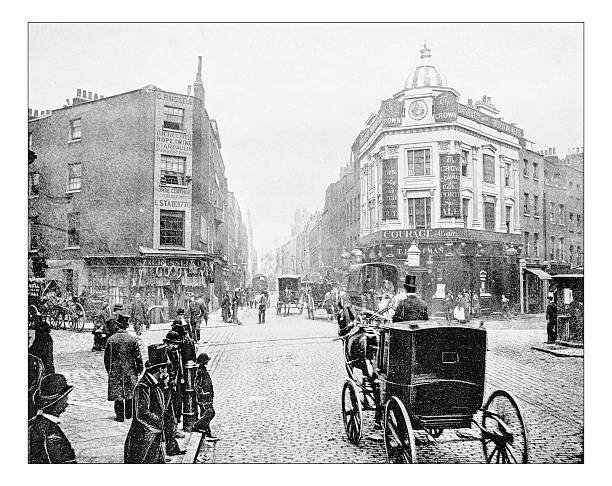
Antique photograph of Seven Dials junction in London as it was in the late 19th century. It is a small circular square, a road junction of seven streets in Covent Garden in the West End of London. In the picture the square, busy with people and carriages, with its buildings with pubs and shops of a district tha was quite poor (now it's a fashionable shopping district).
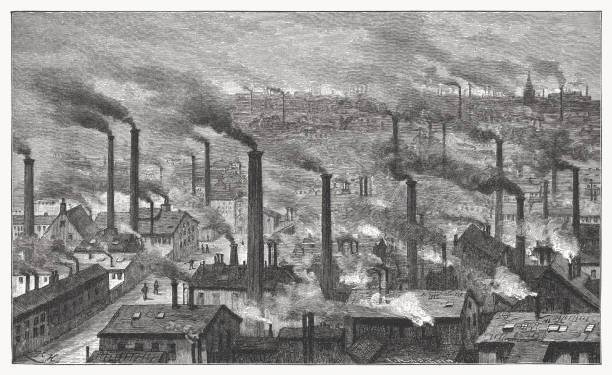
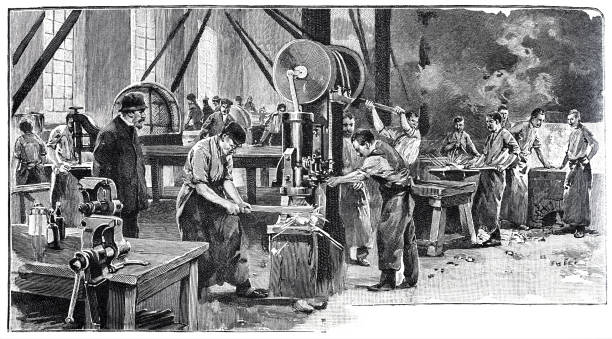
English factory town in the 19th century. Wood engraving after a drawing by Hermann Ludwig Heubner (German painter, 1843 - 1915), published in 1894.

Hudson River and Manhattan New York in the 1800s Harbor shipping trade routes
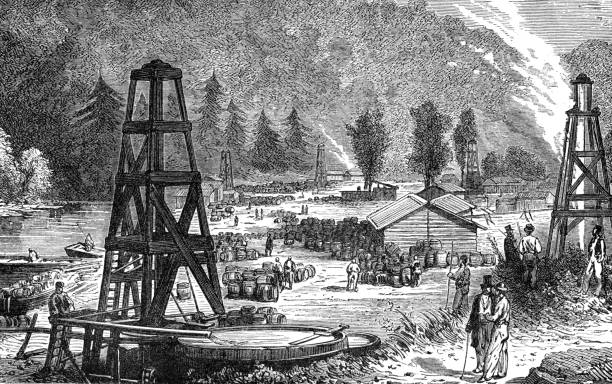
An oil well in nineteenth century USA. Drilling rig in Pennsylvania
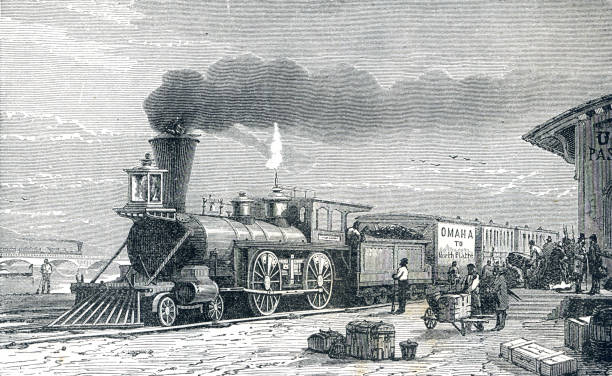
A locomotive engine car coal and smoke in Nebraska with passengers waiting on the station. In 19th Century
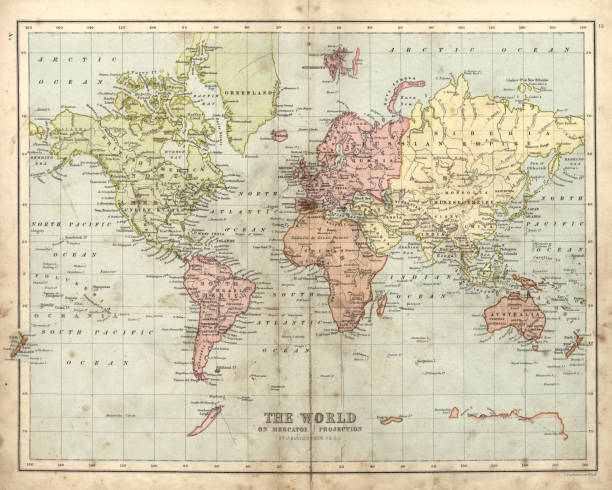
Vintage engraving of a Victorian Antique map of the world, 1873

Sainte-Claire Deville, painting by Léon Augustin L'Hermitte (circa 19th century). Vintage etching circa late 19th century.
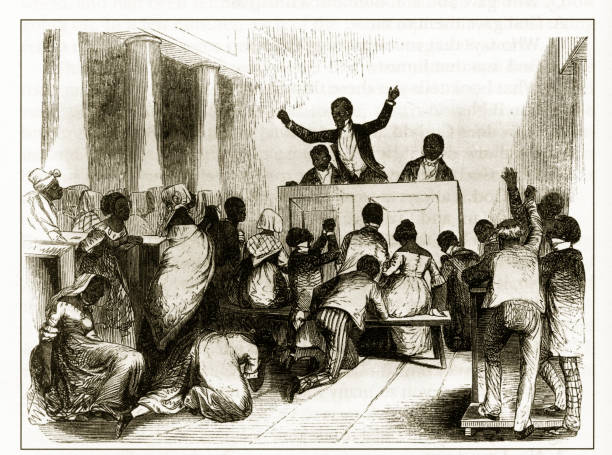
Beautifully Illustrated Antique Engraved Victorian Illustration of Antique Early American Engraving Depicting Social Issues, Circa 1850's. Source: Original edition from my own archives. Copyright has expired on this artwork. Digitally restored.

Vintage illustration Stag, Monarch of the glen, King of the Wild, Victorian landscape art, 19th Century. Hail, king of the wild, whom nature hath borne, O'er a hundred hill tops since the mists of the morn

Slaves walking with garden tools. Racist illustration from 19th Century, showing captives enjoying their life as opposed to true reality of life on the Plantation.
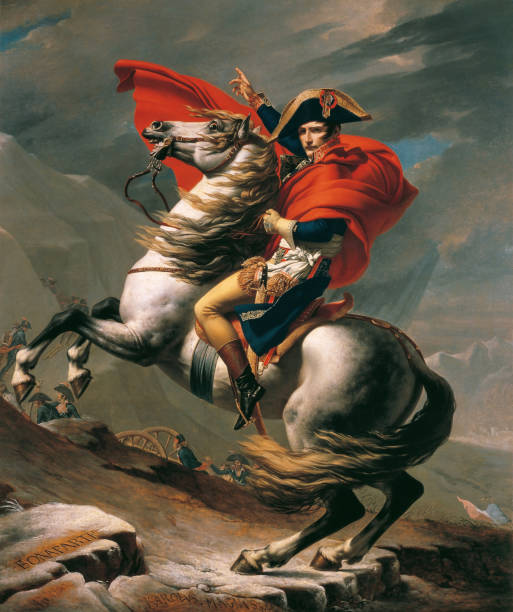
Bonaparte crossing the Grand-Saint-Bernard is an equestrian portrait of Napoleon Bonaparte then First Consul, produced by Jacques-Louis David between 1800 and 1803.
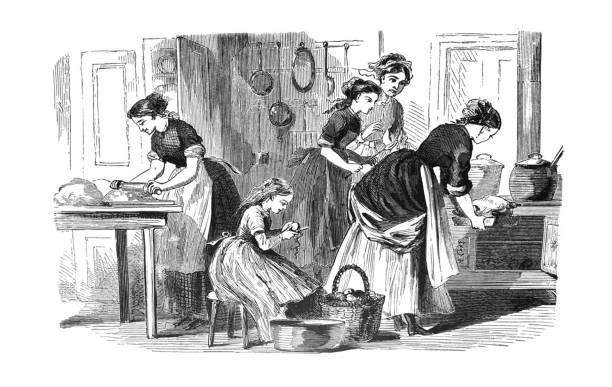
From First Century of National Existence; The United States - 1873