
Excavated ruins of Herculaneum ancient site buried under volcanic ash in the eruption of Mount Vesuvius
Explore the preserved ruins of Herculaneum with professional images from iStock by Getty Images. Buried by the eruption of Mount Vesuvius in 79 AD, this ancient town offers an unparalleled look into Roman life. The collection at iStock features detailed mosaics, villas, and carbonized structures that tell a powerful story. These photos capture the dramatic moment where civilization met the unstoppable force of the environment, a theme you can explore further in our collection of nature stock photos. From preserved wooden furniture to grand courtyards, you'll find compelling imagery, including visuals that stand in contrast to our vibrant royalty-free tree photos.
Excavated ruins of Herculaneum ancient site buried under volcanic ash in the eruption of Mount Vesuvius

A wide-angle view of ruins in the ancient town of Herculaneum, which was buried in lava during the eruption of Mount Vesuvius in Italy in 79 AD.
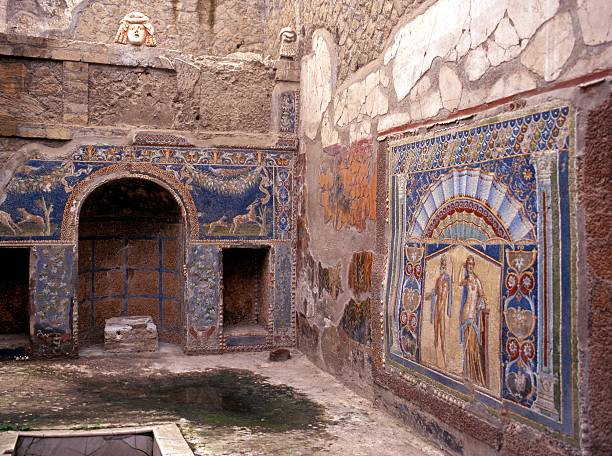
Inside the remians of one of the Roman Villas, Herculaneum, Near Naples, Campania, Italy, Europe
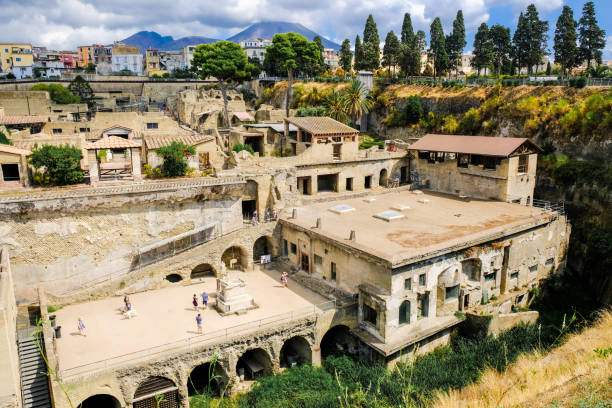
Herculaneum. Views on the ruins of ancient town

Pompeii, Campania, Naples, Italy - ruins of an ancient city buried under volcanic ash and pumice in the eruption of Mount Vesuvius in AD 79.
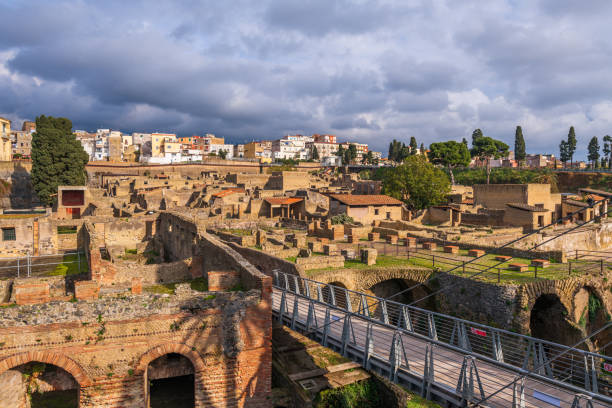
Ercolano, Italy over the ancient Roman ruins of Herculaneum.

Ancient remnants of Pompeii captured under vivid sunlight. The scenery highlights the textures and history of this famous archeological site, showing stone walls and alleys with a picturesque background.
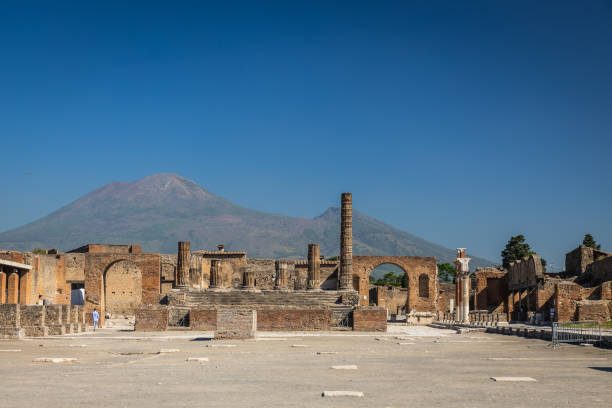
The ruins of Pompeii with a clear blue sky over Mount Vesuvius in Italy.
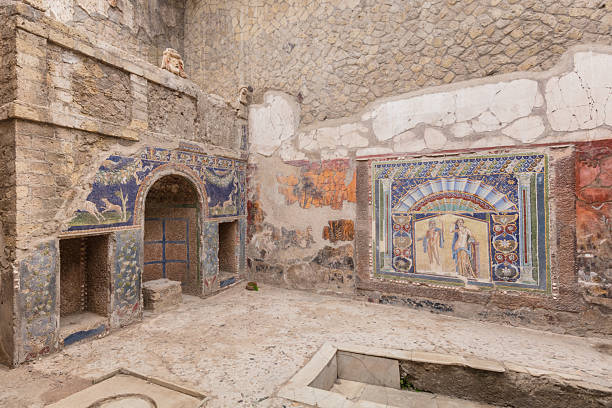
Neptune and Salacia wall mosaic in Herculaneum, Italy

General View of Excavations of Roman town buried by Versuvious in AD79. Herculaneum, Italy

The beautifully preserved and restored wall mosaic from the house of Neptune and Amphitrite in Herculaneum
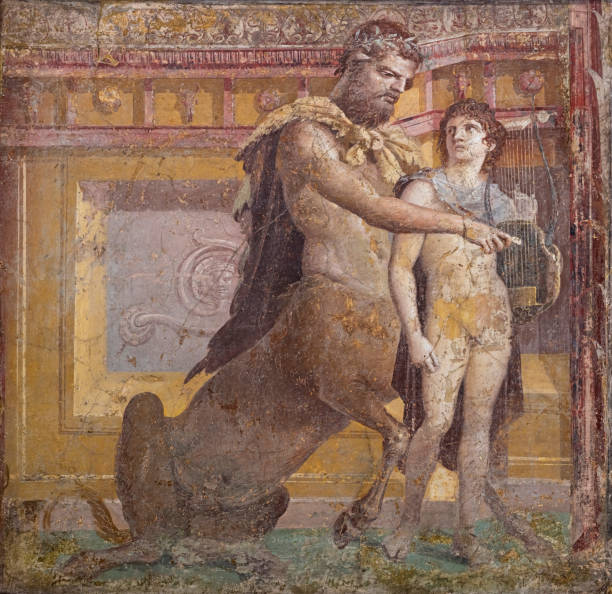
Herculaneum, Augusteum (cd. Basilica)As a boy the Greek hero Achilles was entrusted to the wise Centaur Chiron. The centaur Chiron raised Achilles at the request of Achilles' mother. This centaur, half man, half horse, was, in classical mythology, a famous teacher to various heroes and gods. Attributes in the oil sketch, such as lyre, arrow and hunting horns, refer to his lessons in music and poetry and hunting.The prototype for this fresco was not another painting but a statue that Pliny the Elder recalls was exhibited in Rome in the Saepta Iulia.
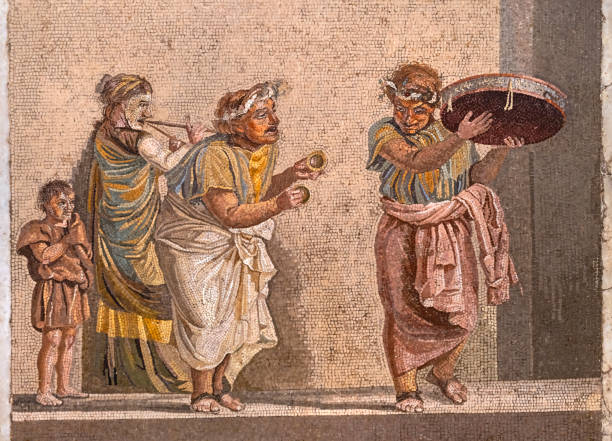
Herculaneum mosaic in opus vermiculatum from polychrome tesserae dated to late 2nd - early 1st century BC. from the Villa of Cicero outside of Porta Ercolano GateInspired by the New Comedy three itinerant musicians faces covered with masks - one playing cymbals - one tambourine and a woman with double flute

Herculaneum, Italy - 9 January 2025. Interior of a Roman bath house featuring a stone mosaic floor, vaulted ceiling, wall niches, and a central basin.
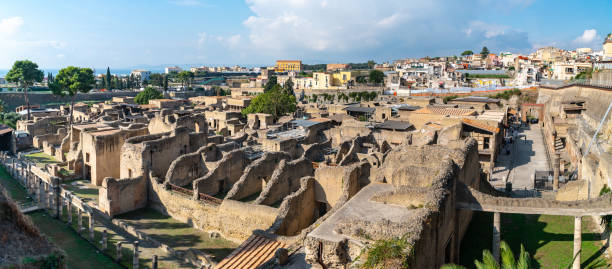
Ruins of Herculaneum, which was covered by volcanic dust after Vesuvius eruption. Italy. History.

Eruption of Mount Vesuvius in 79 AD, history map. General distribution of ash and pumice. Major stratovolcano in southern Italy buried and destroyed the Roman towns Pompeii, Herculaneum, and others.
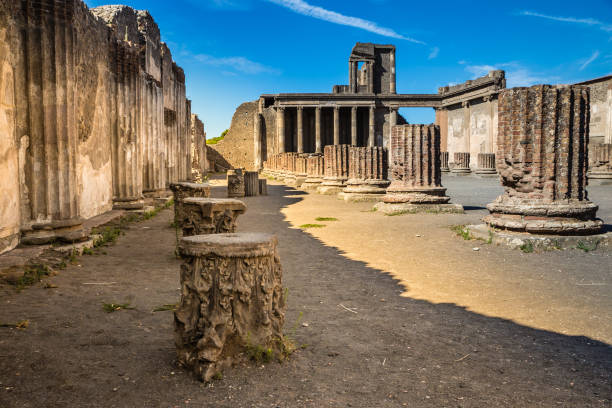
Ruins of Pompeii - Pompei, Province of Naples, Campania, Italy, Europe

View over Naples, Italy, showcasing traditional architecture and a backdrop of the famous Mount Vesuvius highlighting the city's charm, history, and picturesque landscape under a bright and vivid sky.
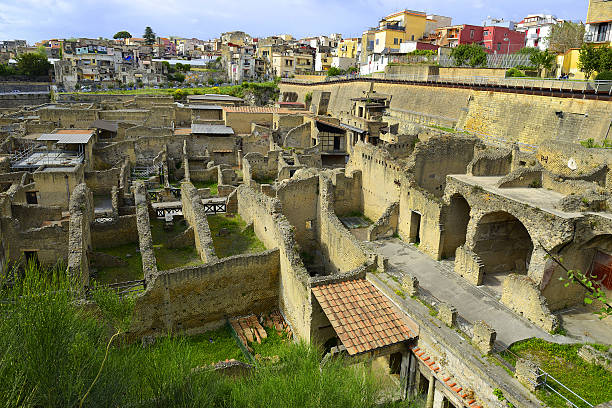
Ercolano, Italy at Herculaneum, an ancient Roman town buried in the eruption of Mount Vesuvius in AD 79 - UNESCO World Heritage Site
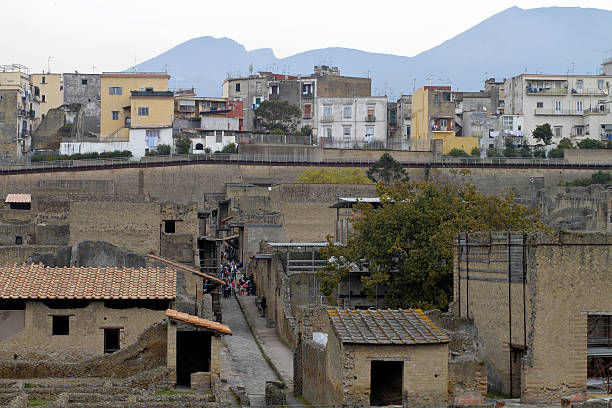
Herculaneum, lying at the foot of Mount Vesuvius, was buried in the pyroclastic flow of the volcanic eruption of 79 AD. It suffered differently to Pompeii (buried in ash during the same eruption) in that it was overwhelmed by a mixture of hot gases and rocks, a lethal current heated to 500 degrees Celsius and travelling at great speed down the mountainside of Vesuvius. As a result, the degree of preservation at Herculaneum is different to Pompeii. This photograph shows the excavation, the modern town beyond and Mount Vesuvius (rear right-hand side). At rear centre to left is the remains of Mount Somma, an even larger volacano, in the centre of whose remains sits Mount Vesuvius.
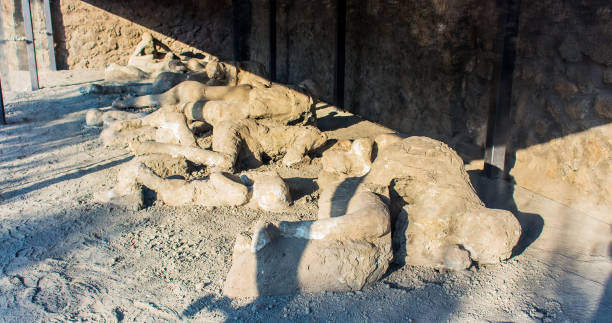
Plaster casts of Pompeii victims killed by the eruption of the volcano Vesuvius. The Roman city was destroyed and buried by ash killing the inhabitants and their families. – Image

Herculaneum, Italy - 9 January 2025. Arched boat sheds and a statue-filled courtyard lie beneath ancient Roman houses with red tile roofs and garden spaces.
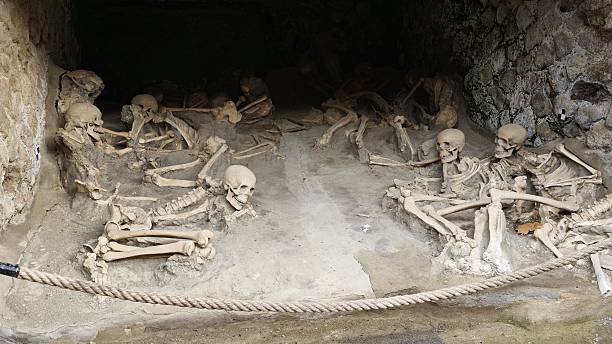
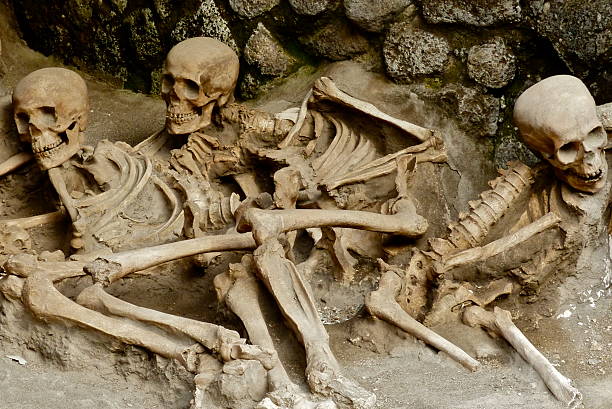
Herculaneum, Italy - 9 January 2025. Multiple skeletons are arranged along the floor of a boatshed, some overlapping, encased in ash beneath rough stone walls and roped-off access.
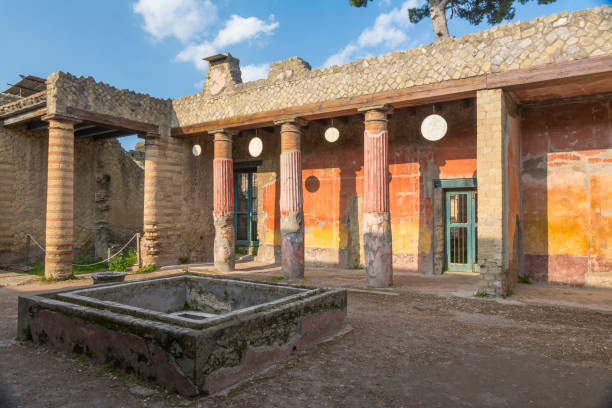
Ercolano, Italy- March 26, 2016: Columns and ruins inside the Herculaneum archeological site near Naples during a summer day.
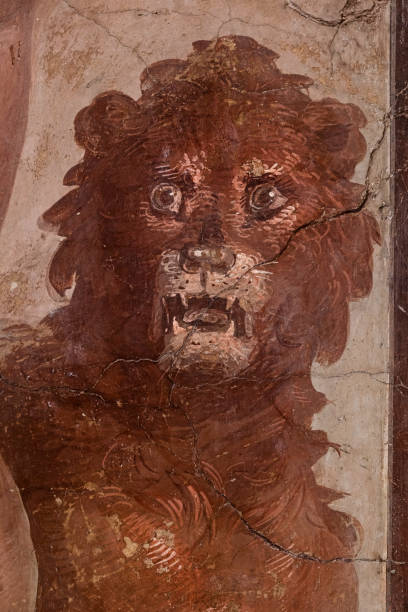
Herculaneum fresco painting lion, first century ADRoman fresco in the Augusteum ( so called Basilica ) at Herculaneum.
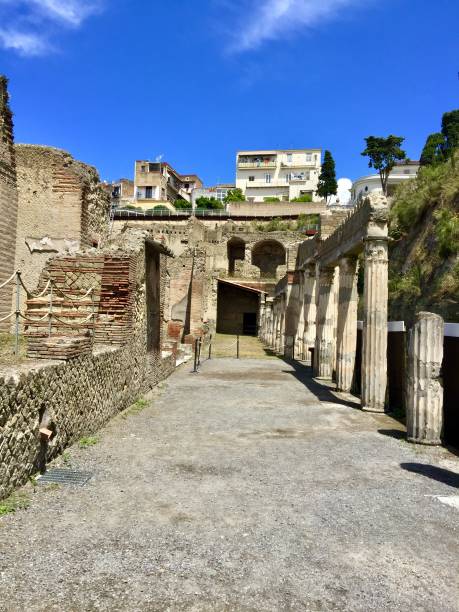
Ruins of ancient Roman city of Herculaneum

Roman fresco in Oplontis villa. Oplontis villa belonged to Poppea, the wife of the roman emperor Nero.
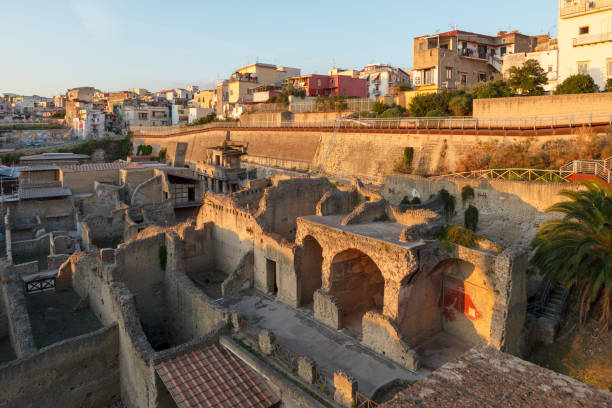
View of ancient Ercolano (Herculaneum) city ruins and modern city at evening. Naples, Campania, Italy

Ercolano, Italy - 25 November, 2023: typical city street and houses in the ancient Roman town of Herculaneum
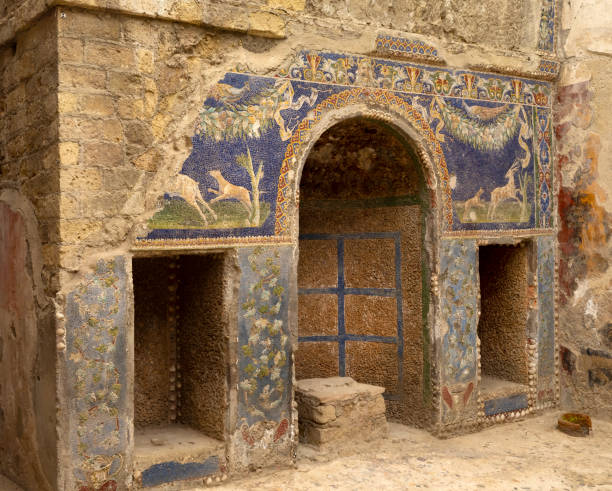
Casa di Nettuno e AnfitriteA small, but richly decorated house in Herculaneum, features a mosaic depicting the sea-god Neptune and his wife in a a Nymphaeum, an artificial grotto with a fountain. It’s located in Insula V, Cardo IV of the city.Neptune, the god of the sea, is depicted nude next to his scantily-clad wife, Amphitrite. Neptune is easily recognizable by the trident that he’s holding in his left hand. Already in the Theogony, the epic poem about the origins of the world and the gods, attributed to Hesiod ( fl. ca. 700 BC ), he and Amphitrite are a couple ( ll. 930-933 ).

Necropolis of the Herculaneum gate in Via delle Tombe street at Ruins of Pompeii. The city was an Roman city destroyed by the volcano Vesuvius. Pompei, Campania, Italy.
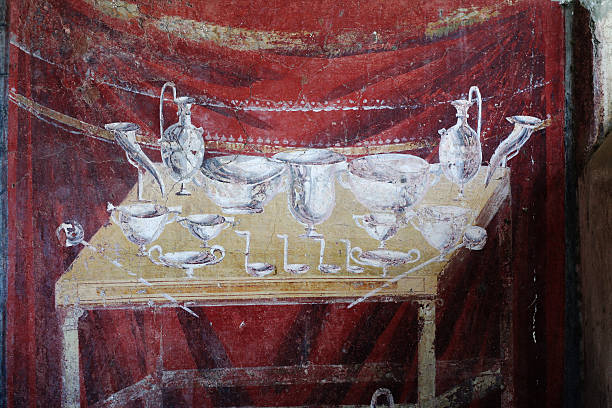
roma fresco found in Pompeii town near a gladiator tomb.
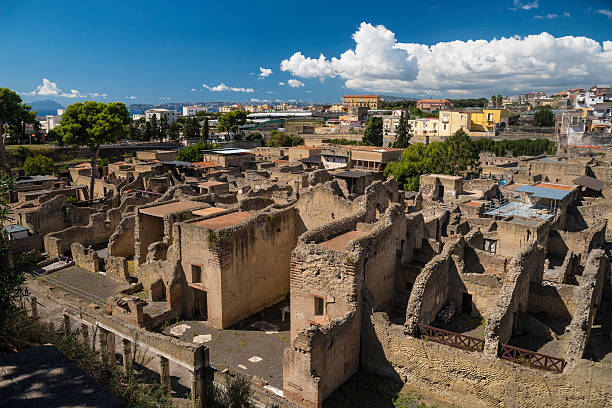
A view of Herculaneum from atop the sixty feet of ash that covered the town in 79 A.D. as a result of the eruption of Mount Vesuvius.
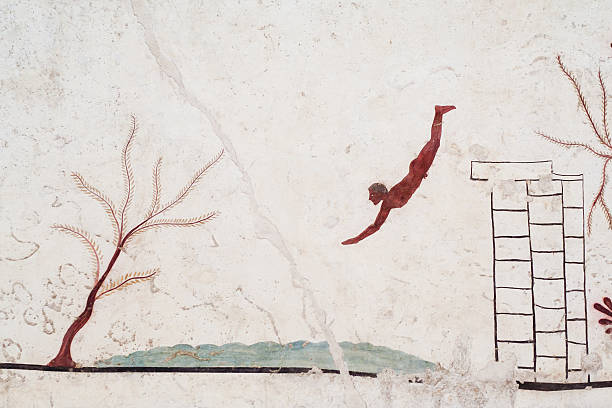
Ancient Greek Fresco: Diver's Tomb, Paestum, Campania, Italy
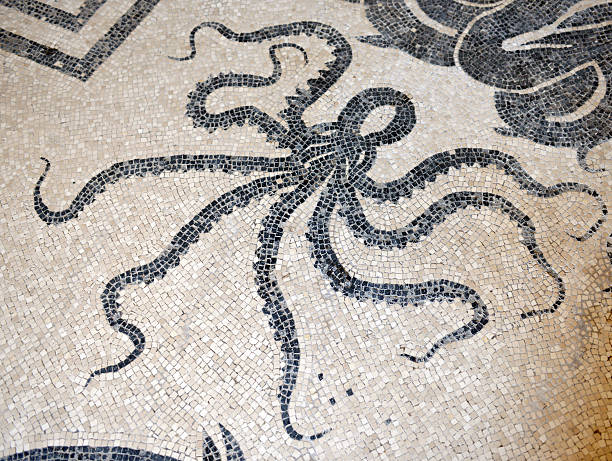
An original Ancient Roman mosaic floor (over 2000 years old) depicting an octopus at the Roman city of Herculaneum
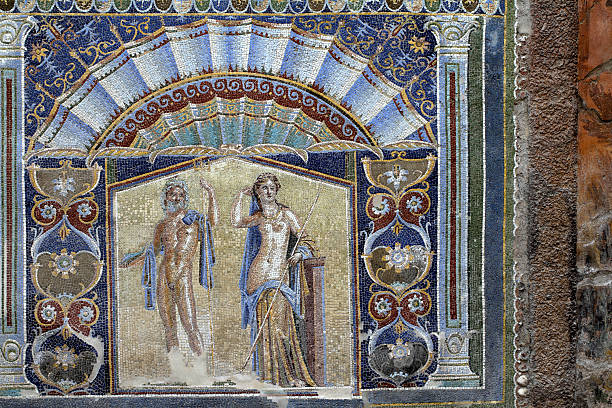
When the early Bourbon explorers of the 18th century tunnelled into the buried town of Herculaneum, they did not discover this mosaic in the Casa di Nettuno e Anfitrite (House of Neptune And Amphitrite). Instead, the house gave up its secrets during further excavations in 1932–1934. King Neptune, god of the sea (Greek Poseidon), holds a trident and stands beside Queen Amphitrite. She holds a royal staff and rests her elbow on a plinth. This would have been decoration for a splendid outdoor dining room.
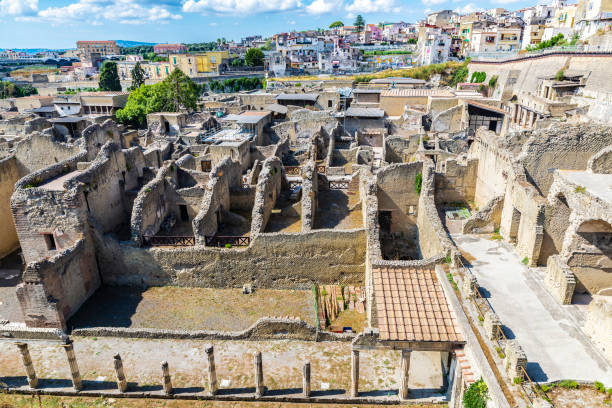
Herculaneum, Italy - September 6, 2019: View of the roman ruins of the ancient archaeological site of Herculaneum and the town of Ercolano, Italy
The city is mainly famous for the ruins of the ancient city of Pompeii
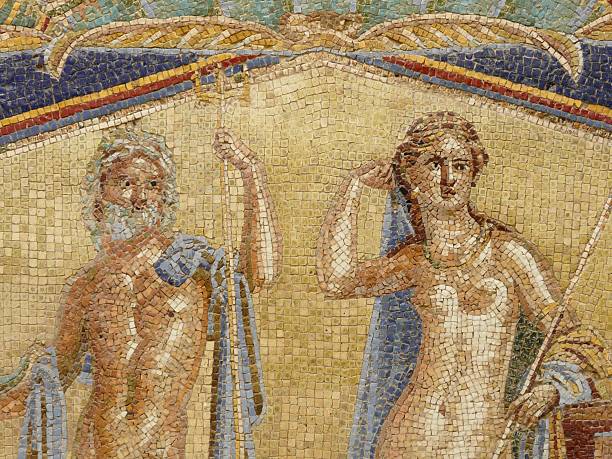
Multi-colored wall mosaics of Venus and Neptune at the ancient Roman city of Herculaneum, which was destroyed and buried by mud and ash during the eruption of Mount Vesuvius in 79 AD
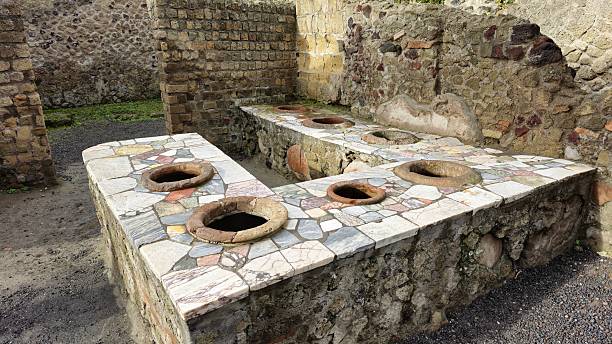
Herculaneum, Italy - 9 January 2025. Roman thermopolium with built-in dolia for storing hot food, set into a mosaic-covered stone counter.
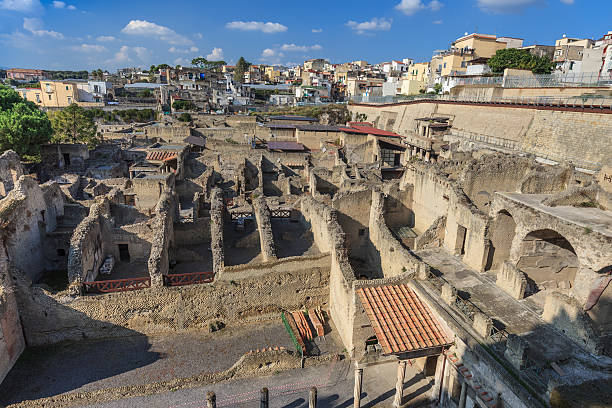
Herculaneum archeological site hentrance and view of the "new" town on background.

Skeletons of victims of the AD79 eruption of Vesuvius unearthed in boathouses at Herculaneum
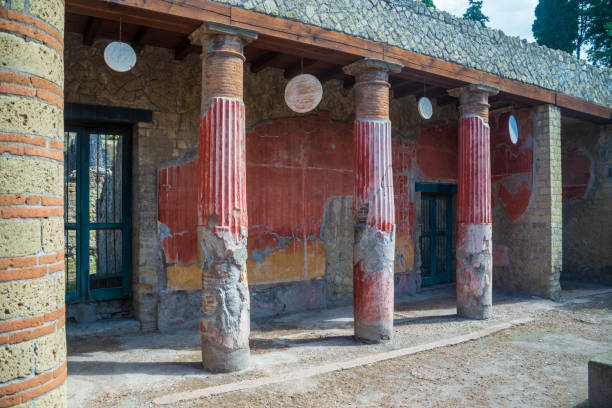
Building columns holding up a roof over a portico that still carry the original color they were painted prior to the eruption of Mount Vesuvius in 79 AD that buried the town in lava.
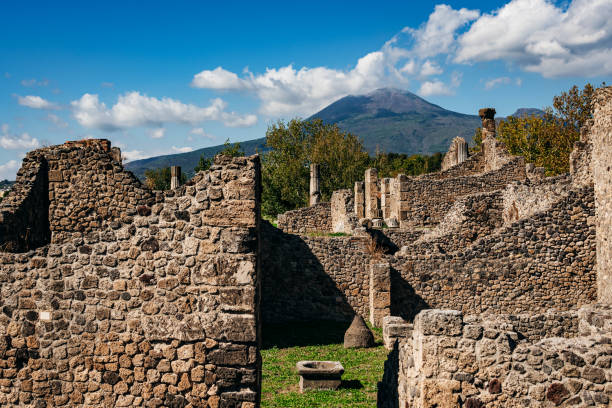
Explore the historic ruins of Pompeii beneath the looming presence of Mount Vesuvius. Captured under a bright blue sky, these ancient stone structures tell tales of Roman civilization and life.
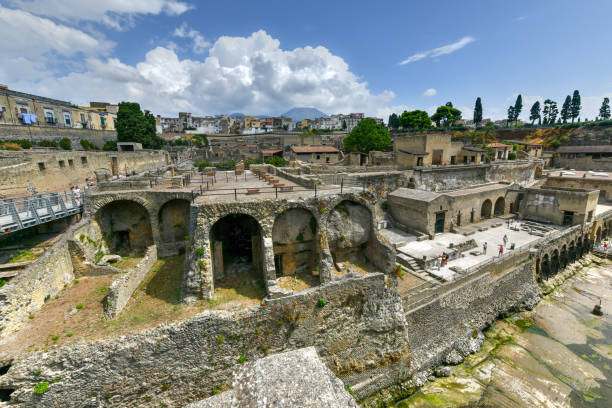
Ruins of an ancient city destroyed by the eruption of the volcano Vesuvius in 79 AD near Naples, Archaeological Park of Ercolano.


