00:07
Aerial view hyperlapse of drone time lapse of Sun light beam from overcast sky at mountain range landscape.
Aerial view hyperlapse of drone time lapse of Sun light beam from overcast sky at mountain range landscape.

Helping Hand Reaches Out is a stock video that features stunning footage of a luminous creature reaching out his hand in front of the camera. This 4096x2160 (4K) bit of video is apt to use in any project that relates to God and religion. Incorporate this footage in your next edit, social media campaign, documentary, etc. Your viewers will be super impressed.

Sun ray fall through a hole on storm cloud. Fast motion. No level adjustment.

A majestic journey unfolds as the viewer moves through soft clouds into a glowing sky.

Timelapse: sun beams shining through moving dramatic white clouds. Cloudy blue sky, warm sunrise or sunset illumination, sun lens flare. Time lapse, peaceful, hope, religion, spiritual, nature concept

Door Opening to a Bright Flashing Light. From Dark to the Light Concept. Camera Moving to the Sun. 3d Animation with Alpha Channel. 4k UHD 3840x2160.

Christian cross appears bright in the sky animation

The clouds move by as the beams of light shine down to the earth.

Hands of Christian praying worship to god on bible, faith and religion concept.

Thailand, Praying, Women, Christianity, Silhouette, Sunset
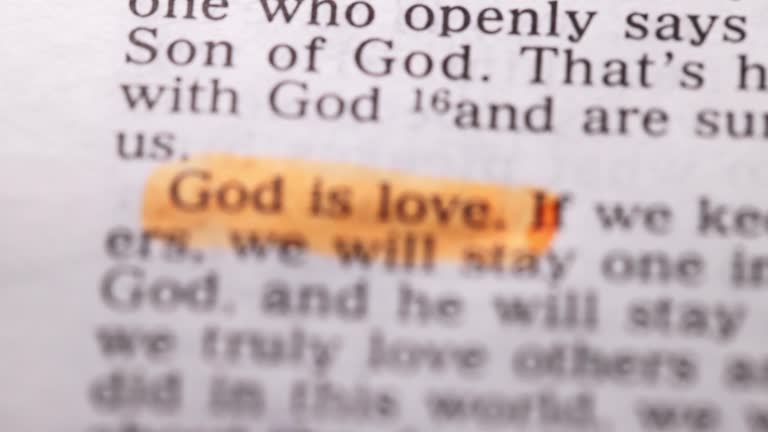
Biblical text. God is love . bible verse, slow motion.

Jesus silhouette standing on hill crest with sun and clouds behind him.

Thailand, Easter, Cross Shape, Religious Cross, Church
Christian Worship Background Animation with Seamless Loop

Silhouette of Jesus praying on hill crest with sun rays and mystic clouds behind Him. Medium Shot

Magic smoke with volumetric light glitter dust. 4k UHD animated Christmas video golden color seamless loop background.

HD1080p A young man takes in the the world around him and prays.
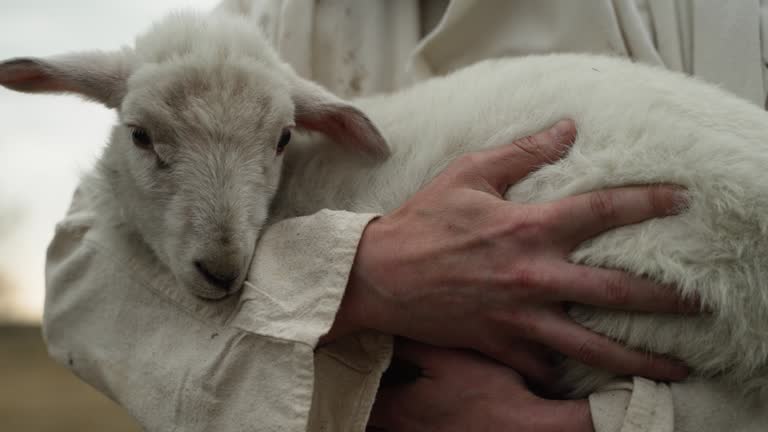
A depiction Jesus Christ from the scene of Psalm chapter 23 from the old testament in the bible or the gospel of John in chapter 10 where Jesus is described as "the good shepherd" - a loving shepherd wearing a white robe holds and cares for his sheep.

Religious Cross, Cross Shape, Easter, Love - Emotion, Jesus Christ
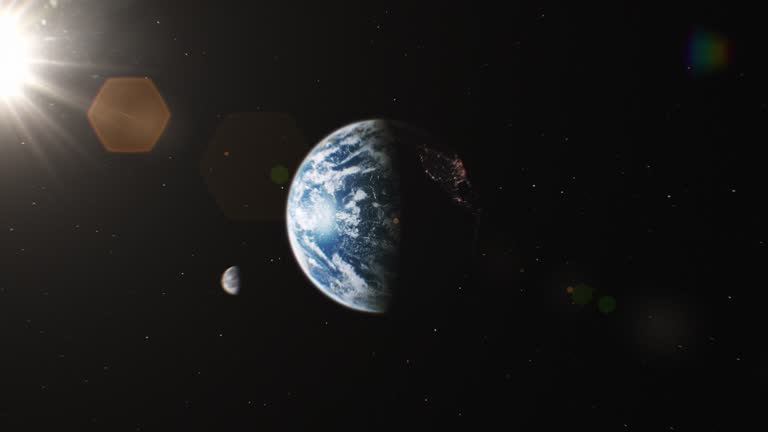
Beautiful Zoom Out from the Earth Through the Stars to the Magic Ball at the End. Flying Away from the Planet Earth. Sun, Stars and Galaxies. Space or Universe in Sphere. Cosmos Theory Concept 4k.

The heavenly clouds part like cliffs on the ocean. A golden staircase leads up through the clouds to the golden gates of heaven

A silhouette of a man in nature among luminous flying lights, fireflies, raising his hands to a bright light in an open huge wall. A light in the end of a tunnel. The concept of success, freedom, choice, open mind, meditation. 4k parallax video animation 60 fps.

Silhouette of Man pray on during sunset. Religion, faith and hope concept . High quality FullHD footage

Silhouette of a man praying outside at beautiful landscape, motion graphics

Greek mythology depicting the battle between Zeus, the king of the gods, and Kronos, the titan ruler. Make this motion graphic an addition to projects related to mythology, history, or storytelling
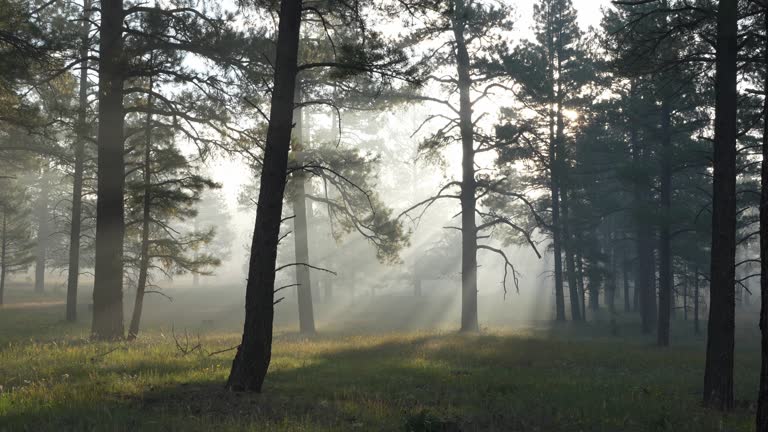
Haze is seen through Ponderosa trees in early morning light, Northern Arizona, Flagstaff, Sedona, Southwestern United States.

Mayan carved stone statue with dust particles floating around

Heavenly flight through clouds animated camera.
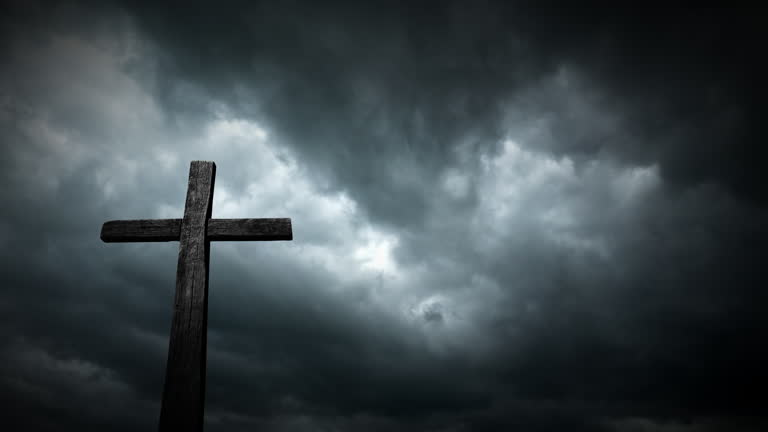
Christianity, Religious Cross, Religion, Crucifix, Wood - Material

A huge explosion and the creation of stars in space.

Cross Hill Christianity symbolizes Faith Power Worship Easter Seamless Looping Video. Perfect as a video background loop or screensaver
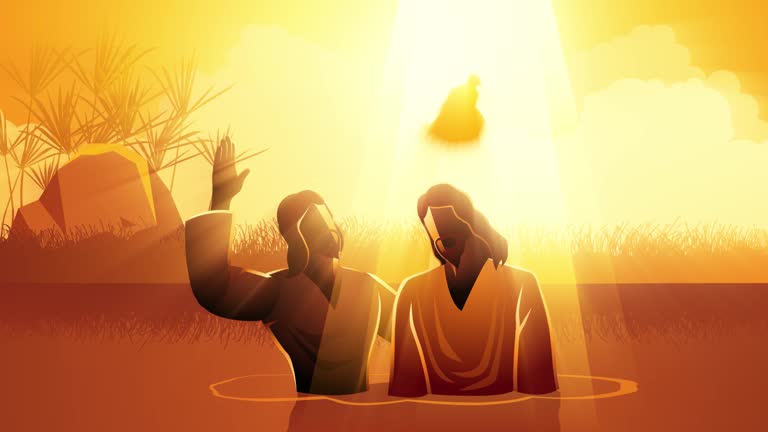
Biblical motion graphics series, Jesus baptized by John the Baptist
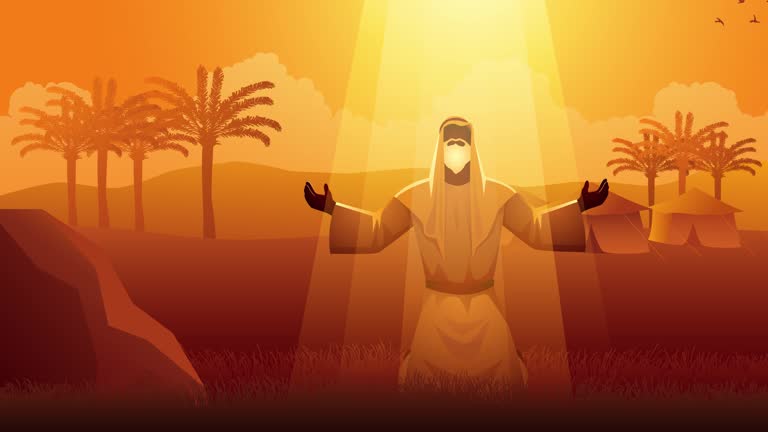
Biblical motion graphic series, God makes covenant with Abraham, God promises to bless Abraham and all of his descendants

Bible, Open, Concepts, Knowledge Is Power, Spirituality
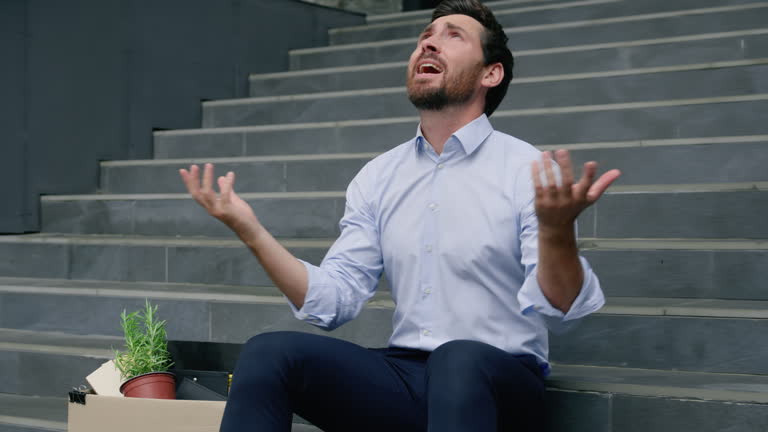
Middle-aged mature stressed businessman man male lost job despair yelling talking scolding God heavens dismissal box sad frustrated business dismissed unemployment fired work economic crisis in city. High quality 4k footage

The Thinker Statue by the French Sculptor Rodin,Conceptual Neurodiversity,glowing with brain waves.

Silhouetted hands stretch upward, grasping for a sacred beam of light, embodying prayer, spiritual struggle, and hope for divine intervention.

Hierapolis was originally a Phrygian cult centre of the Anatolian mother goddess of Cybele and later a Greek city. Its location was centred upon the remarkable and copious hot springs in classical Phrygia in southwestern Anatolia. Its extensive remains are adjacent to modern Pamukkale in Turkey.The hot springs have been used as a spa since at least the 2nd century BCE, with many patrons retiring or dying there as evidenced by the large necropolis filled with tombs, most famously that of Marcus Aurelius Ammianos, which bears a relief depicting the earliest known example of a crank and rod mechanism, and the Tomb of Philip the Apostle.It was added as a UNESCO World Heritage Site in 1988. The Italian Archaeological Mission of Hierapolis of Frigia (MAIER) has operated at the site since 1957 and is currently directed by Grazia Semeraro, Professor of Classical Archaeology at the University of Salento.
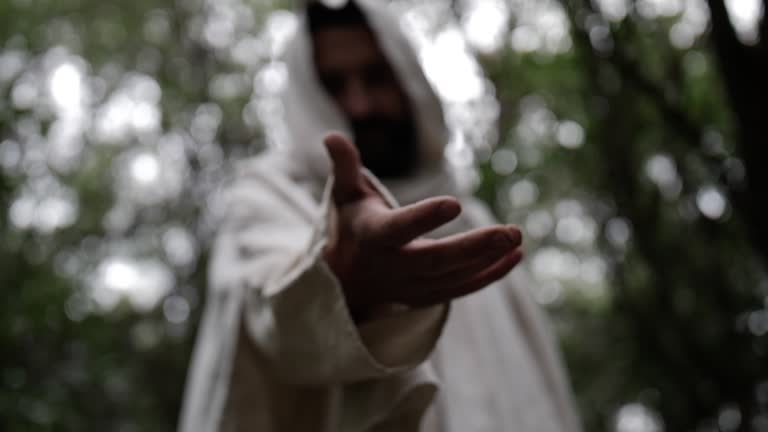
Jesus Christ dressed in white robes offering his hand to help and comfort a young man in cinematic slow motion.

Ancient statue covered in cobwebs with dust particles swirling