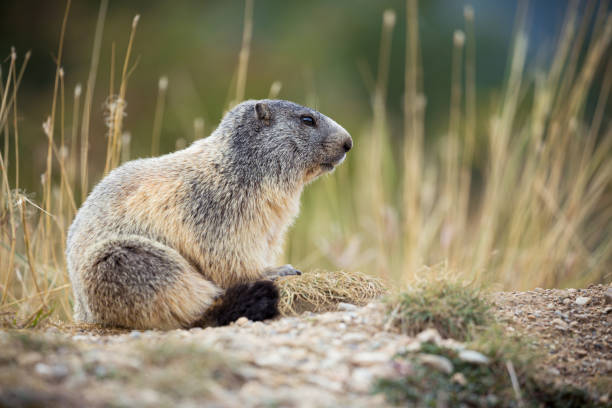
couple of prairie-dogs
Browse 16,000+ ground squirrel close up stock photos and images available, or start a new search to explore more stock photos and images.

Squirrel vector icon, animal silhouette on white background

Close up of a black-tailed prairie dog Cynomys ludovicianus eating vegtables and plants. This rodent of the family Sciuridae is found in the Great Plains of North America.

This Hoary Marmot (Marmota caligata) is feeding on wildflowers in the Paradise Meadows at Mount Rainier National Park, Washington State, USA.

"A Black-tailed prairie dog in the West Block of the Grasslands National Park near Val-Marie, Saskatchewan."

Common frog sat on a group of summer bolete mushrooms in the garden getting a nice view of its surroundings.

Closeup of a Groundhog standing on a meadow and eating.
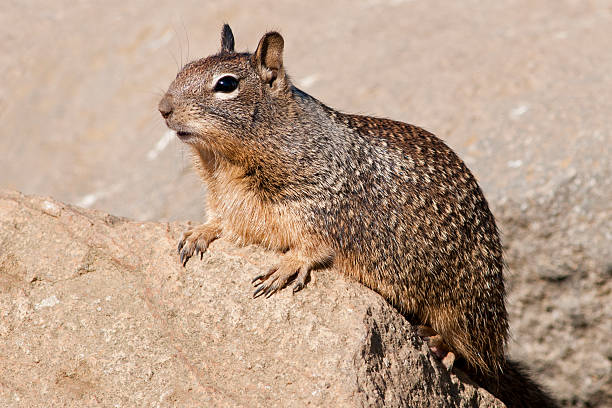
California ground squirrel, Spermophilus beecheyi, scampering over rocks that conceal its burrow.
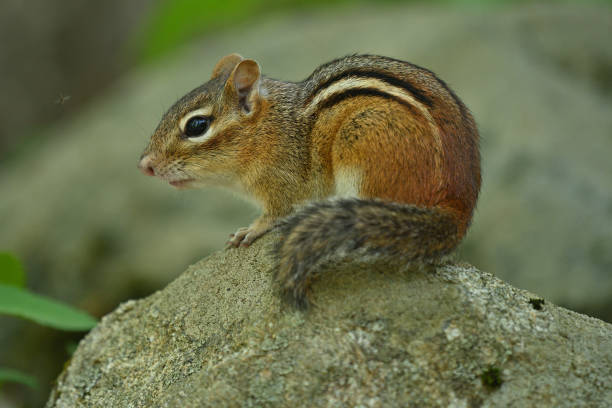
Eastern chipmunk (Tamias striatus) ultra close on a stone wall in Connecticut, spring. Only chipmunk in eastern North America, and in its genus, Tamias. Of the 24 other chipmunk species, 23 occur in western or central North America and one occurs in Siberia. Outside its two breeding seasons, the eastern chipmunk is solitary. Yet it is extremely curious and can seem to enjoy human company, becoming quite tame around houses. It hibernates underground in winter and, in this case, did not emerge until May. The eastern is the largest of the world's chipmunks. It thrives in rocky, brushy woods.
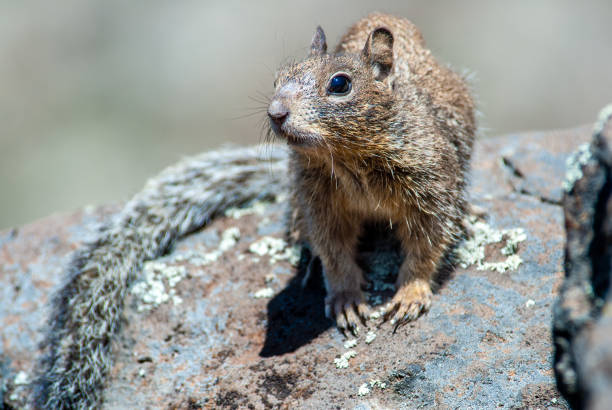
The Rock Squirrel (Otospermophilus variegatus) is a medium sized ground squirrel but can also be seen climbing boulders, rocks and trees. It is typically 8-10 inches long, with a bushy tail up to 8 inches long. Rock squirrels are grayish-brown, with some patches of cinnamon color. They have a light-colored ring around their eyes and pointed ears that project well above their heads. In the northern reach of their habitat, rock squirrels hibernate during the colder months of the year. In southern areas, rock squirrels may not hibernate at all. These squirrels are diurnal animals that spend their days burrowed underground or hiding beneath bushes and rocks, only emerging to forage for food or to find mates. The rock squirrel is omnivorous with its diet consisting mostly of leaves, stems and seeds. They may also eat some insects and other small animals. This rock squirrel was photographed on Campbell Mesa in the Coconino National Forest near Flagstaff, Arizona, USA.

An adorable nature photo of a Richardson's Ground Squirrel nibbling on a delicious green leaf.

A golden-mantled ground squirrel sits atop a rock, caught in a mischievous pause as it looks directly at the camera. Framed by soft pinks and greens, the scene captures the feel of an early autumn day.

Happy Groundhog Day. Funny cute marmot looking out of a burrow, silhouette. Rodent, black icon isolated on yellow background. Pictogram woodchuck. Vector illustration flat design.
![Cape Ground Squirrel (Xerus inauris) 4766 The Cape Ground Squirrel [Xerus inauris] uses it's fluffy tail to create shade in the hot Kalahari Desert sun ground squirrel close up stock pictures, royalty-free photos & images](https://media.istockphoto.com/id/1443334316/photo/cape-ground-squirrel-4766.jpg?s=612x612&w=0&k=20&c=ZryLOr6YQdaxQPM3m9Tbbo4yTlJzf4DxI_-GiY23FPI=)
The Cape Ground Squirrel [Xerus inauris] uses it's fluffy tail to create shade in the hot Kalahari Desert sun

Chipmunk looking cute close to the camera in Estes Park

Cute little squirrel head sticking out head a tree hole

A magnificent American red squirrel, a little surprised, in autumn in the Laurentian forest.

A yellow-bellied marmot with its eyes closed on a rock jetty in United States, Washington, Chelan

A Chipmunk amongst the boulders of the Stanley Valley.
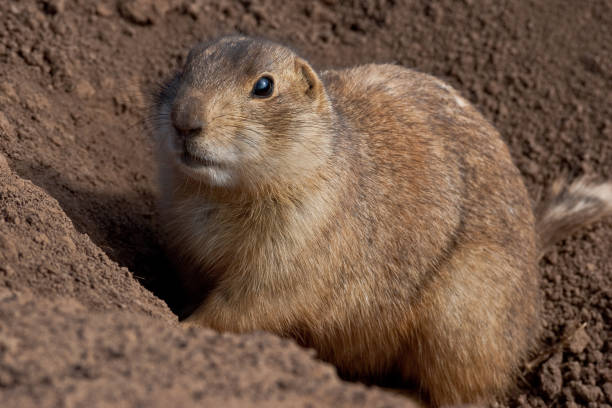
The Gunnison's Prairie Dog (Cynomys gunnisoni) is a rodent and member of the squirrel family. They are primarily distributed in the Four Corners region of Utah, Colorado, New Mexico and Arizona. Their coats are light brown mixed with black-colored hairs. The top of the head, cheeks, and eyebrows are darker than the rest of the body. The tail is mostly white. The prairie dog’s eyes are on the sides of the head to give them wide peripheral vision to more easily spot predators. The Gunnison's prairie dog typically feeds during the day on grasses, herbs, and leaves. In the spring, they feed on newly grown shrubs. In the summer they mainly consume seeds. Prairie dog habitat includes meadows, grasslands, high desert and floodplains. They are often found in areas of rabbitbrush, sagebrush, and saltbrush. Gunnison's prairie dogs live in large colonies of up to several hundred. They are more active in the early morning and late afternoon especially during hot weather. When the temperatures are cooler, they become more active throughout the day. When it rains or snows, the prairie dog will spend its time underground. When they are above ground, they feed, make social contact, look out for predators, groom and dig their burrows. During the winter, the Gunnison's prairie dog hibernates for long periods of time without food or water, instead relying on stored fat and physiological adaptations to slow their metabolism. After hibernation, they become active from April through October. The Gunnison's prairie dog has a complex system of vocal communication. Their bark is a combination of high-pitched syllables to identify various predators. They also have different sounds for an "all-clear" signal. There may be up to 11 distinct warning calls used by the prairie dog. This Gunnison’s prairie dog was photographed in a prairie dog colony by Walnut Canyon Lakes in Flagstaff, Arizona, USA.

Surprised marmot in his mink on the background of light steppe clay

Golden mantled ground squirrel or Chipmunk posing in Crater Lake National Park, Oregon, USA
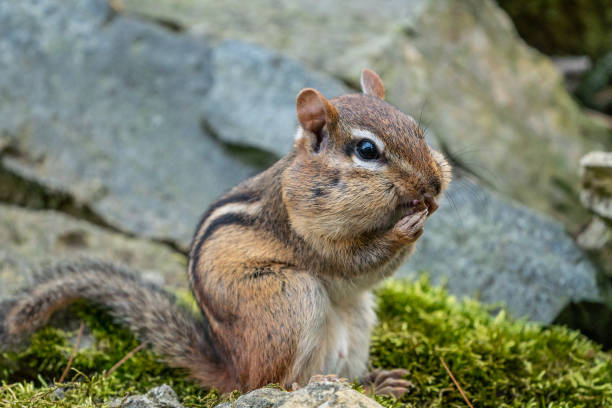
Eastern Chipmunk (Tamias striatus) sitting on moss coverd rock, stuffing his cheeks with sunflower seeds.

Hungry Red Squirrel (Sciurus vulgaris) searching for food in an forest covered with colorful leaves and mushrooms. Autumn day in a deep forest in the Netherlands. Beautiful Christmas card.

Cute european ground squirrel, spermophilus citellus, looking into camera on green grass in spring. Little wild souslik with brown fur watching on meadow. Wild animal in nature.

Grumpy groundhog is hiding in green grass under the house deck in summer.

Close-up showing a wild groundhog eating nuts showing it red undercoat of fur.

Five-striped Indian Palm Squirrel (Funambulus pennantii). The northern palm squirrel is a species of rodent in the family Sciuridae.

Closeup of a black tailed prairie dog popping out of the ground (Cynomys ludovicianus)

Portrait of a chipmunk with its cheeks stuffed

Cute and hungry squirrel eating a chestnut in autumn scene. Hyde park, London, United Kingdom

Chipmunk eating berries viburnum.

Wildlife photographer is startled by a curious Marmot looking into the camera

Cute squirrel eating nuts at Crater Lake National Park in Oregon

wild hamster sitting in the grass

Close-up of three acorns lodged in between crack of brown bark by bird or small animal to save for the winter

A close-up of a Columbia Ground Squirrel. Taken in British Columbia, Canada

A vervet monkey is captured with a sharp focus, showcasing its detailed features against a blurred background of green foliage in its natural forest environment.
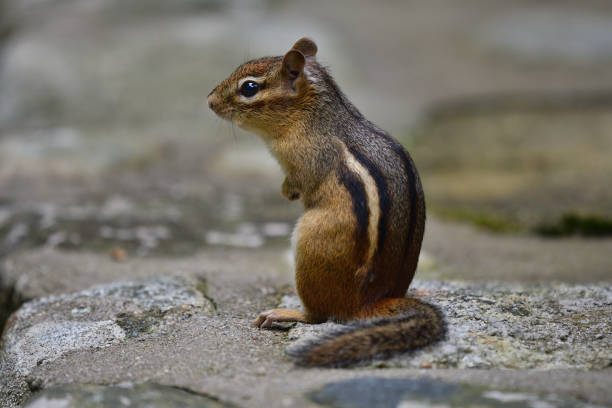
Eastern chipmunk sitting up on a stone wall in Connecticut

Groundhog on hind legs showing teeth. Animal in captivity