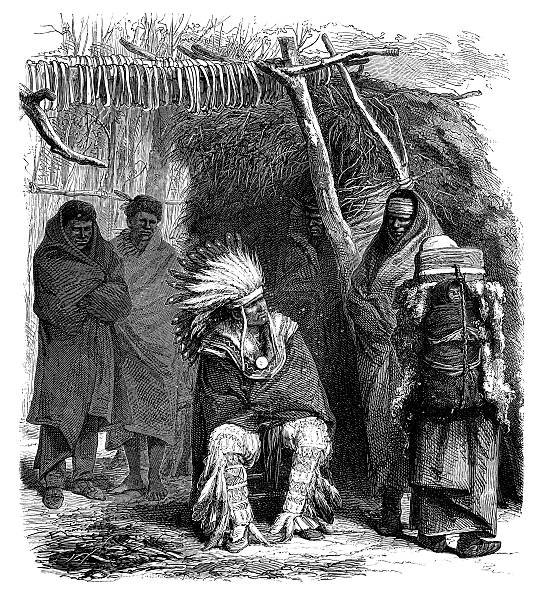
South American natives in the Amazon region. Wood engraving, published in 1893.
Browse 130+ drawing of loin cloth stock illustrations and vector graphics available royalty-free, or start a new search to explore more great stock images and vector art.
South American natives in the Amazon region. Wood engraving, published in 1893.
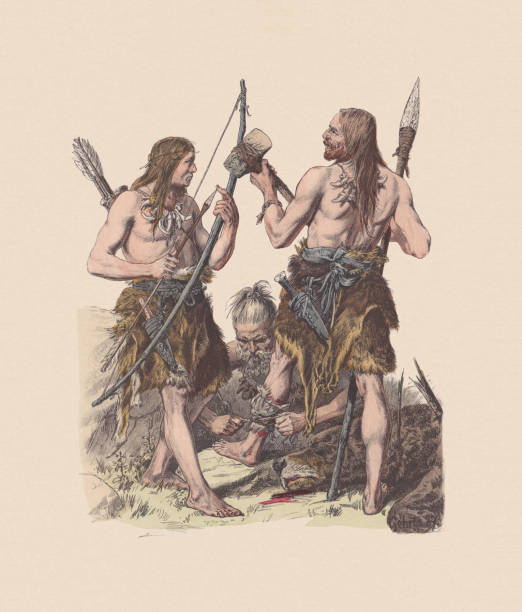
Germanic peoples during the Stone Age. Hand colored wood engraving, published ca. 1880.

Cartoon caveman with beard wearing leopard fur and holding wooden bat isolated on white background. Prehistoric cave man - flat vector illustration.
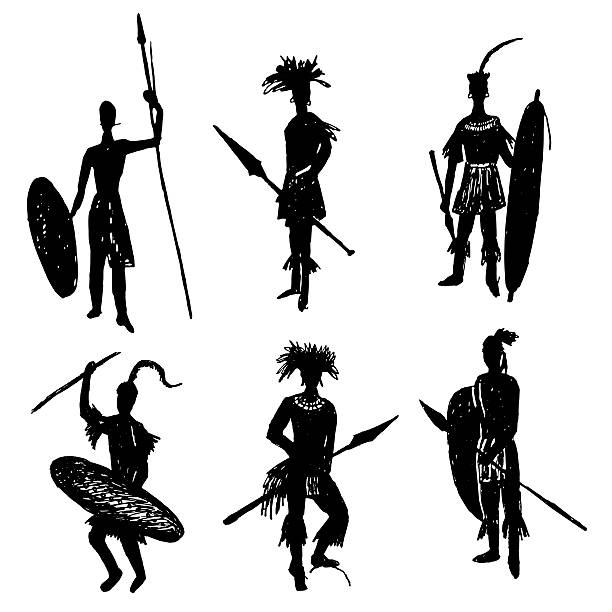
African tribal warriors in the battle suit and arms drawing sketch hand drawn vector illustration
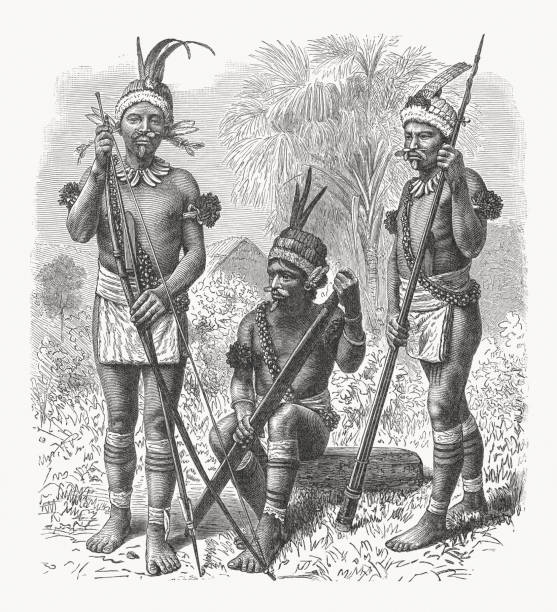
South American native people. Wood engraving after a photograph, published in 1897.

Cultural objects of African indigenous people: 1) Spears of the Mang'anja; 2) Arrows of the Mang'anja; 3) Quiver of the Dor; 4) Bow of the Maravi (Malawi, Mozambique); 5) Axes of the Badema; 6) Club of the Dinka (South Sudan); 7) Daggers of the Shira people (Gabon); 8) Slaves fork; 9) War trumpet (White Nile); 10) Dance belt of the girls of the Zande people (Central Africa); 11) Loin cloth of the girls on the middle Zambezi River; 12) Leather apron of the women of the Zande people; 13 Wooden bowl of the Zande people; 14) Saber of the Zande people; 15) Pumpkin bowl of the Tokaleya people (Zambia, Zimbabwe); 16) Axe and spear of the Lotuko people (South Sudan); 17) Shild of the Ganda people (Buganda); 18) Drinking vessel - wattled from grass - of the Ganda people; 19) Leg jewelry of Muteesa I of Buganda; 20) Weapons of the Shira people (Gabon); 21) Woman taboret of the Mangbetu (Congo); 22) West African chair; 23) Rattle, to drive out the devil; 24) Ivory arm ring of the Jur Modo (South Sudan); 25) Single-string fiddle; 26) Sompa; 27) Marimba with beater; 28) Guitar; 29) Timpani of the Dinka (South Sudan). The explanations are in German. Wood engraving, published in 1893.
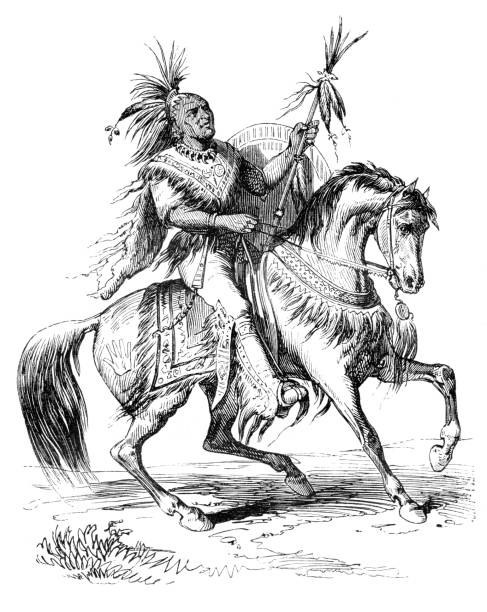
Steel engraving of native american chief riding horse 1863

Malay culture, left side: 1, 3-6) Idols (ancestral portraits) from Nias, 2) Funeral building on Borneo; 7) Dance mask; 8) Peasant costume from Borneo; 9) Pirate from Sulu; 10) Proa from Sumatra; 11) Dayak village on Borneo; 12) House of the Batak people on Sumatra; 13) Javanese house. Right side: 1-8) Farm tools and knives ; 9) Blowpipe with bayonet (Borneo); 10) Spear (Nias); 11) Quiver (Borneo); 12) Earring (Nias); 13) Headdress of a chieftain (Nias); 14) Sabre (Jawa Timur); 15) Kris (Java); 16) Sabre (Sumatra); 17) Sword (Nias); 18) Kris (Bali); 19) Kris (Sulawesi); 20) Spear (Luzon); 21) Drum, (Nias); 22) Braided edging (Sulawesi); 23) Loincloth edging of Dayak (Borneo); 24) Carvings of the Dayak (Borneo); 25) Brazier and rice pot (Java); 26) Hair comb (Nias); 27) Earring (Nias); 28) Shield of the Dayak (Borneo); 29) Bangle of men (Nias); 30) Spoon (Nias); 31) Fiddle. Wood engravings, published in 1897.

Drawing of aged Asian man with loincloth place upon his shoulder on white background. vector illustration.
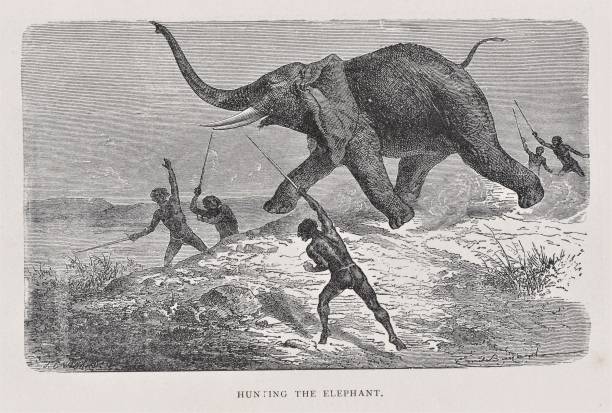
African men spearing an elephant in the 1800s. Illustration published 1891. Source: Original edition is from my own archives. Copyright has expired and is in Public Domain.

William Frederick 'Buffalo Bill' Cody (1846 "u2013 1917) was an American soldier, bison hunter and showman. As one of the most colorful figures of the American Old West, Buffalo Bill became famous for the shows with cowboy themes, which he toured in Europe. Woodcut after a photograph.

Native american riding on horse 1864 Original edition from my own archives Source : Tour du monde 1864 Drawing: D. Lancelot
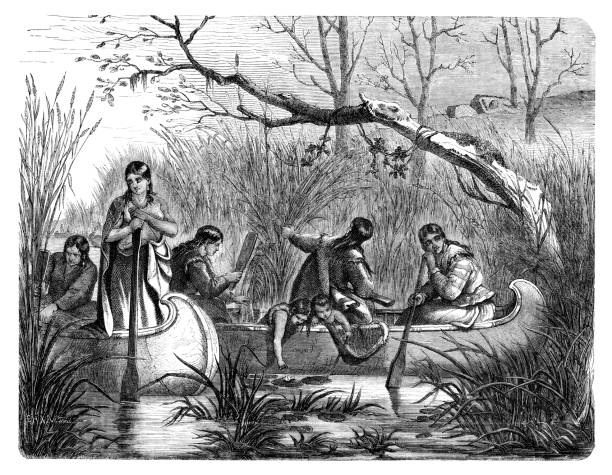
Native american people harvesting wild rice in river 1869 Original edition from my own archives Source : Illustrierte Welt - 1869 Drawing : Döpler Graveur : Specht

An ancient Roman gladiator retiarius with a trident and a net. Color vector illustration with black contour lines isolated on a white background in a cartoon style.

Illustration of a Canoe building site

Native american sioux warrior portrait 1864 Original edition from my own archives"rSource : Tour du monde 1864 Drawing: D. Lancelot

Indigenous native hunter archer warrior with bow and arrow. Vector illustration isolated on white background

Portrait of a Pygmy boy from the Akka tribe in late 1800s Africa. Illustration published 1891. Source: Original edition is from my own archives. Copyright has expired and is in Public Domain.
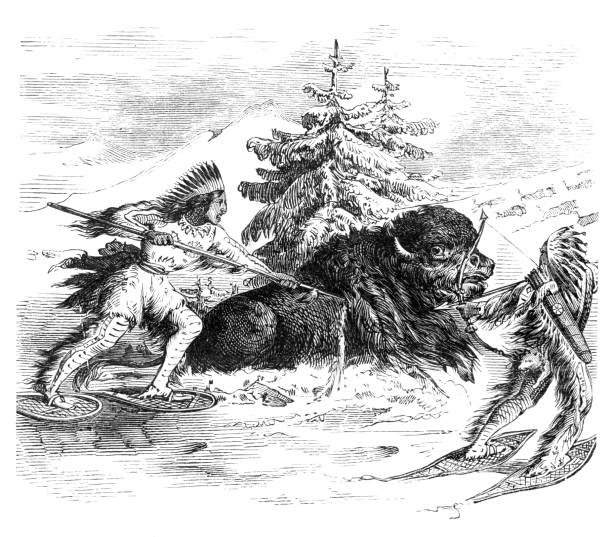
Steel engraving of native american hunting buffalo at winter 1863

Aggressive one-eyed Cyclops with a wooden club. Ancient Greek mythological monster. Vector illustration with contour lines in black ink isolated on a white background in cartoon and hand-drawn style.
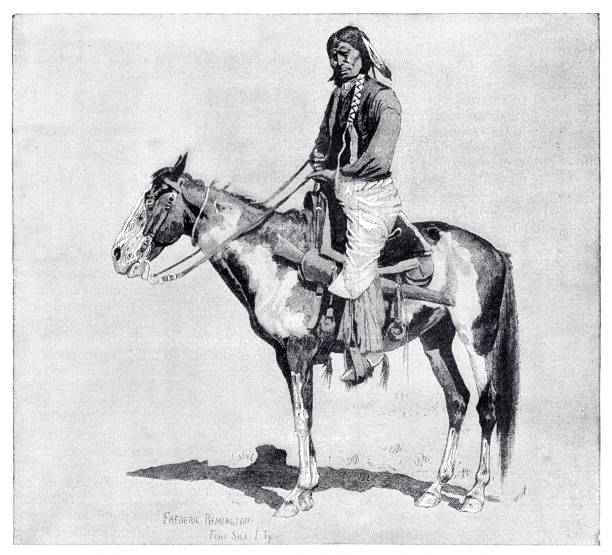
Native american comanche chief riding horse 1891 Frederic Sackrider Remington was an American painter, illustrator, sculptor, and writer who specialized in depictions of the Old American West, specifically concentrating on the last quarter of the 19th century American West and images of Cowboys, American Indians, and the U.S. Cavalry. Original edition from my own archives Source : 1891 Ilustración Artística
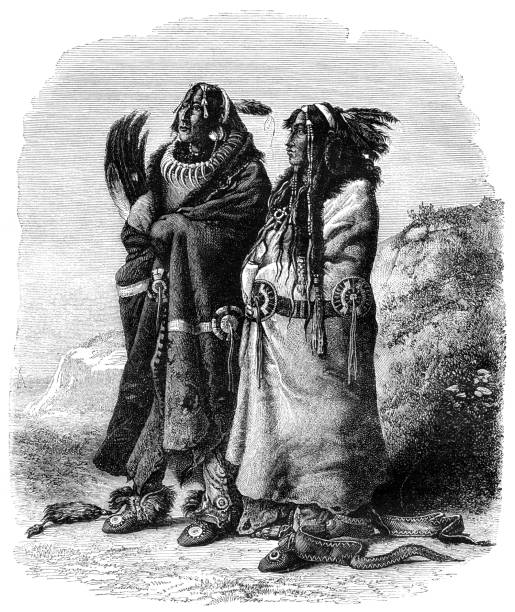
http://farm2.static.flickr.com/1359/5135885055_69a03dfd95.jpg

Vector cartoon clip art illustration of a tough mean muscular green orc or troll mascot with a spiked club poised to smash something. Line art and color fills are on separate layers. Club elements are separate also.

Mohawk people in the past. They are an Iroquoian-speaking indigenous people of North America, with communities in southeastern Canada and northern New York State. Wood engraving, published in 1868.

Prehistoric man. A Stone Age hunter. A caveman with his trophy. Vector illustration with contour lines in black ink isolated on a white background in cartoon and hand drawn style.

A street scene in Delhi during the British Raj. Illustration from "Royal Geographical Readers no. 5" of Asia, Africa, America and Oceania, publ. T Nelson & Sons, London in 1883.

The main ancient Greek god is Zeus. The Lord of thunder and lightning. Vector illustration with contour lines in black ink isolated on a white background in cartoon and hand-drawn style.

Cartoon joyful natives man with a stone hammer. Vector image

Vintage illustration Japanese grooms, Betos, holding reins, dressed in loincloth, Japan History 19th Century. A European sojourn in Japan, Aime Humbert Swiss minister in Japan

Illustration of a Baluba village

Tools and decorative items of the Brazilian indigenous peoples. Lithograph, published ca. 1830.

Illustration of a sorcerer of the Niam-Niam Tribe of Sudan

A cartoonish drawing of a man in a wrestling pose with a flower in the background. The man is wearing a loincloth and he is angry

A cartoonish drawing of a man in a wrestling pose with a flower in the background. The man is wearing a loincloth and he is angry

Cartoon natives man with a stone hammer on the seashore. Vector image

Two African warriors argue after their village had been ambushed by Arabs in the late 1800s. One warrior had wanted to negotiate peace and the other was angry they hadn’t fought harder against the foreigners. Illustration published 1891. Source: Original edition is from my own archives. Copyright has expired and is in Public Domain.

Illustration of a Ruler of the Luba people or Baluba

A cartoon illustration of a muscular caveman holding a sign

Waganda tribe in Central Africa during 1873. Illustration published 1891. Source: Original edition is from my own archives. Copyright has expired and is in Public Domain.

Baroque style decor angel sculpture with gold elements ancient art construction vector baby with golden wings cupid. or cherub architectural decoration male character legendary or mythical creature