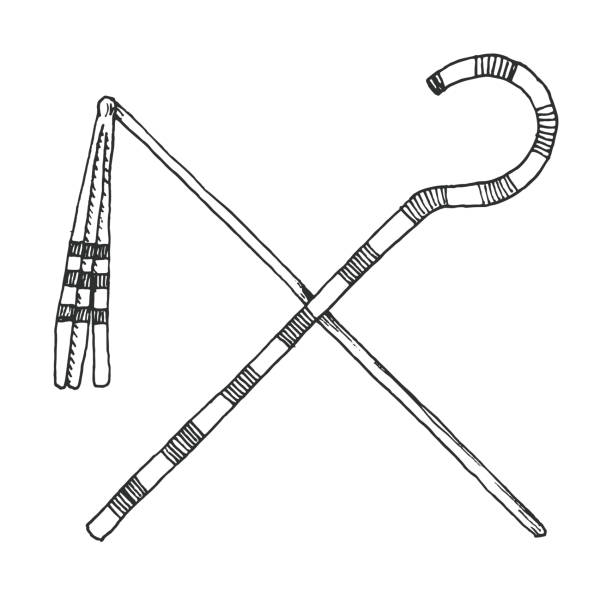
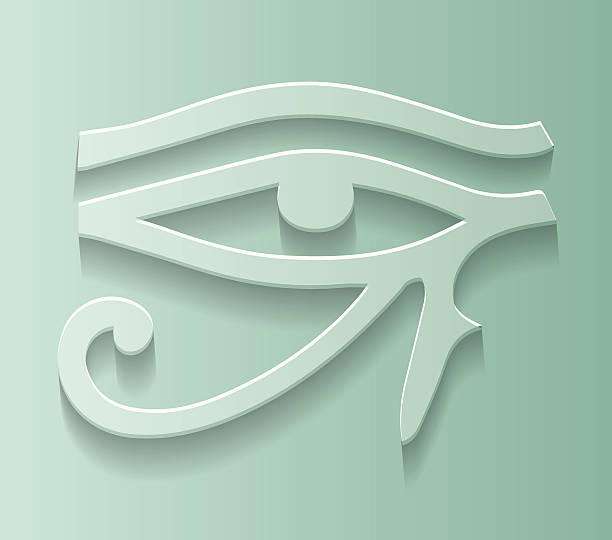
Egyptian ancient symbol, isolated figure of ancient egypt deities
Browse 220+ osiris drawing stock illustrations and vector graphics available royalty-free, or start a new search to explore more great stock images and vector art.
Egyptian ancient symbol, isolated figure of ancient egypt deities
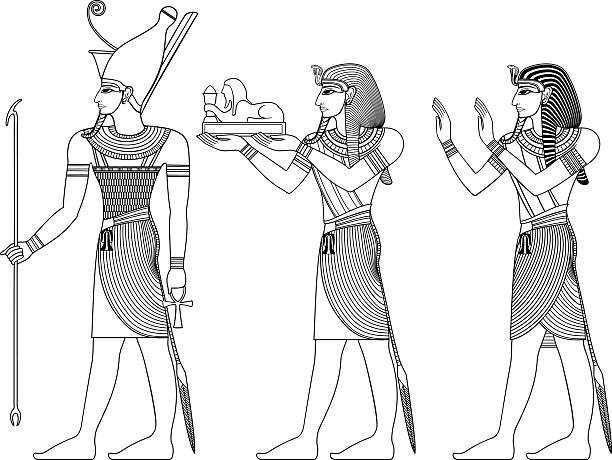
Pharaoh , egyptian ancient symbol, vector set of ancient egypt deities

Egyptian Gods and Religious Symbols Engraving Antique Illustration, Published 1851. Source: Original edition from my own archives. Copyright has expired on this artwork. Digitally restored.

egyptian ancient symbol, isolated figure of ancient egypt deities
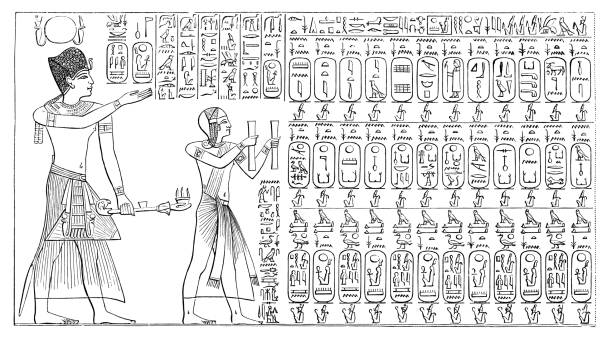
The Abydos King List, also known as the Abydos Table, is a list of the names of 76 kings of ancient Egypt, found on a wall of the Temple of Seti I at Abydos, Egypt. It consists of three rows of 38 cartouches (borders enclosing the name of a king) in each row. The upper two rows contain names of the kings, while the third row merely repeats Seti I's throne name and nomen.Original edition from my own archivesSource : Mundo ilustrado 1880
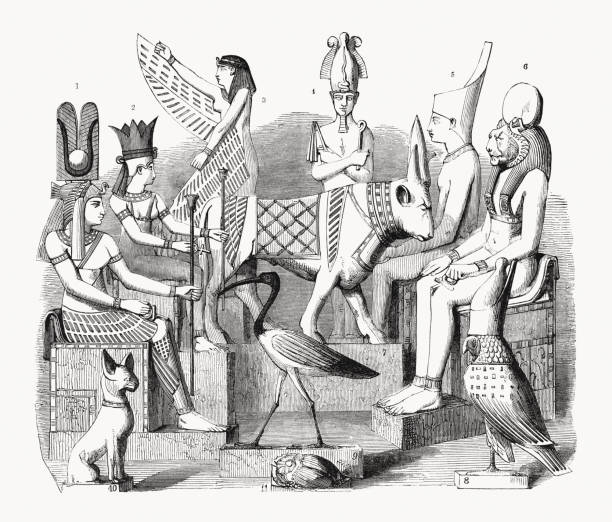
Ancient Egyptian gods and goddesses: 1) Amun; 2) Mut; 3) Isis; 4) Osiris; 5) Amunet; 6) Sachmet; 7) Apis; 8) Horus; 9) Thoth; 10) Bastet; 11) Khepri. Wood engraving, published in 1862.

Egyptian ancient symbol, isolated figure of ancient egypt deities

King Ay performing the opening of the mouth ceremony on the mummy of Tutankhamen - Pharaoh Tutankhamen being greeted by the goddess illustration

Illustrations of the gods of ancient Egypt. Isis, Ra, Osiris and Anubis on background.

Template welcome to ancient Egypt with place for the text and Egyptian goodness Isis, Hathor, queen Nefertiti and Egyptian winged sun.
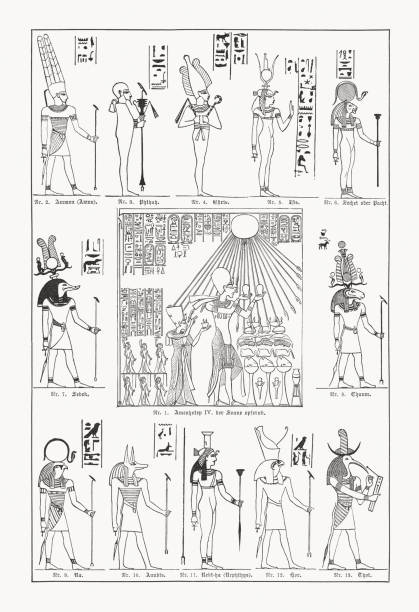
Egyptian gods and goddesses: 1) Akhenaten (Amenophis IV) sacrifices the god Aton. Behind him his wife Nefertiti and princesses; 2) Amun; 3) Ptah; 4) Osiris; 5) Isis; 6) Sekhmet; 7) Sobek; 8) Khnum; 9) Ra; 10) Anubis; 11) Nephthys; 12) Horus; 13) Thot. Wood engravings, published in 1893.

Judgment of the dead before the god Osiris in the underground courtroom. Chromolithograph (facsimile) after an ancient papyrus, published in 1879.

Pharaoh with egyptian queen illustrationIsis was a major goddess in ancient Egyptian religion whose worship spread throughout the Greco-Roman world.

The judgement of the dead in the presence of Osiris from book of the deadThe ancient Egyptians believed that the heart was the seat of the emotions, the intellect and the character, and thus represented the good or bad aspects of a person's life. If the heart did not balance with the feather, then the dead person was condemned to non-existence, and consumption by the ferocious 'devourer'Original edition from my own archivesSource : Bilder-Atlas - Ikonographische Encyklopädie 1870

Ra was the ancient Egyptian deity of the sun. By the Fifth Dynasty, in the 25th and 24th centuries BC, he had become one of the most important gods in ancient Egyptian religion, identified primarily with the noon-day sun. Ra ruled in all parts of the created world: the sky, the earth, and the underworld. He was believed to have ruled as the first pharaoh of Ancient Egypt. He was the god of the sun, order, kings and the sky.

Vector Egyptian Cross (Ankh) with Decorative Floral Design

Egypt sketches with ancient Egyptian travel landmarks and tourism vector design. Pharaoh pyramid, Sphinx and Cairo temples, gods, Egyptian flag, map and heraldic eagle, scarab and parchment scroll

Ancient egyptian hieroglyph of OsirisOsiris is the god of fertility, agriculture, the afterlife, the dead, resurrection, life, and vegetation in ancient Egyptian religion.Original edition from my own archivesSource : Bilder-Atlas - Ikonographische Encyklopädie 1870

Download with the EPS file for any editable or scalable needs

Ancient egypt background.Egyptian hieroglyph and symbol . Ancient culture sing and symbol

Abu Simbel are two massive rock-cut temples in the village of Abu Simbel ,Aswan Governorate, Upper Egypt, near the border with Sudan. They are situated on the western bank of Lake Nasser, about 230 km southwest of Aswan. The complex is part of the UNESCO World Heritage Site known as the "Nubian Monuments"Original edition from my own archivesSource : Weltgeschichte 1898

King Ay performing the opening of the mouth ceremony on the mummy of Tutankhamen

The goddess Isis wife of Osiris god of the underworld - illustration realized in Photoshop and Illustrator

Egyptian goddess Osiris Isis HorusOriginal edition from my own archivesSource : Beckers Weltgeschichte 1884

Isis, Osiris, Seth, Re, Thoth, Bastet. Watercolor hand-drawn gods of ancient Egypt, myth, culture, history illustrations
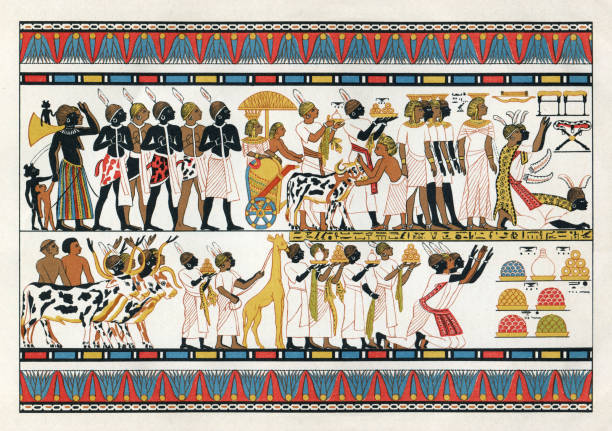
Nubian tribal chiefs offering gifts to the egyptian king ( 1380 B.C )Fresco in a thebanian tomb ( XVIII Dynasty )Original edition from my own archivesSource : "Meyers Konversations-Lexikon" 1896

Athor, Isis and Serapis: Egyptian Gods and Religious Symbols Engraving Antique Illustration, Published 1851. Source: Original edition from my own archives. Copyright has expired on this artwork. Digitally restored.

Illustration of a Temple Of Osiris

Egyptian Family Idols: Egyptian Gods and Religious Symbols Engraving Antique Illustration, Published 1851. Source: Original edition from my own archives. Copyright has expired on this artwork. Digitally restored.

Ancient egyptian King Sethos offering to goddess OsirisOriginal edition from my own archivesSource : Bilder-Atlas - Ikonographische Encyklopädie 1870

The goddess Isis, wife of Osiris, god of the underworld. In ancient Egyptian beliefs, she symbolized the pharoah's mother.

Ancient egypt mural.Egyptian mythology.Ancient culture sing and symbol.Historical background.Ancient goddess.

Abu Simbel are two massive rock-cut temples in the village of Abu Simbel ,Aswan Governorate, Upper Egypt, near the border with Sudan. They are situated on the western bank of Lake Nasser, about 230 km southwest of Aswan. The complex is part of the UNESCO World Heritage Site known as the "Nubian Monuments"Original edition from my own archivesSource : Mundo ilustrado 1880

Engraved Antique, Egyptian Gods and Religious Symbols Engraving Antique Illustration, Published 1851. Source: Original edition from my own archives. Copyright has expired on this artwork. Digitally restored.

God of Ancient Egypt Seth. Egyptian ancient symbol, isolated figure of ancient Egypt deities.

Egyptian ancient symbol.Religion icon.Egypt deiteis.Culture.Design element.Horus.Set.Anubis.

Sacred Ships: Egyptian Gods and Religious Symbols Engraving Antique Illustration, Published 1851. Source: Original edition from my own archives. Copyright has expired on this artwork. Digitally restored.

Egyptian Gods and Religious Symbols Engraving Antique Illustration, Published 1851. Source: Original edition from my own archives. Copyright has expired on this artwork. Digitally restored.

Isis Upon a Lotus: Egyptian Gods and Religious Symbols Engraving Antique Illustration, Published 1851. Source: Original edition from my own archives. Copyright has expired on this artwork. Digitally restored.

Serpis as the Sun: Egyptian Gods and Religious Symbols Engraving Antique Illustration, Published 1851. Source: Original edition from my own archives. Copyright has expired on this artwork. Digitally restored.

Osiris with the Serpent: Egyptian Gods and Religious Symbols Engraving Antique Illustration, Published 1851. Source: Original edition from my own archives. Copyright has expired on this artwork. Digitally restored.

Egyptian Amun: Egyptian Gods and Religious Symbols Engraving Antique Illustration, Published 1851. Source: Original edition from my own archives. Copyright has expired on this artwork. Digitally restored.

Kneph Mendes or Pan: Egyptian Gods and Religious Symbols Engraving Antique Illustration, Published 1851. Source: Original edition from my own archives. Copyright has expired on this artwork. Digitally restored.

Amun, Isis and Osiris: Egyptian Gods and Religious Symbols Engraving Antique Illustration, Published 1851. Source: Original edition from my own archives. Copyright has expired on this artwork. Digitally restored.

Statue of Isis: Egyptian Gods and Religious Symbols Engraving Antique Illustration, Published 1851. Source: Original edition from my own archives. Copyright has expired on this artwork. Digitally restored.

Amun, Isis, Osiris and Horus: Egyptian Gods and Religious Symbols Engraving Antique Illustration, Published 1851. Source: Original edition from my own archives. Copyright has expired on this artwork. Digitally restored.

Isis, Harpocrates and Sacred Jugs: Egyptian Gods and Religious Symbols Engraving Antique Illustration, Published 1851. Source: Original edition from my own archives. Copyright has expired on this artwork. Digitally restored.

Isis: Egyptian Gods and Religious Symbols Engraving Antique Illustration, Published 1851. Source: Original edition from my own archives. Copyright has expired on this artwork. Digitally restored.

Egyptian Amun: Egyptian Gods and Religious Symbols Engraving Antique Illustration, Published 1851. Source: Original edition from my own archives. Copyright has expired on this artwork. Digitally restored.

Ailures: Egyptian Gods and Religious Symbols Engraving Antique Illustration, Published 1851. Source: Original edition from my own archives. Copyright has expired on this artwork. Digitally restored.