Vintage engraving of London Bridge, 17th Century, With houses built on it
Browse 620+ 17th century london stock photos and images available, or start a new search to explore more stock photos and images.
Vintage engraving of London Bridge, 17th Century, With houses built on it

Illustration of the old London bridge at the time of Charles II

Vintage illustration of Skyline of London, before the Great Fire, 17th Century

Illustration of a London before the Great Fire in the 17th century
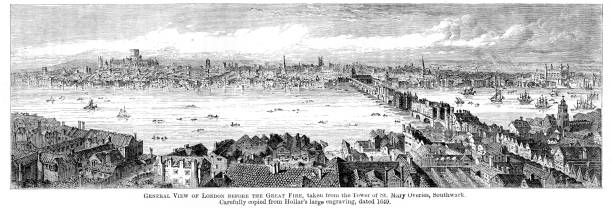
Vintage engraving of London, England, before the Great Fire. From the Tower of St Mary Overies, Southwark, 1649

Protected view of London. Royal St James Park view to Horse Guards Parade Palace of Whitehall in London

Scanned directly from 'Old and New London - Its History, its people and its places', published by Cassell, Petter, Galpin & Co. 1878.

Historic engraving from 1876 showing the Tower of London in 1690.

Vintage engraving of People fleeing the Great Fire of London. The Great Fire of London was a major conflagration that swept through the central parts of the English city of London, from Sunday, 2 September to Wednesday, 5 September 1666.

Vintage illustration London Conduit, water fountain, and water-carriers, 17th Century

Vintage engraving of the old London Bridge
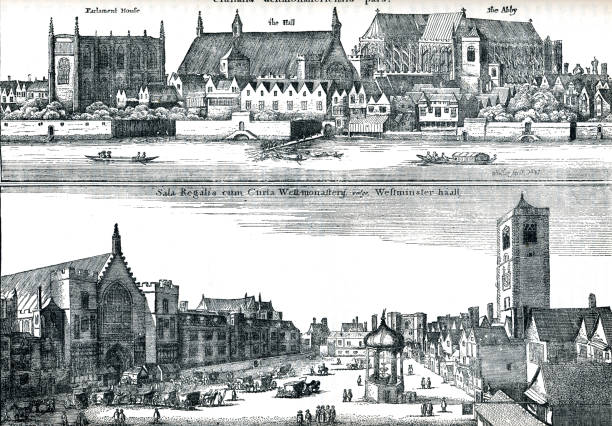
Westminster Abbey and other buildings in Whitehall near River Thames
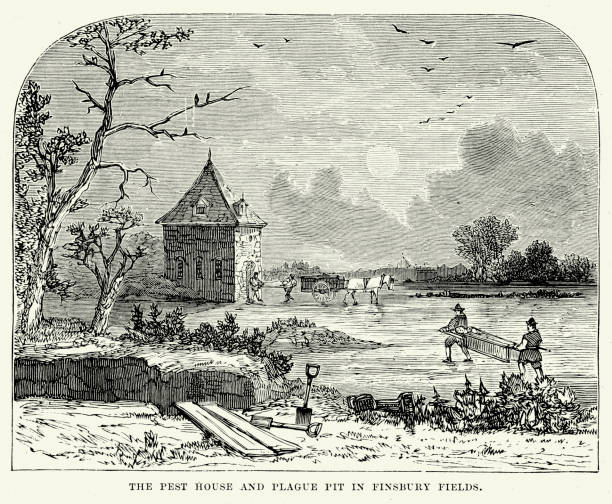
The pest house and Plague Pit in Finsbury Fields during the Great Plague of London 1665 to 1666

Illustration published in 1891, out of copyrightIsaac Newton (1642-1727) is in the President's chair.

English costumes, London 1640: Citizen woman. Lady on the street. Wife of the Lord Mayor. Matron (left to right). Hand colored wood engraving, published ca. 1880.

A view from the South Bank of the River Thames in London towards the Westminster Parliament House, Westminster Hall and Westminster Abbey. Copied from an engraving by Wenceslaus Hollar (1607-1677). From “A Brief Account of Westminster Abbey” by W.J. Loftie B.A., F.S.A., with illustrations by Herbert Railton. Published by Seeley & Co. Limited, Essex Street, Strand, London, in 1894.

Oliver Cromwell dissolving the Long Parliament

"Scanned directly from 'Old and New London - Its History, its people and its places', published by Cassell, Petter, Galpin & Co. 1878. Illustration of Tomkins and Challoner being led to the gallows. In the second year of the war between King and Parliament, the Royal successes at Bath, Bristol, and Cornwall, as well as the partial victory at Edgehill, had roused the party and chilled many adherents of the Puritans. The distrust of Pym and his friends soon broke out into a reactionary plot, in which Waller, the poet, was dangerously mixed up. The chief conspirators were Tomkins and Challoner, the former Waller's brother-in-law, a gentleman living in Holborn, near the end of Fetter Lane, and a secretary to the Commissioners of the Royal Revenues. Tomkins and Challoner were hung at the Holborn end of Fetter Lane in 1643."

Vintage engraving showing a scene from 17th Century London England. The Old Medieval London Bridge covered in housing and shops.

The Falcon Tavern (The Falcon) in Battersea, London, England from the Works of William Shakespeare. Vintage etching circa mid 19th century. The palace was demolished in the 17th century.

"Two 17th Century 'country bumpkin's' or 'Yokel's' share a horse on the way the London, England."
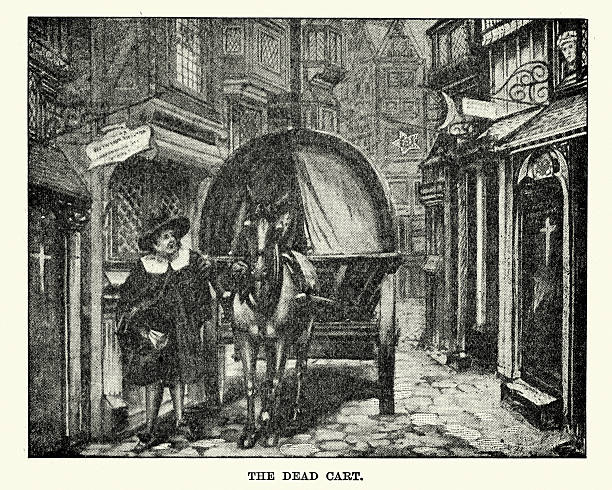
Vintage engraving of a dead cart collecting the bobies of plague victims during the Great Plague of London. The Great Plague, lasting from 1665 to 1666, was the last major epidemic of the bubonic plague to occur in England.

"Plan of London of the Great fire of 1666 showing which parts had been burnt down. The Great Fire of London was a major conflagration that swept through the central parts of the English city of London, from Sunday, 2 September to Wednesday, 5 September 1666. It consumed 13,200 houses, 87 parish churches, St. Paul's Cathedral, and most of the buildings of the City authorities. It is estimated that it destroyed the homes of 70,000 of the City's ca. 80,000 inhabitants."

Vintage illustration of John Keeling's 17th Century early pump fire engine

Illustration showing Whitehall Palace and the Royal Park of St James Westminster Abbey London

Vintage engraving of Titus Oates in the Pillory. Titus Oates (15 September 1649 – 12/13 July 1705), also called Titus the Liar, was an English perjurer who fabricated the Popish Plot, a supposed Catholic conspiracy to kill King Charles II.

Vintage engraved illustration - Palace of Westminster or Houses of Parliament (London) seen from across the River Thames in the 17th century

Historical view of the Bank of England in London. United Kingdom. Founded on July 27, 1694. Steel engraving, published in 1836.

Vintage engraving of King Charles II entering London on his restoration to the throne.

The Houses of Parliament London 1689Original edition from my own archivesSource : Picture Magazine Vol.1 1893
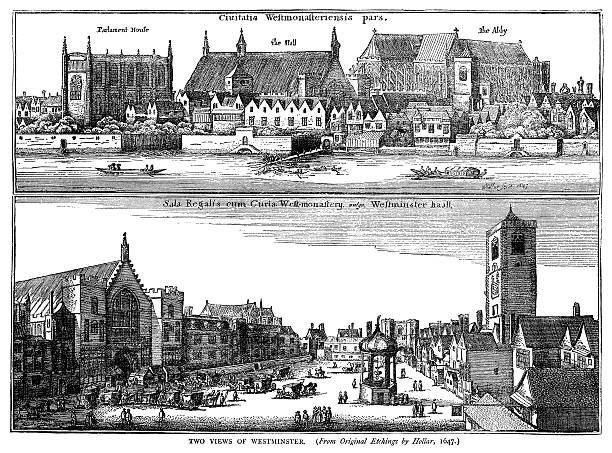
Two views of Westminster by Wenceslaus Hollar (Václav Hollar), 1647. A Bohemian etcher, he was born in Prague and died in London in 1677: he was buried in St Margaret’s Church, Westminster. From “Old & New London” by Walter Thornbury and Edward Walford, published in parts by Cassell & Co, London from 1873-1888. These illustrations are from parts 30-35 inclusive.

Lambeth Palace, on the South bank of the River Thames in London, as it appeared in 1688. The ‘Revolution’ mentioned on the caption refers to the overthrow of the king, James II, by a union of English Parliamentarians which resulted in the joint monarchy of William III (Prince of Orange) and his wife Mary II, eldest daughter of James II. From “The Sunday at Home: A Family Magazine for Sabbath Reading, 1888”. Published in London by the Religious Tract Society.

Illustration of the Great Fire of London , 2 September to Wednesday, 5 September 1666

William Shakespeare's plays were performed at the Globe Theater in London, England. It was destroyed by fire June 29, 1613. Illustration published 1863. Source: Original edition is from my own archives. Copyright has expired and is in Public Domain.

Illustration of a William III, 14.11.1650 - 19.3.1702, King of England

Royal procession to Westminster Abbey through the streets of the City of Westminster in London, England in the 17th century from the Works of William Shakespeare. Vintage etching circa mid 19th century.

Holbein Gate and Banqueting House, Whitehall on Whitehall Street in the City of Westminster in London, England in the 17th century from the Works of William Shakespeare. Vintage etching circa mid 19th century. Holbein Gate was demolished in the 18th century.

Vintage engraving of the Trial of King Charles the First. The trial began on 20 January 1649 in Westminster Hall, with a moment of high drama. After the proceedings were declared open, Solicitor General John Cook rose to announce the indictment; standing immediately to the right of the King, he began to speak, but he had uttered only a few words when Charles attempted to stop him by tapping him sharply on the shoulder with his cane and ordering him to Hold.
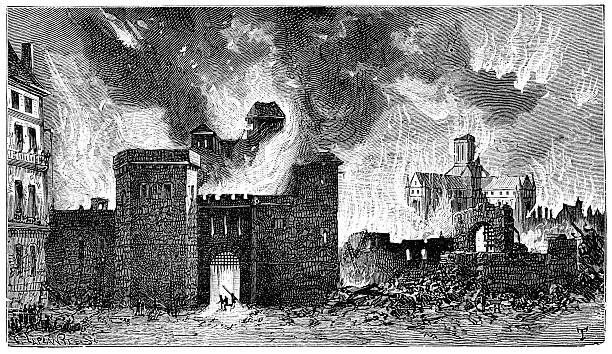
"Vintage engraving from 1878 of the Great Fire of London. The Great Fire of London was a major conflagration that swept through the central parts of the English city of London, from Sunday, 2 September to Wednesday, 5 September 1666. The fire gutted the medieval City of London inside the old Roman City Wall."

St Paul's Cathedral in London rebuilt in limestone and baroque style after the Great Fire of 1666 is an Anglican cathedral, the seat of the Bishop of London and the mother church of the Diocese of London.

Very Rare, Beautifully Illustrated Antique Engraving of Lord Falkland, English Victorian Engraving, 1806. Source: History of England from the Invasion of Julius Caesar to the Revolution in 1688. Original edition from my own archives. Copyright has expired on this artwork. Digitally restored.

Holland House, originally known as Cope Castle, was one of the first great houses built in Kensington in London, and is situated in Holland Park.,Holland House was built in 1605 for Sir Walter Cope. It presided over a 500 acres (200 ha; 0.78 sq mi) estate.

Royal Hospital Chelsea on Royal Hospital Road in Chelsea, London, is a retirement home for veteran British soldiers. It is located over 66 acres and was founded by Charles II in 1682 as a nursing home for veterans. Sir Christopher Wren designed the chapel and the Great Hall.

Illustration published in 1891, out of copyrightThe Duke's Theatre, sometimes called the Queen's Theatre, in Dorset Gardens, City of London. Restoration plays seen by King Charles II and Samuel Pepys.
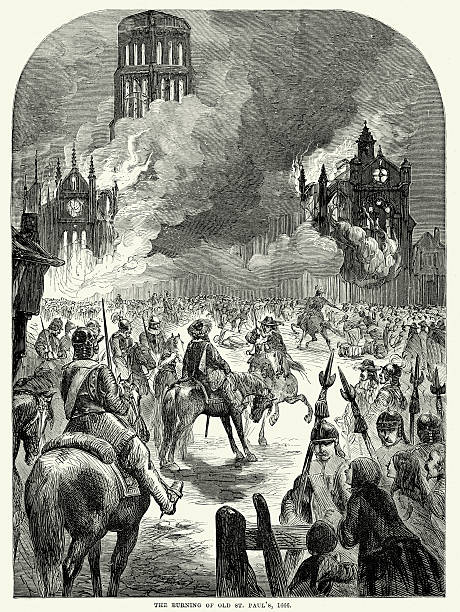
Burning of Old St Paul's during the Great Fire of London. 1666
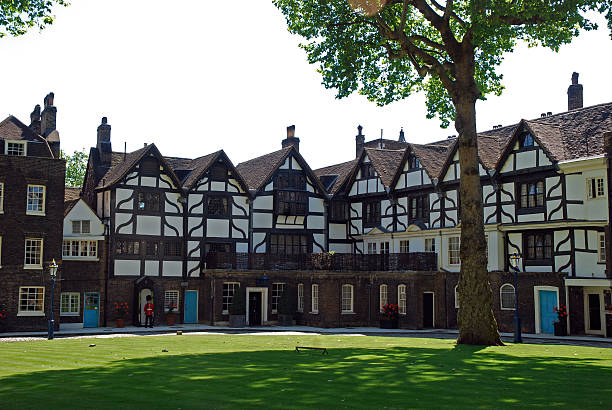
"Half timber buildings around a green, within the Tower of London."

The Swan with Two Necks a coaching inn in the City of London.Until the arrival of the railways, was one of the principal departure points for travel to the north of England from London. Its site was given over in the early 1860s to a goods and parcels depot for a firm of railway agents and carriers.
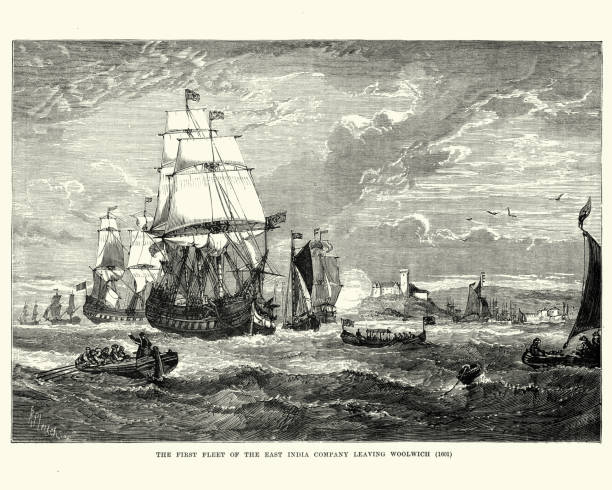
Vintage engraving of the first fleet of the East India Company leaving Woolwich, 1601

Vintage engraved illustration - Plan of the city and suburbs of London in 1643

Vintage engraving of a streey during the Great Plague of London. The Great Plague, lasting from 1665 to 1666, was the last major epidemic of the bubonic plague to occur in England.

Vintage engraving of old St Paul's Cathedral burning during the Great Fire of London. The Great Fire of London was a major conflagration that swept through the central parts of the English city of London, from Sunday, 2 September to Wednesday, 5 September 1666. The fire gutted the medieval City of London inside the old Roman city wall.

Illustration of a Parliament building from the time of Charles I ,London in the 17th Century

Great Fire of London, England, in September 1666. 17th Century British History . Illustration published 1868. Source: Original edition is from my own archives. Copyright has expired and is in Public Domain.

Historical view of St Paul's Cathedral - an Anglican cathedral in London, England and one of the largest cathedrals in the world. Built in 1666 in the style of neoclassical baroque. Wood engraving, published in 1885.

3D Rendering Illustration of a Microscope designed and use by Robert Hooke in the middle of XVII century; with wooden bases and parts, mobile metal components, removable lenses, crystals & oil lamp.