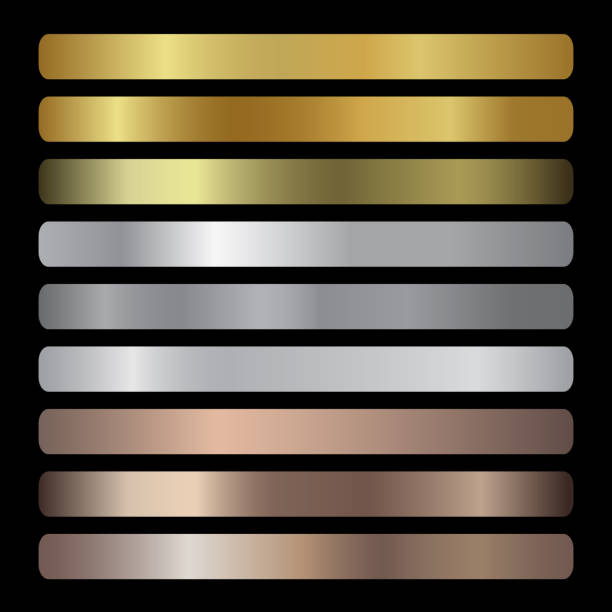
39,199 Bronze Metal Texture Images and Stock Photos

View bronze metal texture videos

Browse 39,100+ bronze metal texture stock photos and images available, or search for gold texture or bronze background to find more great stock photos and pictures.

Our creative library is free of AI-generated contentChoose your visuals with confidence knowing our creative library is free from AI-generated content, so your searches only return safe, high-quality visuals you can trust.
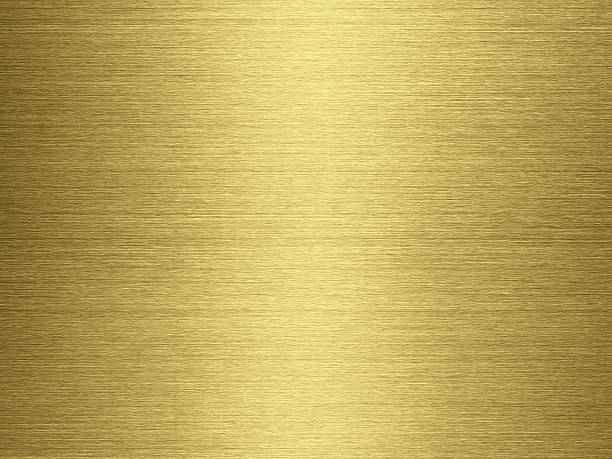
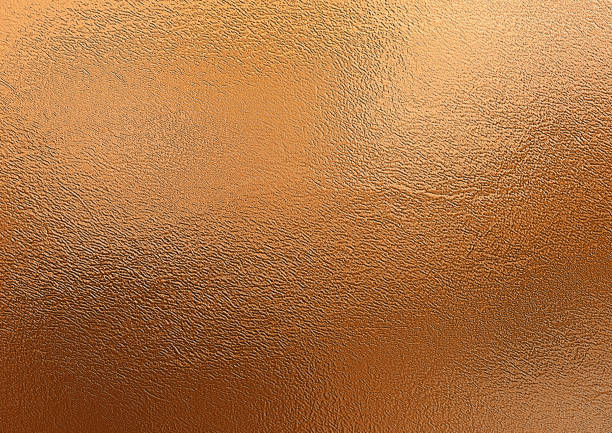
Grainy pearl gold foil texture noisy gradient golden bronze metallic luxury abstract background Grainy pearl gold metal foil texture noisy gradient golden bronze metallic luxury abstract background. Metallic gold, such as in paint, is often called goldtone or gold tone, or gold ground when describing a solid gold background. In heraldry, the French word or is used. In model building, the color gold is different from brass. A shiny or metallic silvertone object can be painted with transparent yellow to obtain goldtone, something often done with Christmas decorations. Bronze is an alloy consisting primarily of copper, commonly with about 12–12.5% tin and often with the addition of other metals and sometimes non-metals or metalloids. Gold leaf is gold that has been hammered into thin sheets (usually around 0.1 μm thick) by a process known as goldbeating, for use in gilding. Gold leaf is a type of metal leaf, but the term is rarely used when referring to gold leaf. The term metal leaf is normally used for thin sheets of metal of any color that do not contain any real gold. Gold leaf is available in a wide variety of karats and shades. The most commonly used gold is 22-karat yellow gold. Golden yellow is often called goldtone or gold tone, or gold ground when describing a gold background. Glitter is an assortment of flat, small, reflective particles that are precision cut and come in a variety of shapes, sizes, and colors. Glitter particles reflect light at different angles, causing the surface to sparkle or shimmer. bronze metal texture stock pictures, royalty-free photos & images

Grainy pearl gold metal foil texture noisy gradient golden bronze metallic luxury abstract background. Metallic gold, such as in paint, is often called goldtone or gold tone, or gold ground when describing a solid gold background. In heraldry, the French word or is used. In model building, the color gold is different from brass. A shiny or metallic silvertone object can be painted with transparent yellow to obtain goldtone, something often done with Christmas decorations. Bronze is an alloy consisting primarily of copper, commonly with about 12–12.5% tin and often with the addition of other metals and sometimes non-metals or metalloids. Gold leaf is gold that has been hammered into thin sheets (usually around 0.1 μm thick) by a process known as goldbeating, for use in gilding. Gold leaf is a type of metal leaf, but the term is rarely used when referring to gold leaf. The term metal leaf is normally used for thin sheets of metal of any color that do not contain any real gold. Gold leaf is available in a wide variety of karats and shades. The most commonly used gold is 22-karat yellow gold. Golden yellow is often called goldtone or gold tone, or gold ground when describing a gold background. Glitter is an assortment of flat, small, reflective particles that are precision cut and come in a variety of shapes, sizes, and colors. Glitter particles reflect light at different angles, causing the surface to sparkle or shimmer.
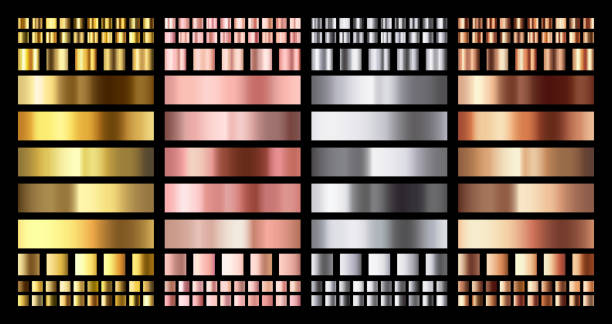
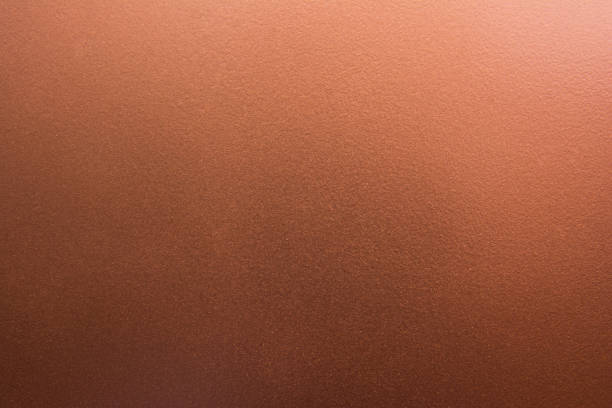
Grainy matte copper foil texture diffused gradient bronze color blurry abstract background banner Grainy matte copper foil texture diffused gradient bronze color blurry abstract background banner. Copper is a chemical element. It has the symbol Cu, and the atomic number 29. It is a soft, malleable, and ductile metal with very high thermal and electrical conductivity. A freshly exposed surface of pure copper has a pinkish-orange color. Copper is a brownish-orange color encompassing a range of shades that edge more red, more orange, and even more grey. Bronze is an alloy consisting primarily of copper, commonly with about 12–12.5% tin and often with the addition of other metals and sometimes non-metals or metalloids. Copper foil is a thin sheet of copper metal that is widely used in various applications due to its excellent electrical conductivity, malleability, and corrosion resistance. Color gradient specifies a range of position-dependent colors, usually used to fill a region. The colors produced by a gradient vary continuously with position, producing smooth color transitions. bronze metal texture stock pictures, royalty-free photos & images



Grainy matte copper foil texture diffused gradient bronze color blurry abstract background banner. Copper is a chemical element. It has the symbol Cu, and the atomic number 29. It is a soft, malleable, and ductile metal with very high thermal and electrical conductivity. A freshly exposed surface of pure copper has a pinkish-orange color. Copper is a brownish-orange color encompassing a range of shades that edge more red, more orange, and even more grey. Bronze is an alloy consisting primarily of copper, commonly with about 12–12.5% tin and often with the addition of other metals and sometimes non-metals or metalloids. Copper foil is a thin sheet of copper metal that is widely used in various applications due to its excellent electrical conductivity, malleability, and corrosion resistance. Color gradient specifies a range of position-dependent colors, usually used to fill a region. The colors produced by a gradient vary continuously with position, producing smooth color transitions.

of100Next
Take any image from "not quite" to "just right"See how you can modify existing images — or generate entirely new ones — to your exact needs.
Discover Unlimited AI