
Santa Cruz, California, USA.
Browse 200+ desert cottontail rabbit stock photos and images available, or start a new search to explore more stock photos and images.

Sylvilagus audubonii. Common rabbit found around Arizona.

An adorable wild desert cottontail rabbit eating a prickly pear cactus flower bud in the Sonoran desert outside of Tucson, Arizona in the American Southwest. Green, brown and sandy colors along with white and black in this beautiful photograph.

Feeding on plants along the Gunnison River, a desert cottontail feeds in the Dominguez-Escalate National Conservation Area in western Colorado.

Cute wild rabbit sitting in newly fallen snow

Desert Cottontail. Taken at Camus NWR, Hamer, Idaho.

A desert cottontail preening along a trail in Costa Mesa, California.
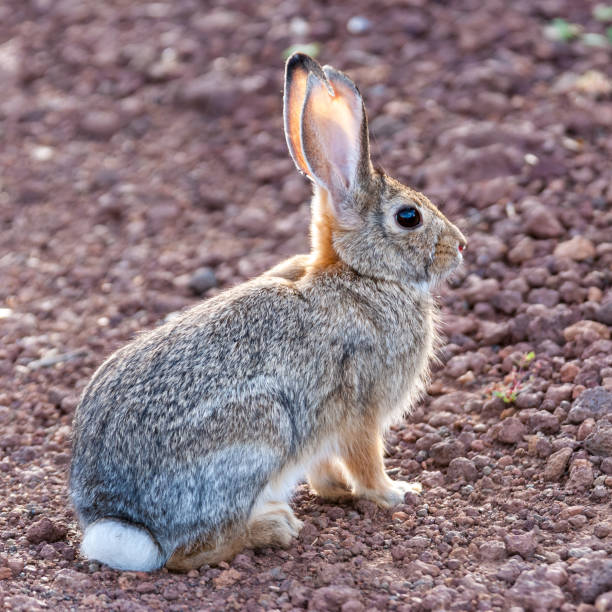
The Desert Cottontail (Sylvilagus audubonii) is a rabbit native to the American southwest from western Texas north to eastern Montana, and in northern and central Mexico. The cottontail gets its name from the grayish-brown tufted tail. The desert cottontail’s diet consists mainly of forbs and grasses. It can also eat many other plants including cacti. They can be seen foraging for their food in the early morning and evening. Since they get most of their water from plants or dew, they rarely need to drink. On windy days they remain in their burrows because the wind interferes with their ability to hear predators. Cottontails use burrows created by other mammals to give birth to their young. This desert cottontail was photographed near Walnut Canyon Lakes in Flagstaff, Arizona, USA.

Desert Cottontail, large ears beautifully visible, in golden morning sunlight in Saguaro National Park, West Division, near Golden Gate Road.

Adorable baby desert cottontail bunny rabbit, Sylvilagus audubonii, peering out from the safety of a prickly pear cactus patch. Found in Pima County, Tucson, Arizona, USA.

Desert Cottontail Rabbit sitting in a patch of green grass with filtered sunlight
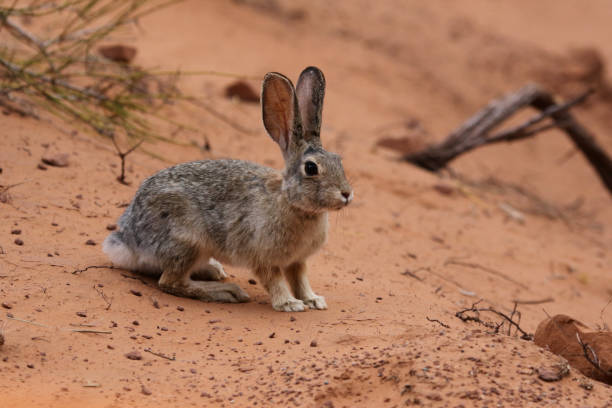
A Desert Cottontail (Sylvilagus audubonii) sitting in the sand in Arches National Park, Utah.

The Desert Cottontail (Sylvilagus audubonii) is a rabbit native to the American southwest from western Texas north to eastern Montana, and in northern and central Mexico. The cottontail gets its name from the grayish-brown tufted tail. The desert cottontail’s diet consists mainly of forbs and grasses. It can also eat many other plants including cacti. They can be seen foraging for their food in the early morning and evening. Since they get most of their water from plants or dew, they rarely need to drink. On windy days they remain in their burrows because the wind interferes with their ability to hear predators. Cottontails use burrows created by other mammals to give birth to their young. This desert cottontail was photographed by the Agate House Trail in Petrified Forest National Park near Holbrook, Arizona, USA.

The Desert Cottontail (Sylvilagus audubonii) is a rabbit native to the American southwest from western Texas north to eastern Montana, and in northern and central Mexico. The cottontail gets its name from the grayish-brown tufted tail. The desert cottontail’s diet consists mainly of forbs and grasses. It can also eat many other plants including cacti. They can be seen foraging for their food in the early morning and evening. Since they get most of their water from plants or dew, they rarely need to drink. On windy days they remain in their burrows because the wind interferes with their ability to hear predators. Cottontails use burrows created by other mammals to give birth to their young. This desert cottontail was photographed near Walnut Canyon Lakes in Flagstaff, Arizona, USA.

An adorable wild desert cottontail rabbit sitting on the sand and grooming their coat in front of native prickly pear cactus in the Sonoran desert outside of Tucson, Arizona in the American Southwest. Green, brown and sandy colors along with white and black in this beautiful photograph.

An adorable wild desert cottontail rabbit sitting on the sand in front of native prickly pear cactus in the Sonoran desert outside of Tucson, Arizona in the American Southwest. Green, brown and sandy colors along with white and black in this beautiful photograph.

Desert cottontail, also known as Audubon's cottontail, with a bug above its nose sits among mesquite tree's fallen bean pods in the American Southwest
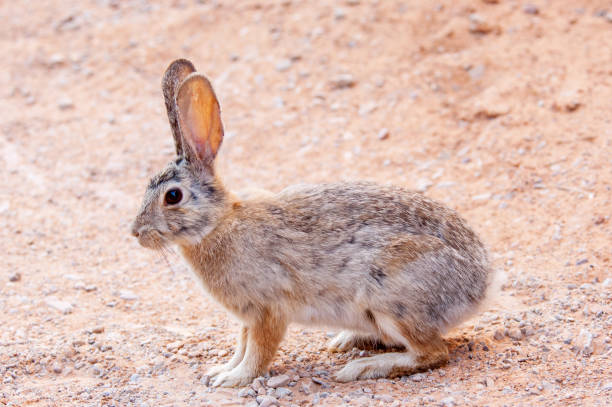
Desert cottontail rabbit on the sandstone ground of Canyonlands National park, Utah, USA

Desert cottontail rabbit at the Running Deer Natural Area in Fort Collins, Colorado

Audubon's Cottontail rabbit backlit by morning glow stands and nibbles upward at shrub leaves at Gilbert Water Ranch in Arizona

A cottontail rabbit peaking through scrub while eating.

A Desert Cottontail (Sylvilagus audubonii) sitting in the sand in Arches National Park, Utah.

A close-up shot of a desert cottontail rabbit nestled amongst dry, light brown grasses. The rabbit's fur is a mix of gray and brown, blending seamlessly with its surroundings. Its ears are erect, and its eyes are focused, suggesting alertness.

Side profile portrait of cute wild desert cottontail rabbit with big ears and green plants

Desert Cottontail rabbit (Sylvilagus audubonii, Audubon’s Cottontail) front view close-up of face on brown dirt earth. Gray, tan, and white fur. Brown eyes. Whiskers. Yellow, orange, and green detritus. Horizontal. Copy space. No people. Mood: thoughtful, still, quiet, attentive, listening, tense.

"A baby desert cottontail, Sylvilagus audobonii, on a green lawn."

A young desert cottontail, Silvilagus audobonii.

A wild rabbit eats on the lush foliage during spring in Southern California.

A wild rabbit enjoys the spring foliage of Southern California.

A Desert Cottontail rabbit (Sylvilagus audubonii) blends in while still with the rocky ground at Dinosaur National Monument, but is ready to spring away at any moment.

A desert cottontail, shot in Arizona, USA

A Desert Cottontail rabbit (Sylvilagus audubonii) looks toward the camera from its hiding spot amid the scrub brush at Dinosaur National Monument.

Side profile portrait of cute wild desert cottontail rabbit with big ears and green plants

The Desert Cottontail (Sylvilagus audubonii) is a rabbit native to the American southwest from western Texas north to eastern Montana, and in northern and central Mexico. The cottontail gets its name from the grayish-brown tufted tail. The desert cottontail’s diet consists mainly of forbs and grasses. It can also eat many other plants including cacti. They can be seen foraging for their food in the early morning and evening. Since they get most of their water from plants or dew, they rarely need to drink. On windy days they remain in their burrows because the wind interferes with their ability to hear predators. Cottontails use burrows created by other mammals to give birth to their young. This desert cottontail was photographed near Walnut Canyon Lakes in Flagstaff, Arizona, USA.

A desert cottontail rabbit in a desert scene in Henderson, Nevada

Desert Cottontail rabbit sitting in a patch of fresh green grass at the Big Morongo Canyon Preserve in Morongo Valley, California.

An adorable wild desert cottontail rabbit sitting for a close up portrait on the sand in front of native prickly pear cactus in the Sonoran desert outside of Tucson, Arizona in the American Southwest. Green, brown and sandy colors along with white and black in this beautiful photograph.

An adorable wild desert cottontail rabbit sitting in the middle of native prickly pear cactus in the Sonoran desert outside of Tucson, Arizona in the American Southwest. Green, brown and sandy colors along with white and black in this beautiful photograph.

The Desert Cottontail (Sylvilagus audubonii) is a rabbit native to the American southwest from western Texas north to eastern Montana, and in northern and central Mexico. The cottontail gets its name from the grayish-brown tufted tail. The desert cottontail’s diet consists mainly of forbs and grasses. It can also eat many other plants including cacti. They can be seen foraging for their food in the early morning and evening. Since they get most of their water from plants or dew, they rarely need to drink. On windy days they remain in their burrows because the wind interferes with their ability to hear predators. Cottontails use burrows created by other mammals to give birth to their young. This desert cottontail was photographed by the Agate House Trail in Petrified Forest National Park near Holbrook, Arizona, USA.

A Desert Cottontail rabbit against a desert scene in Henderson, Nevada

A Desert Cottontail rabbit against a desert scene in Henderson, Nevada

A desert cottontail rabbit in a desert scene in Henderson, Nevada

A desert cottontail rabbit in a desert scene in Henderson, Nevada

A desert cottontail rabbit in a desert scene in Henderson, Nevada

An adorable wild desert cottontail rabbit sitting for a close up portrait on the sand in front of native prickly pear cactus in the Sonoran desert outside of Tucson, Arizona in the American Southwest. Green, brown and sandy colors along with white and black in this beautiful photograph.


