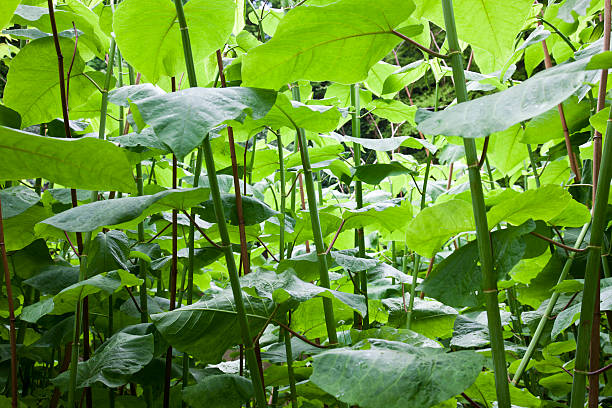
Waxy clinch perennial plant Reynoutria japonica, green perennial strongly branching perennial can reach a height of up to 3 m
Browse 930+ japanese knotweed stock photos and images available, or search for japanese knotweed roots or japanese knotweed spring to find more great stock photos and pictures.
Waxy clinch perennial plant Reynoutria japonica, green perennial strongly branching perennial can reach a height of up to 3 m
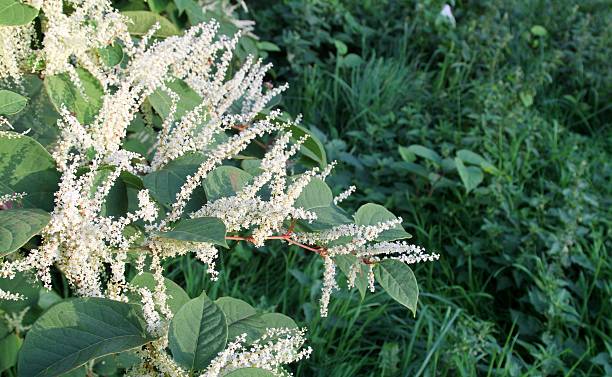
japanese knotweed flowering, invasive weed ,classified as controlled waste under the Environmental Protection Act 1990, it grows from tiny fragments of rhizomes the underground network of stems and roots , it spreads easily and can work it's way through concrete and tarmac , its roots can go down up to 3m deep. Here in the UK the having this weed in your garden can lower the value of your house by several thousands.

A view of a large area of Japanese knotweed plants

In summer, the perennial plant Reynoutria grows in nature

Fallopia japonica ( Japanese knotweed ) flowers. Polygonaceae perennial plants. Small white flowers bloom from summer to autumn, and young shoots in early spring are edible.

stems and leaves of Japanese Knotweed

In summer, the perennial plant Reynoutria grows in nature
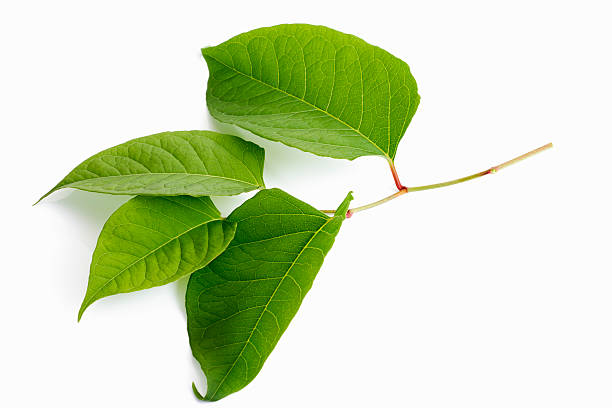
Blue Japanese Knã¶terich, Perennials (Fallopia japonica, syn. Reynoutria japonica)
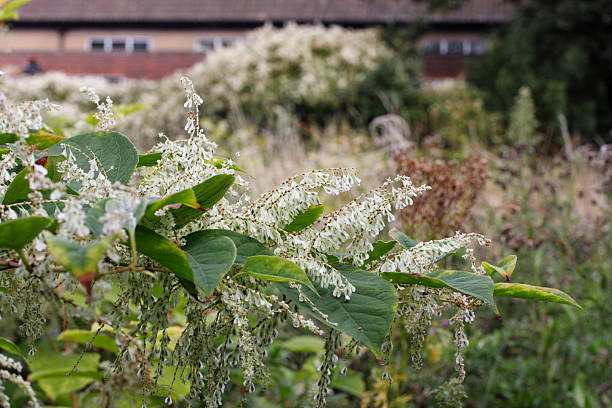
Japanese knotweed ((Fallopia japonica)) was introduced to Britain in the 19th century as an ornamental plant, and won a gold medal at a prestigious flower show under its previous name of (Polygonum cuspidatum). However, once planted, this knotweed spread and refused to go away. Beyond the Far East, its homeland, Japanese knotweed has no natural biological enemies to check its spread. On the other hand, in Japan, at least 30 species of insect and 6 species of fungi live on the plant and restrict its spread. In 2004, a UK government review of non-native species stated the costs involved in eradication would be at least GBP1.56bn. Some other ecology-related photographs: .

Warning sign on a site of Japanese Knotweed to prevent the dead shoots being cut. No people.

Japanese knotweed being sprayed to kill of the weed - horticulturist spraying the affected area

Large inflorescences of Sakhalin knotweed (Reinutria, Sakhalin buckwheat, Siberian bamboo) close-up.

Japanese Knot weed highly invasive plant very difficult to remove

The fast-growing, invasive, plant Japanese Knotweed or 'or as it is also known, Polygonum cuspidatum or Fallopia japonica. No people.

an Asian species of flowering plant in the family, including Russian vine, Bukharan fleece, Chinese vine, mile a minute, and silver lace. It comes from Asia and grows wild as an introduced, baldschuanica, asian knotweed, buchanan fleece, fallopia japonica, polygonaceae, asteraceae, donkey rhubarb, aubertii, regel,

Japanese Knotweed is an invasive plant difficult to eradicate. It can damage infrastructure.

Reynoutria japonica. Common names include Japanese knotweed and Asian knotweed. spring sprouts

Reynoutria japonica or Japanese knotweed growing in the forest in Skane, Sweden as an invasive exotic weed.

Japanese knotweed being sprayed to kill of the weed - horticulturist spraying the affected area

Blooming Japanese knotweed branch on a table
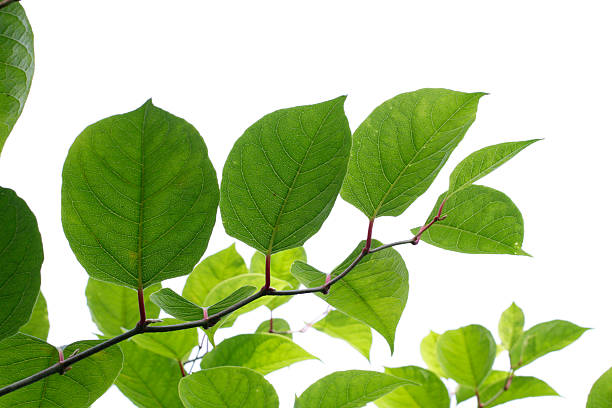
Japanese knotweed ((Fallopia japonica)) was introduced to Britain in the 19th century as an ornamental plant, and won a gold medal at a prestigious flower show under its previous name of (Polygonum cuspidatum). However, once planted, this knotweed spread and refused to go away. Beyond the Far East, its homeland, Japanese knotweed has no natural biological enemies to check its spread. On the other hand, in Japan, at least 30 species of insect and 6 species of fungi live on the plant and restrict its spread. In 2004, a UK government review of non-native species stated the costs involved in eradication would be at least GBP1.56bn. This photograph is taken in Surrey, UK, in July. The white flowers appear later. Some other ecology-related photographs: .
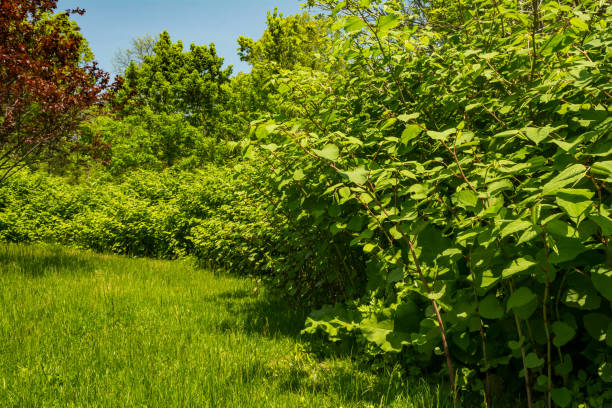
Japanese Knotweed invading wetlands in New England.

Freshly growing clump of invasive Japanese Knotweed in early Spring.

Japanese Knotweed spraying by a horticulturist to kill plant - wearing mask and gloves

Japanese Knotweed growing exclusively by the side of a local river. Close-up and well focussed.

Fresh japanese knotweed or Reynoutria japonica leaves and flowers on a wooden table

Japanese knotweed is considered an invasive species in Denmark and has managed to exploit a niche where it can reproduce rapidly with relatively little pressure. The knotweed shades out the natural vegetation and diminishes the landscape and recreational values when it transforms open areas into dense, impenetrable growth. It spreads quickly and can produce 7-meter-long root runners in a year. Therefore, efforts are made to combat it both locally and nationally.

Waxy clinch perennial plant Reynoutria japonica, green perennial strongly branching perennial can reach a height of up to 3 m

Shot of white blossoming small flowers. Koenigia Alpina.

Blooming Giant Knotweed plant on a black background

This lovely flowering plant featuring bushy white blossoms, are considered by many in the United States and an invasive species and a pest.

Blossoms of the Japanese Knotweed (Fallopia japonica), an invasive plant species in Europe.

Japanese Knotweed plant is very invasive and difficult to eradicate.

Close up view of the invasive perennial plant Japanese knotweed or Fallopia Japonica

Japanese knotweed is a plant with extremely high reproductive power that seeds sprout and spread, and soon grows rhizomes and forms communities in roadside and wasteland.

A clump of Japanese Knotweed (Reynoutria japonica, aka Fallopia japonica, aka Polygonum cuspidatum), a highly invasive plant, growing at the side of the coastal road through Craighouse, Isle of Jura, Scotland.

In summer, the perennial plant Reynoutria grows in nature

Reynoutria japonica or Japanese knotweed along the river Hollandsche IJssel as an invasive exotic weed in the Netherlands

Japanese knotweed being injected to kill off the weed - horticulturist injecting the stem just above the ground

The Japanese Knotweed plant,an invasive weed that is hard to eradicate.

Japanese knotweed or Reynoutria japonica tincture in a glass bottle

Japanese knotweed sproutShoots of tiger caneKnotweedThe Japanese knotweed is famous for being brought from Nagasaki to Europe for ornamental purposes by Siebold.Japanese knotweed, a species of western Japan, out of the three strains of Japan.Knotweed is famous for being brought from Nagasaki to Europe for ornamental purposes by Siebold.The western Japan of the three strains of the Japan.

The invasive, plant Japanese Knotweed or as it is also known, Polygonum cuspidatum or Fallopia japonica growing through metal railings in front of a wall. No people.

Reynoutria japonica foliage close up

One green reynoutria tree leaf on light green background, detailed macro close up photo of natural reynoutria japonica leaf. Single leaf of reynoutria tree isolated object on greenish background

A clump of Japanese Knotweed, Fallopia japonica, aka Reynoutria japonica, aka Polygonum cuspidatum ,a plant species which is extremely invasive in the UK.