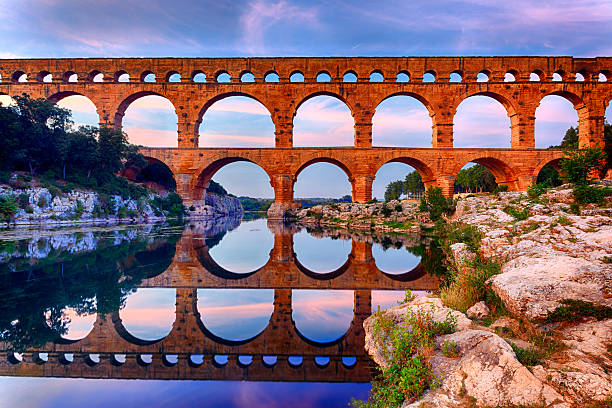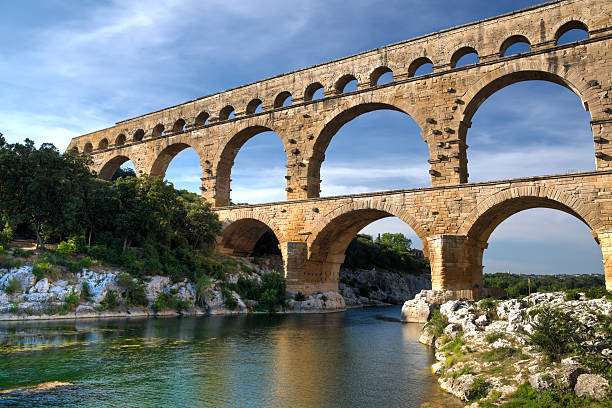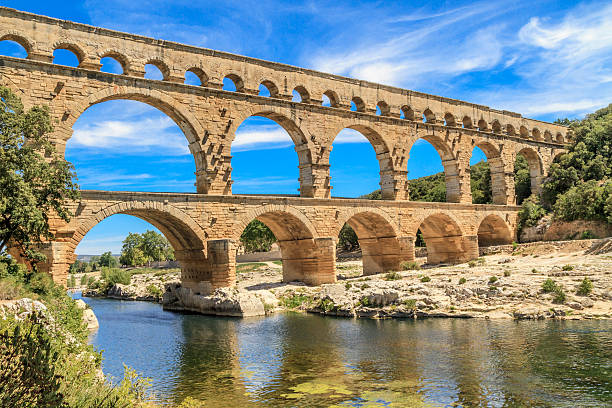
Pont du Gard is an old Roman aqueduct near Nimes in Southern France
Browse 15,000+ roman aqueduct stock photos and images available, or search for appian way or great wall of china to find more great stock photos and pictures.
Pont du Gard is an old Roman aqueduct near Nimes in Southern France

Les Ferreres Aqueduct, also known as Pont del Diable. A part of the Roman aqueduct built to supply water to the ancient city of Tarraco - now Tarragona, Spain
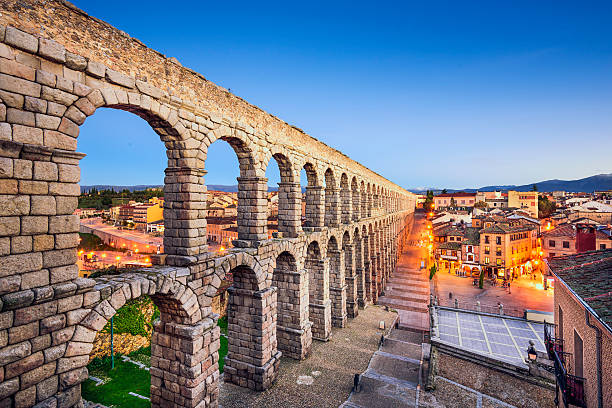
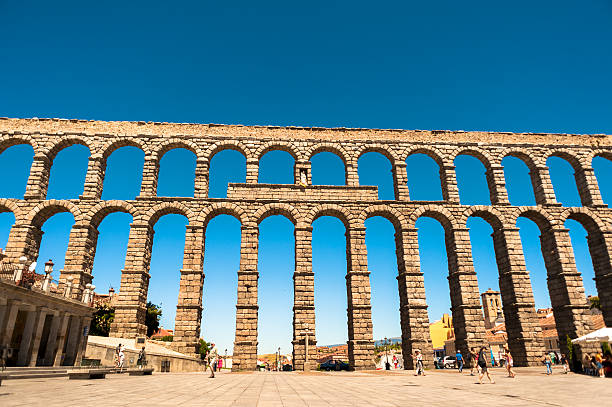
Segovia, Spain at the ancient Roman aqueduct.
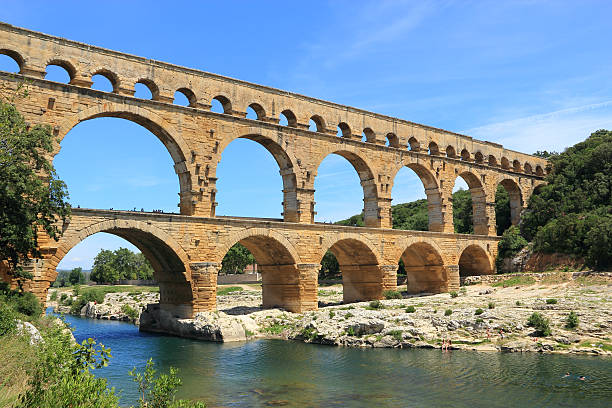
The famous Pont du Gard, near Nimes, France. This bridge is an Unesco World Heritage site.
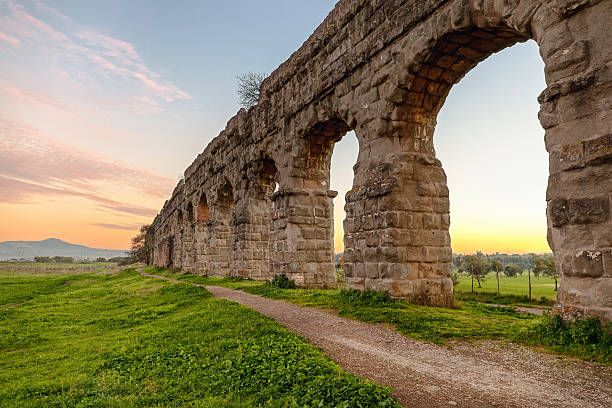
Arches of an ancient Roman aqueduct, made of blocks of tufa. A path runs along the property in a green park in the outskirts of Rome.

Segovia, Spain at the ancient Roman aqueduct.

The Pont du Gard, a Roman aqueduct near Nîmes

View from below the Roman aqueduct in the city of Segovia, Castilla Leon in Spain.

Parco degli Acquedotti, Aqua Claudia, Rome Italy

Vintage engraving of a Ancient Roman Aqueduct

Vintage engraving of Aqueducts. The Aqua Claudia, an aqueduct of ancient Rome. The Campagna of Rome, and at Metz on the Moselle.
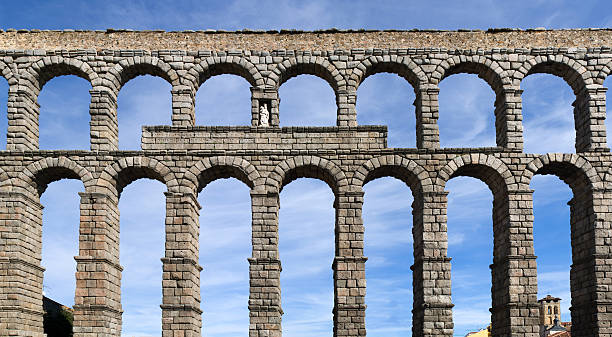
The Aqueduct of Segovia (or more precisely, the aqueduct bridge) is one of the most significant and best-preserved monuments left by the Romans on the Iberian Peninsula. It is among the most important symbols of Segovia, as is evidenced by its presence on the city's coat of arms.
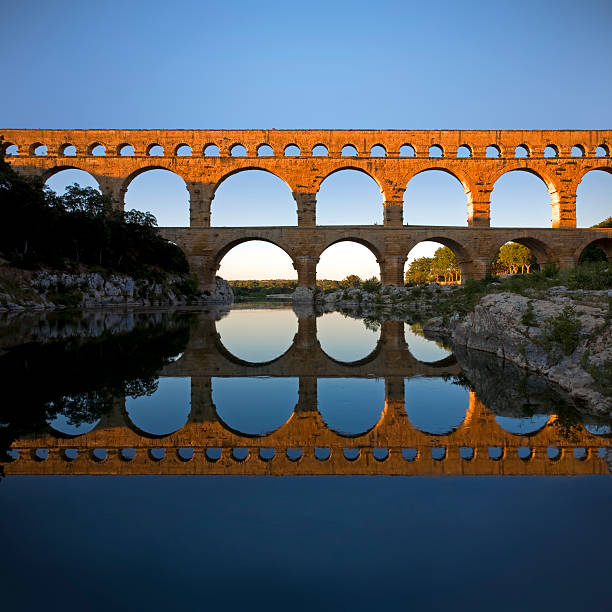
Roman aqueduct at Pont du Gard, Provence, France.

view of the roman aqueduct Pont del Diable, Tarragona, Spain

The photo is HDR (high dynamic range) obtained by combining several images with different exposure time. The Pont du Gard is a notable ancient Roman aqueduct bridge that crosses the Gard River in southern France. It is part of a 50 km (31 mi) long aqueduct that runs between Uzes and Nimes in the South of France.

photographed from a book titled the 'National Encyclopedia', published in London in 1881. Copyright has expired on this artwork. Digitally restored.

The beautiful Segovia Aqueduct, UNESCO World Heritage site, under the milky way.

Roman architecture: 1 - 2) Arena of Nîmes (exterior view and floor plan); 3) Aqua Claudia (52 AD), Rome; 4 - 6) House of Pansa in Pompeii with floor plan, longitudinal average, and inside view (visual reconstruction); 7) Arch of Constantine (built 312 - 315 AD), Rome; 8 - 9) Castel Sant'Angelo with floor plans, Rome (visual reconstruction after Borgatti); 10) Baths of Caracalla (inside view, visual reconstruction, 216 AD); 11) Diocletian's Palace (UNESCO World Heritage Site), view of the Peristyle (305 AD), Split, Croatia; 12) Diocletian's Palace, facade detail. Wood engravings, published in 1897.

Travel destination: Roman aqueduct of Segovia, or Acueducto de Segovia. Segovia, Spain

Remains of the ancient Roman aqueduct in ancient city Caesarea at sunset. Israel.

Red line Aqueduct of Segovia, Spain icon isolated on white background. Roman Aqueduct building. National symbol of Spain. Set icons in circle buttons. Vector.

The Aqueduct of Segovia (Spanish: Aqueduct de Segovia) is a Roman aqueduct in Segovia, Spain. It was built around the first century AD to channel water from springs in the mountains 17 kilometers (11 mi) away to the city's fountains, public baths and private houses, and was in use until 1973. Its elevated section, with its complete arcade of 167 arches, is one of the best-preserved Roman aqueduct bridges and the foremost symbol of Segovia, as evidenced by its presence on the city's coat of arms. The Old Town of Segovia, and the aqueduct, were declared a UNESCO World Heritage Site in 1985

Parco degli Acquedotti at sunset in Rome, Italy

Old traditional drinking fountain with cold water in Rome. Classic roman free water public fountain.City Fountain Closeup. Authentic corners of Rome. Iconic Roman Landmark. Travel to Rome.

"Set of five ancient Roman bridges - Aqua Claudia (Italy), Pont du Gard (France), Roman Bridge of Salamanca (Spain), etc. Illustrations published in Systematische Bilder-Gallerie, Karlsruhe und Freiburg (1839)."
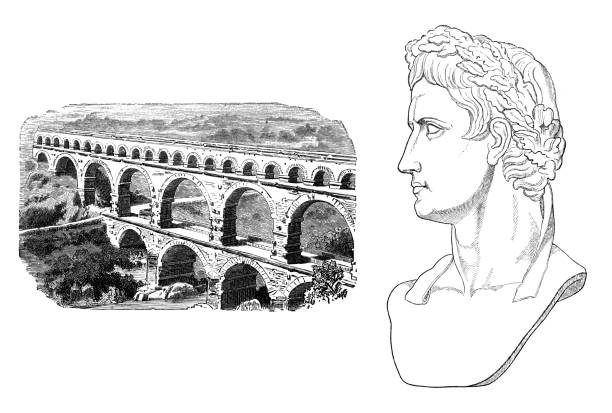
Caesar Augustus ( 23 September 63 BC - 19 August AD 14 ), also known as Octavian ( Latin: Octavianus ), was the first Roman emperor, reigning from 27 BC until his death in AD 14.Original edition from my own archivesSource : Mundo Ilustrado 1880

A simple line drawing of an Aqueduct. The illustration style of the image is minimalist, geometric, Modern and iconic, akin to a symbol or logo.

Park of the Aqueducts (Parco degli Acquedotti). Rome, Italy

Parco degli Acquedotti is an archeological public park in Rome, part of the Appian Way Regional Park, with monumental ruins of roman aqueducts.

Aqueduct structure colorful line ui icon. Roman water supply. Historic, heritage. Ancient bridge, archeology. Isolated vector duotone linear symbol. User interface element, pixel perfect
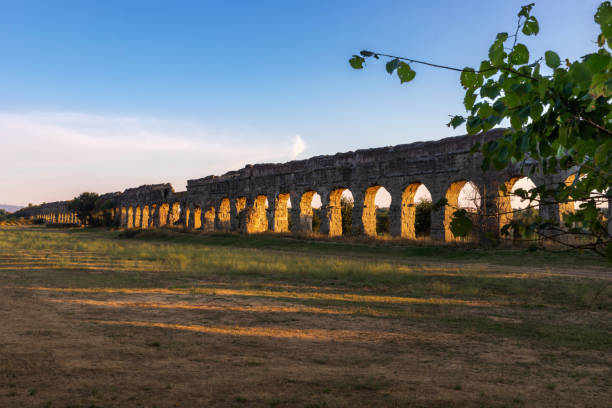
In the park of the ancient Roman aqueducts, the sun sets and the arches of the ancient Claudius aqueduct cast their shadow on the lawn in front.
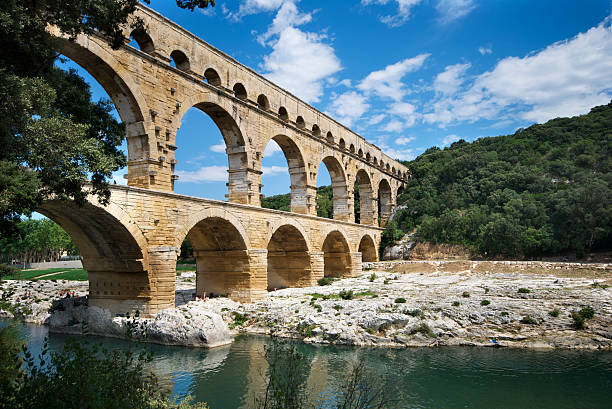
The Pont du Gard is a notable ancient Roman aqueduct bridge that crosses the Gard River in southern France. It is part of a 50 km (31 mi) long aqueduct that runs between Uz

Segovia, Spain at the ancient Roman aqueduct.

Plaza del Azoguejo and Roman Aqueduct of Segovia, one of the best-preserved elevated Roman Aqueducts and is a symbol of Segovia. Castile and Leon, Spain. Watercolor sketch style.

Pont du Gard, famous roman aqueduct in southern France near Nimes.

Vintage engraving of Ancient Roman architecture, Circus, Arch of Constantine, Pont du Gard near Nimes a Roman aqueduct bridge.

Naples, Italy - October 09, 2019: Ancient Roman Underground Cisterns (Pluvial Tanks).

Historical view of the Roman aqueduct of Segovia in Spain - one of the best-preserved elevated Roman. Wood engraving, published in 1893.

daytime view of the roman aqueduct (Segovia, Spain).

France, Pont Du Gard Landmark city isolated skyline vector illustration, travel landmark

An ancient high stone viaduct. Constructed of stone and bricks a huge bridge. Even the smallest details are visible. View in profile.

Vintage engraving of Architecture, Bridges, Pont du Gard Nimes, Brooklyn Bridge, Wooden bridge over the Cismone by Palladio

Ruins of old Roman Aqueduct. View Delikkemer Bridge at olive forest near Mediterranean sea coast. Near to Patara Ancient City at location Kalkan, Kas, Antalya. Popular travel destination in Turkey
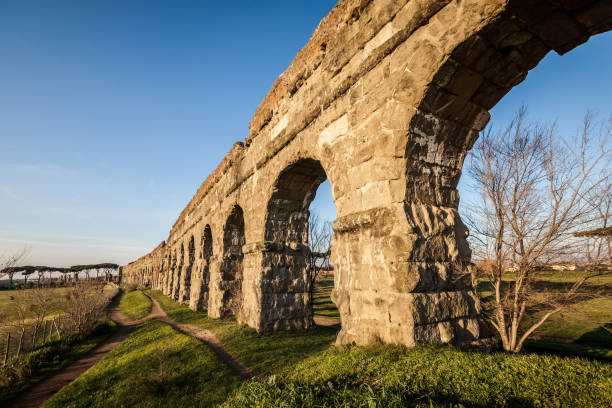
The Roman Aqueduct along the Appian Way, in Parco degli Acquedotti

The Roman Aqueduct along the Appian Way, in Parco degli Acquedotti

Historical view of the Pont du Gard – a Roman aqueduct in southern France, located in the municipality of Vers-Pont-du-Gard in the Gard department. The bridge is of impressive height and represents one of the best-preserved Roman aqueducts in France. The Pont du Gard is one of the most important surviving bridge structures of the ancient Roman world and one of the most important tourist attractions in southern France. UNESCO World Heritage Site since 1985. Steel engraving, published in 1880.