265 Rock Squirrel Photos Images and Stock Photos

View rock squirrel photos videos

Browse 260+ rock squirrel photos stock photos and images available, or start a new search to explore more stock photos and images.

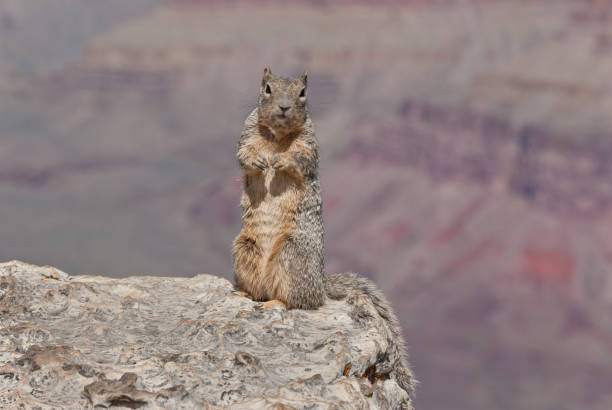
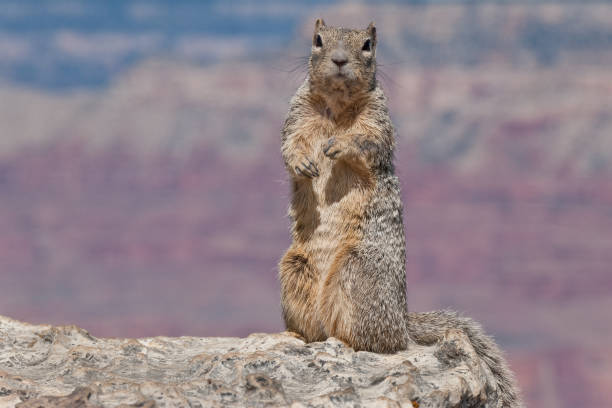
Rock Squirrel at Yavapai Point The Rock Squirrel (Spermophilus variegatus) is fairly large ground squirrel but can also be seen climbing boulders, rocks and trees. It is typically 17-21 inches long, with a bushy tail up to 8 inches long. Rock squirrels are grayish-brown, with some patches of cinnamon color. They have a light-colored ring around their eyes and pointed ears that project well above their heads. In the northern reach of their habitat, rock squirrels hibernate during the colder months of the year. In southern areas, rock squirrels may not hibernate at all. The diet of the rock squirrel is predominantly herbivorous, consisting mostly of leaves, stems and seeds. They may also eat some insects and other small animals. Because of high human visitation, rock squirrels have become the most dangerous animals at the national parks of the American Southwest. Rock squirrels attack more tourists at the Grand Canyon than any other wild animal. Attacks have become so common that park rangers have begun warning tourists about the dangers. This rock squirrel was photographed at Yavapai Point in Grand Canyon National Park, Arizona, USA. rock squirrel photos stock pictures, royalty-free photos & images

The Rock Squirrel (Spermophilus variegatus) is fairly large ground squirrel but can also be seen climbing boulders, rocks and trees. It is typically 17-21 inches long, with a bushy tail up to 8 inches long. Rock squirrels are grayish-brown, with some patches of cinnamon color. They have a light-colored ring around their eyes and pointed ears that project well above their heads. In the northern reach of their habitat, rock squirrels hibernate during the colder months of the year. In southern areas, rock squirrels may not hibernate at all. The diet of the rock squirrel is predominantly herbivorous, consisting mostly of leaves, stems and seeds. They may also eat some insects and other small animals. Because of high human visitation, rock squirrels have become the most dangerous animals at the national parks of the American Southwest. Rock squirrels attack more tourists at the Grand Canyon than any other wild animal. Attacks have become so common that park rangers have begun warning tourists about the dangers. This rock squirrel was photographed at Yavapai Point in Grand Canyon National Park, Arizona, USA.
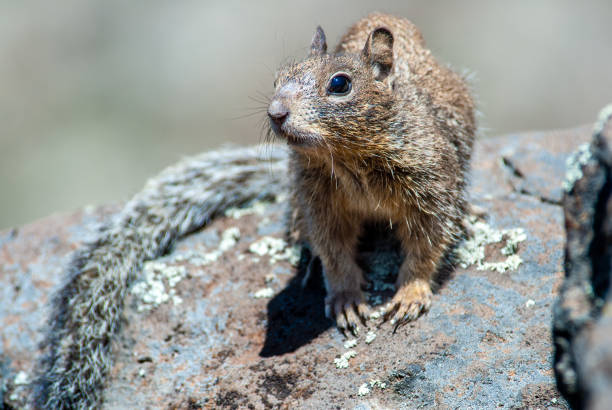
Rock Squirrel Standing on a Rock The Rock Squirrel (Otospermophilus variegatus) is a medium sized ground squirrel but can also be seen climbing boulders, rocks and trees. It is typically 8-10 inches long, with a bushy tail up to 8 inches long. Rock squirrels are grayish-brown, with some patches of cinnamon color.  They have a light-colored ring around their eyes and pointed ears that project well above their heads.  In the northern reach of their habitat, rock squirrels hibernate during the colder months of the year. In southern areas, rock squirrels may not hibernate at all.  These squirrels are diurnal animals that spend their days burrowed underground or hiding beneath bushes and rocks, only emerging to forage for food or to find mates.  The rock squirrel is omnivorous with its diet consisting mostly of leaves, stems and seeds.  They may also eat some insects and other small animals.  This rock squirrel was photographed on Campbell Mesa in the Coconino National Forest near Flagstaff, Arizona, USA. rock squirrel photos stock pictures, royalty-free photos & images
Rock Squirrel Standing on a Rock The Rock Squirrel (Otospermophilus variegatus) is a medium sized ground squirrel but can also be seen climbing boulders, rocks and trees. It is typically 8-10 inches long, with a bushy tail up to 8 inches long. Rock squirrels are grayish-brown, with some patches of cinnamon color. They have a light-colored ring around their eyes and pointed ears that project well above their heads. In the northern reach of their habitat, rock squirrels hibernate during the colder months of the year. In southern areas, rock squirrels may not hibernate at all. These squirrels are diurnal animals that spend their days burrowed underground or hiding beneath bushes and rocks, only emerging to forage for food or to find mates. The rock squirrel is omnivorous with its diet consisting mostly of leaves, stems and seeds. They may also eat some insects and other small animals. This rock squirrel was photographed on Campbell Mesa in the Coconino National Forest near Flagstaff, Arizona, USA. rock squirrel photos stock pictures, royalty-free photos & images

The Rock Squirrel (Otospermophilus variegatus) is a medium sized ground squirrel but can also be seen climbing boulders, rocks and trees. It is typically 8-10 inches long, with a bushy tail up to 8 inches long. Rock squirrels are grayish-brown, with some patches of cinnamon color. They have a light-colored ring around their eyes and pointed ears that project well above their heads. In the northern reach of their habitat, rock squirrels hibernate during the colder months of the year. In southern areas, rock squirrels may not hibernate at all. These squirrels are diurnal animals that spend their days burrowed underground or hiding beneath bushes and rocks, only emerging to forage for food or to find mates. The rock squirrel is omnivorous with its diet consisting mostly of leaves, stems and seeds. They may also eat some insects and other small animals. This rock squirrel was photographed on Campbell Mesa in the Coconino National Forest near Flagstaff, Arizona, USA.

Our creative library is free of AI-generated contentChoose your visuals with confidence knowing our creative library is free from AI-generated content, so your searches only return safe, high-quality visuals you can trust.
Rock Squirrel at Yavapai Point The Rock Squirrel (Spermophilus variegatus) is fairly large ground squirrel but can also be seen climbing boulders, rocks and trees. It is typically 17-21 inches long, with a bushy tail up to 8 inches long. Rock squirrels are grayish-brown, with some patches of cinnamon color. They have a light-colored ring around their eyes and pointed ears that project well above their heads. In the northern reach of their habitat, rock squirrels hibernate during the colder months of the year. In southern areas, rock squirrels may not hibernate at all. The diet of the rock squirrel is predominantly herbivorous, consisting mostly of leaves, stems and seeds. They may also eat some insects and other small animals. Because of high human visitation, rock squirrels have become the most dangerous animals at the national parks of the American Southwest. Rock squirrels attack more tourists at the Grand Canyon than any other wild animal. Attacks have become so common that park rangers have begun warning tourists about the dangers. This rock squirrel was photographed at Yavapai Point in Grand Canyon National Park, Arizona, USA. rock squirrel photos stock pictures, royalty-free photos & images

The Rock Squirrel (Spermophilus variegatus) is fairly large ground squirrel but can also be seen climbing boulders, rocks and trees. It is typically 17-21 inches long, with a bushy tail up to 8 inches long. Rock squirrels are grayish-brown, with some patches of cinnamon color. They have a light-colored ring around their eyes and pointed ears that project well above their heads. In the northern reach of their habitat, rock squirrels hibernate during the colder months of the year. In southern areas, rock squirrels may not hibernate at all. The diet of the rock squirrel is predominantly herbivorous, consisting mostly of leaves, stems and seeds. They may also eat some insects and other small animals. Because of high human visitation, rock squirrels have become the most dangerous animals at the national parks of the American Southwest. Rock squirrels attack more tourists at the Grand Canyon than any other wild animal. Attacks have become so common that park rangers have begun warning tourists about the dangers. This rock squirrel was photographed at Yavapai Point in Grand Canyon National Park, Arizona, USA.

Animal Control Officer Removes Squirrel Las Cruces, New Mexico, USA - August 13, 2014: An animal control officer in Las Cruces, New Mexico removes a rock squirrel from a residence where it and other animals were beginning to burrow into and under rock wall construction, creating damage. Animal control officials take squirrels away from residential areas and miles into the desert where they are released into habitat more suitable for wild animals. Fortunately, in this part of the world there are still plenty of wide open spaces for wildlife to thrive. rock squirrel photos stock pictures, royalty-free photos & images

Las Cruces, New Mexico, USA - August 13, 2014: An animal control officer in Las Cruces, New Mexico removes a rock squirrel from a residence where it and other animals were beginning to burrow into and under rock wall construction, creating damage. Animal control officials take squirrels away from residential areas and miles into the desert where they are released into habitat more suitable for wild animals. Fortunately, in this part of the world there are still plenty of wide open spaces for wildlife to thrive.

Animal Control Officer Prepares To Transport Squirrel Las Cruces, New Mexico, USA - August 13, 2014: An animal control officer in Las Cruces, New Mexico removes a rock squirrel from a residence where it and other animals were beginning to burrow into and under rock wall construction, creating damage. Animal control officials take squirrels away from residential areas and miles into the desert where they are released into habitat more suitable for wild animals. Fortunately, in this part of the world there are still plenty of wide open spaces for wildlife to thrive. rock squirrel photos stock pictures, royalty-free photos & images

Las Cruces, New Mexico, USA - August 13, 2014: An animal control officer in Las Cruces, New Mexico removes a rock squirrel from a residence where it and other animals were beginning to burrow into and under rock wall construction, creating damage. Animal control officials take squirrels away from residential areas and miles into the desert where they are released into habitat more suitable for wild animals. Fortunately, in this part of the world there are still plenty of wide open spaces for wildlife to thrive.

Rock Squirrel Rock squirrels thrive in U.S. national parks.   They are omnivores, prone to beg food from visitors.  Sometimes they may bite, thinking food is being offered.  The park service advises keeping your distance from this “friendly” creature. rock squirrel photos stock pictures, royalty-free photos & images
Rock Squirrel Rock squirrels thrive in U.S. national parks. They are omnivores, prone to beg food from visitors. Sometimes they may bite, thinking food is being offered. The park service advises keeping your distance from this “friendly” creature. rock squirrel photos stock pictures, royalty-free photos & images

Rock squirrels thrive in U.S. national parks. They are omnivores, prone to beg food from visitors. Sometimes they may bite, thinking food is being offered. The park service advises keeping your distance from this “friendly” creature.

of5Next
Take any image from "not quite" to "just right"See how you can modify existing images — or generate entirely new ones — to your exact needs.
Discover Unlimited AI