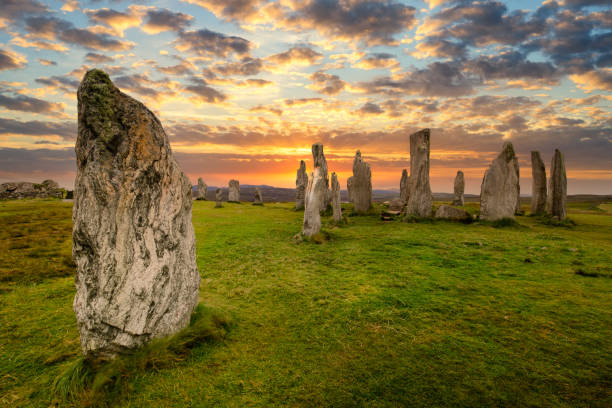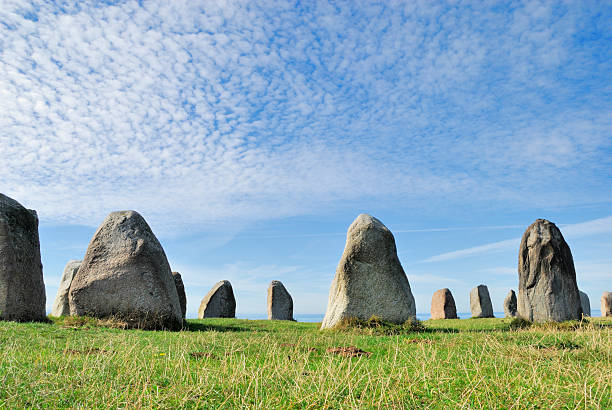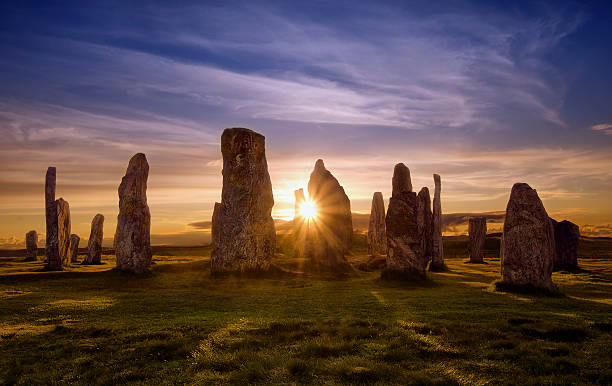
Callanish stones at sunset, Scotland
Callanish stones at sunset, Scotland
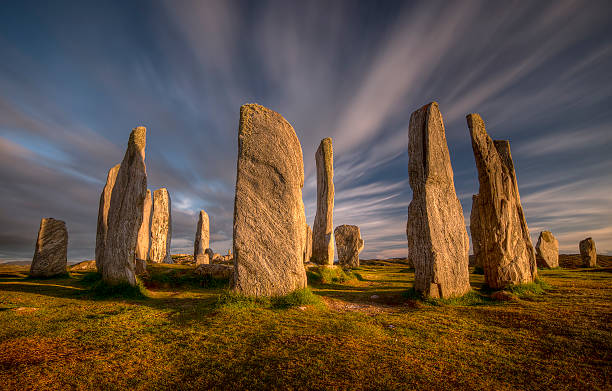
Callanish henge on Isle of Lewis, Scotland
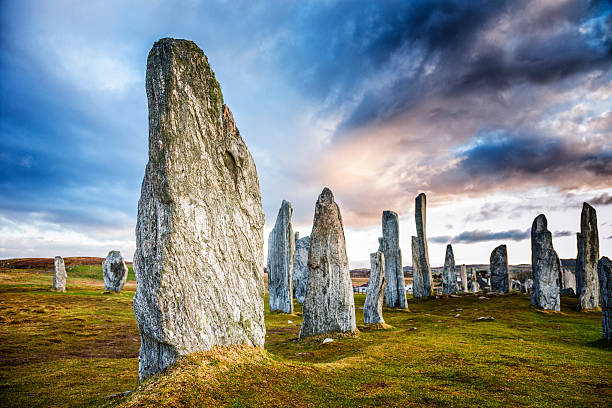
The ancient standing stones of Callanish (or Calanais) on Lewis in the Outer Hebrides of Scotland. Built about 5000 years ago, the deeply textured stones of Callanish are arranged in allignments of avenues and a central circle not unlike a celtic cross.
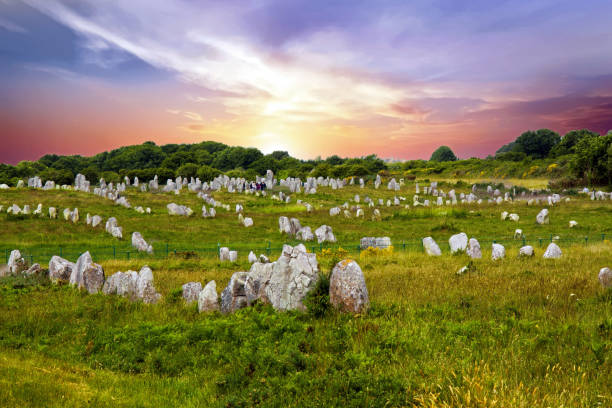
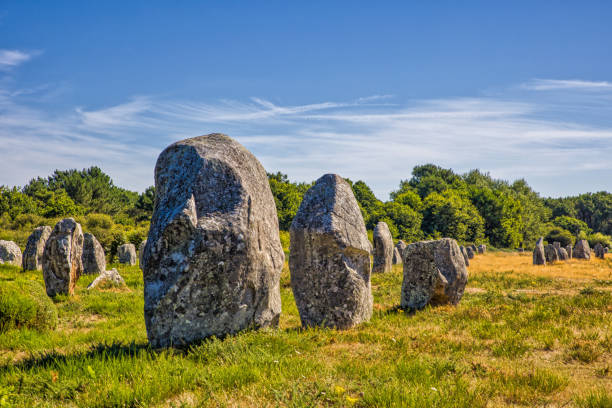
Shooting of the Alignments of Carnac which are the most famous and impressive megalithic ensembles of this period with nearly 4,000 stones raised around 4500 YEARS BEFORE our era, at 18/135, 200 iso, f 16, 1/125 second
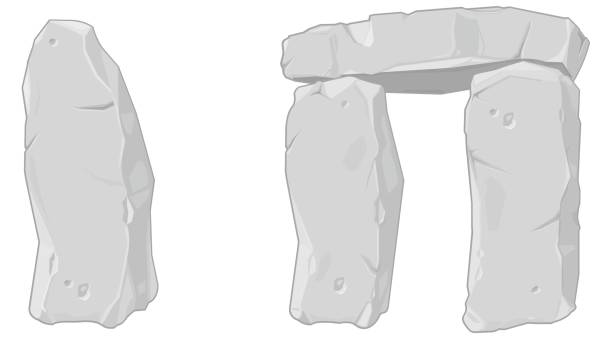
A vector illustration of ancient stone megaliths.
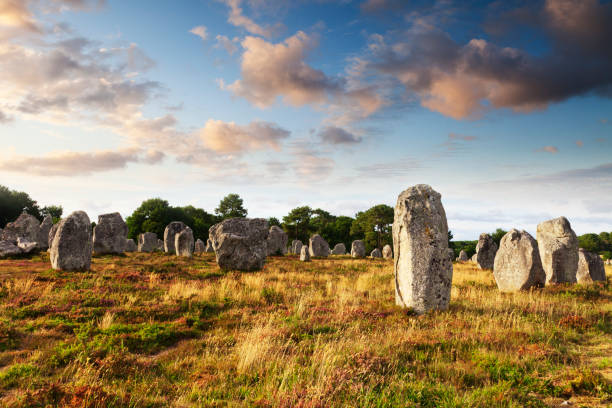
Some of the 3000 standing stones at Carnac, Brittany, France. It is believed that these stones were placed in position around 5000 years ago.

carnac, france, july 2022, the historic megalithic stones of carnac an UNESCO World Heritage
Natural texture and background. The wall of the house is covered with white marble tiles.

The menhir of Champ-Dolent is located in Dol-de-Bretagne in the French department of Ille-et-Vilaine. With its 9.30 meters high, it is one of the tallest standing menhirs in Brittany.

BZH, Bretagne, icône, Brocéliande, légende, cairn, menhir, dolmen, symboles, triskèle, rocher, granit
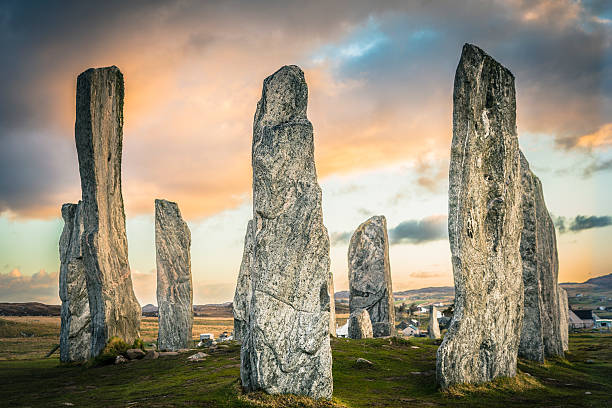
The ancient standing stones of Callanish (or Calanais) on Lewis in the Outer Hebrides of Scotland at sunrise. Built about 5000 years ago, the deeply textured stones of Callanish are arranged in allignments of avenues and a central circle not unlike a celtic cross.
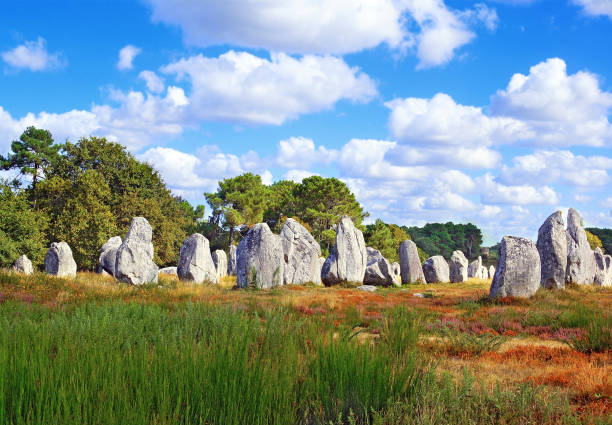
A menhir - Breton meaning stone and hir meaning long - is a megalithic monument composed of a single stone, cut or rough, small or large and placed vertically. Menhirs are also called monoliths. They can be arranged alone or in groups.

The ancient standing stones of Callanish (or Calanais) on Lewis in the Outer Hebrides of Scotland at sunset
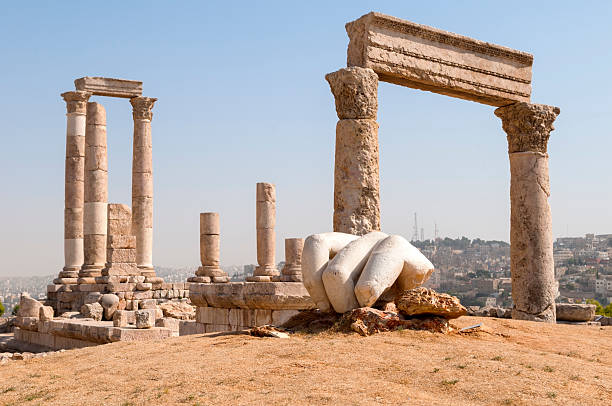
Roman-era hand of Hercules at the ancient Citadel in Amman, Jordan. The hand is all that remains of what was once a massive statue.
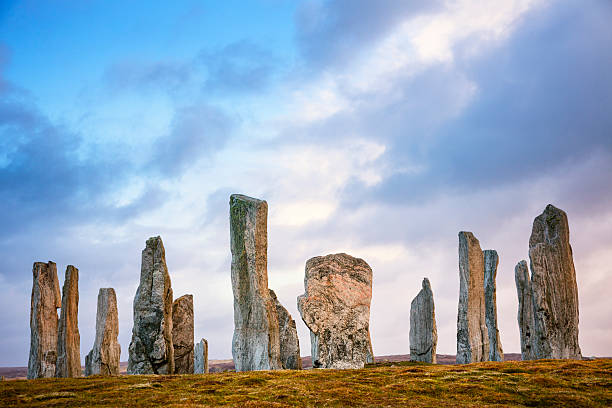
Sunset light on the ancient standing stones of Callanish (or Calanais) on Lewis in the Outer Hebrides of Scotland. Built about 5000 years ago, the deeply textured stones of Callanish are arranged in allignments of avenues and a central circle not unlike a celtic cross.
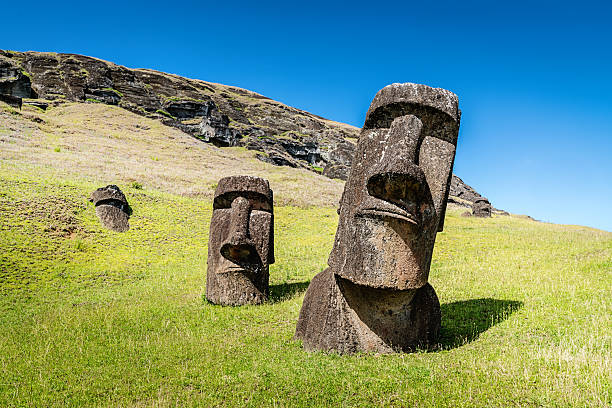
Easter Island Moai Statues at Rano Raraku under sunny summer sky. Rano Raraku, Rapa Nui National Park, Hanga Roa, Easter Island, Chile.

Easter Island Ahu Tongariki Panorama. Fifteen ancient civilization polynesian Moai Statues standing side by side in a row along the pacific ocean coast under sunny blue summer sky with fluffy cloudscape. Rapa Nui. Easter Island, Isla de Pascua, Polynesia, Chile, Oceania
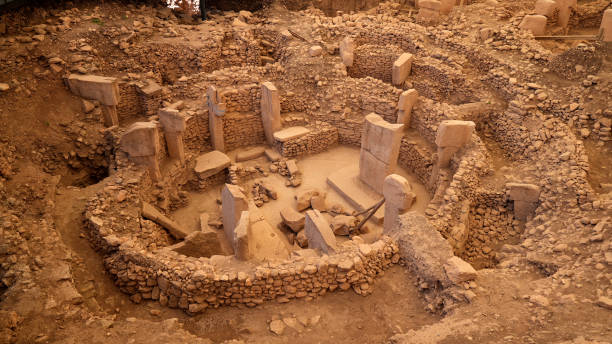
Göbekli Tepe is an archaeological site from the Neolithic period. B.C. Dating to 9600-9500 BC, the area is one of the oldest historical buildings in the world.

A beautiful shot of Callanish standing stones against blue cloudy sky at sunrise in Isle of Lewis, Scotland
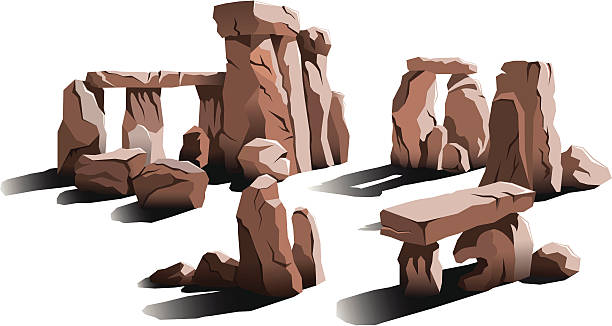
Ancient stones circle, a place of magic, vector illustration

Ggantija is a megalithic temple complex from the Neolithic era (c. 3600–2500 BC), on the Mediterranean island of Gozo in Malta. The Ggantija temples are the earliest of the Megalithic Temples of Malta and are older than the pyramids of Egypt. Their makers erected the two Ggantija temples during the Neolithic, which makes these temples more than 5500 years old and the world's second oldest existing manmade religious structures after Gobekli Tepe in present-day Turkey.

The ancient standing stones of Callanish (or Calanais) on Lewis in the Outer Hebrides of Scotland at sunset

The standing stones of Castlerigg in the English Lake District

Xagra, Gozo - January 16th 2023: Visitors on the walkway leading into the gantija megalithic temple complex which dates from the Neolithic era (c. 36002500 BC).
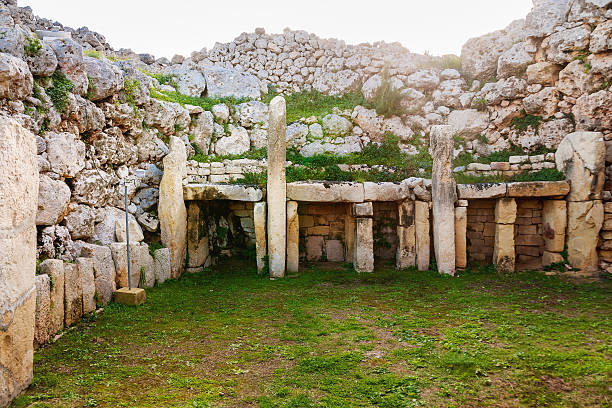
Neolithic megalith temple complex of Ggantija (Tempji Neolitici Tal-Ggantija, "Giant Tower") on the island of Gozo in Malta. UNESCO World Heritage Site.

The menhir of the tip of Er-Limouzen or also menhir of Manemeur is a menhir on the penisula Quiberon in department Morbihan in Brittany, France

Mnajdra Temple within Hagar Qim megalithic complex. Qrendi, Malta. UNESCO World Heritage Site.
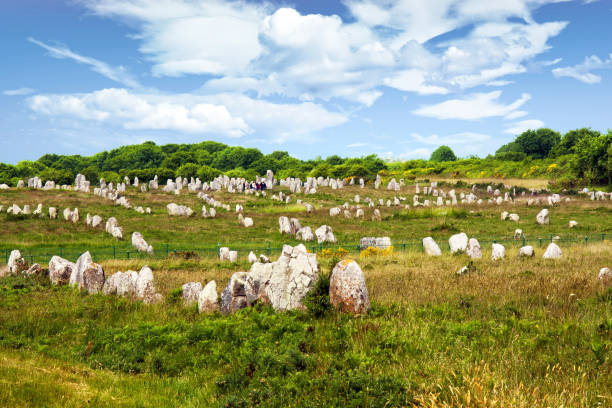
Shooting in natural light at zoom 18/135, 200 iso, f 16, 1/125 second

Tarxien, Malta - October 20th 2019: The Tarxien Temple under a protective shelter, dates from 3150 BC and is an Unesco World Heritage Site.
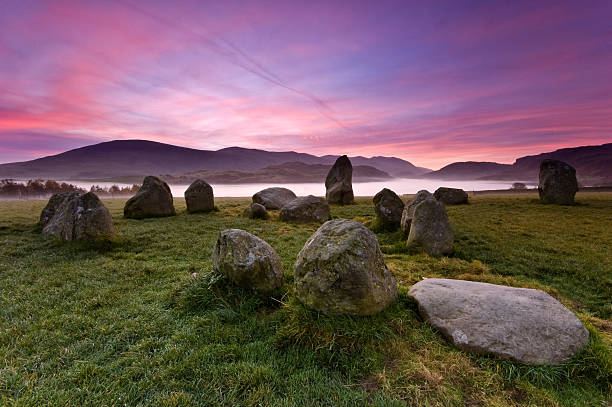
Shot on a very cold, windy morning with a beautiful sunrise amongst the historic stone circle at Castlerigg with some atmospheric mist in the valley
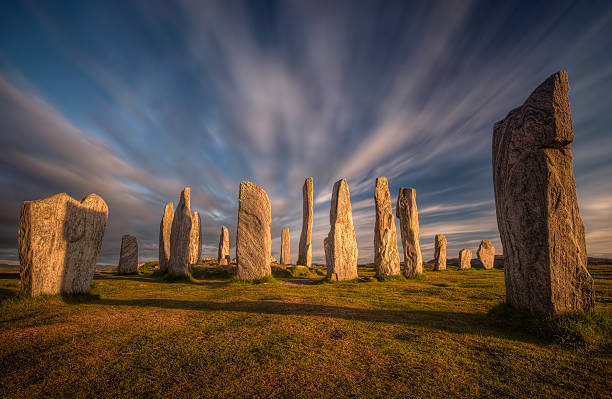
Callanish stones in sunset light, Lewis, Scotland
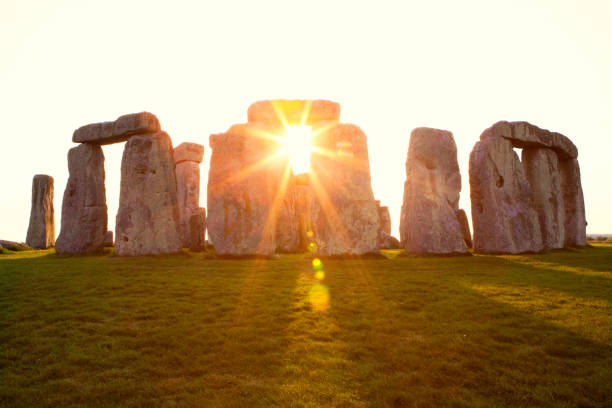
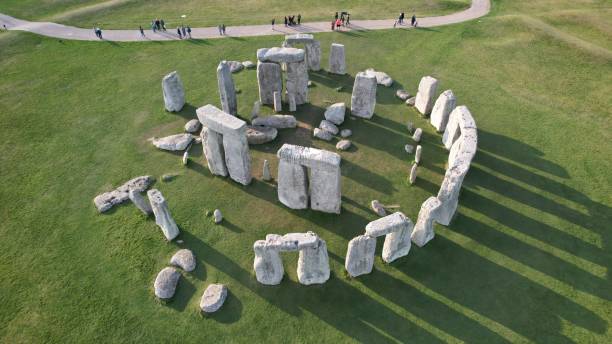
Close-up view of ancient stones during sunset at UNESCO World Heritage Site at Stonehenge, Wiltshire, UK. Sun shines through the stones. Major tourist destination, archeological and pilgrimage site during Summer Solstice and Winter Solstice. Visible grain, softer focus.

Sunlight streaming in, as the sun rises early on a clear August morning.

Travel Landmark icon set and cultures, set of 16 editable filled, Simple clearly defined shapes in one color.

Cusco, Peru. May 27th 2006. The famous stone walls of the Inca citadel of Saqsaywaman above the city of Cusco, Peru.
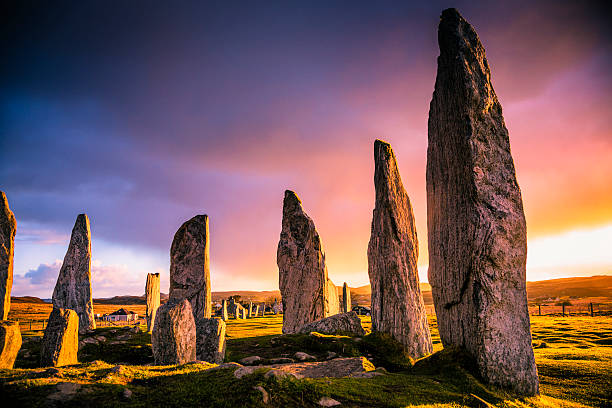
The ancient standing stones of Callanish (or Calanais) on Lewis in the Outer Hebrides of Scotland at sunrise. Built about 5000 years ago, the deeply textured stones of Callanish are arranged in allignments of avenues and a central circle not unlike a celtic cross.

Sun setting behind the neolithic stone circle at Callanish, Isle of Lewis, Outer Hebrides

As the first light of dawn pierces the clear sky, it reveals an ancient arrangement of menhirs standing solemnly in a lush green field in Galicia. These prehistoric monuments, shrouded in morning mist, whisper tales of Spain's megalithic past, forming a bridge to a time when such stones were erected for reasons that remain a cultural heritage mystery. The grass glistens with dew, and the fog lends an ethereal quality to the landscape, inviting contemplation of nature and history intertwined.

Callanish standing stone circle, Callanish, Isle of Lewis, Scotland, UK.
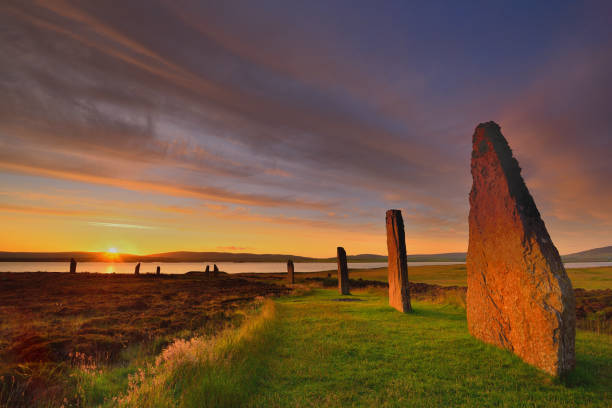
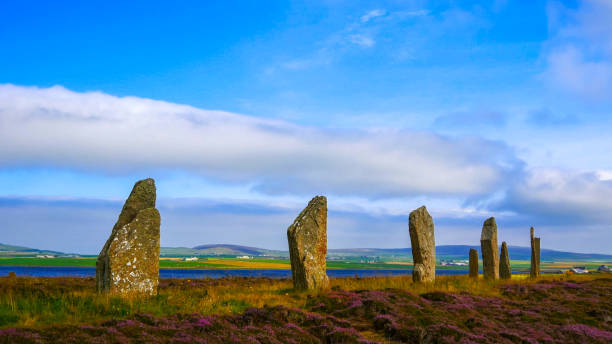
Summer sunrise at the Ring of Brodgar in the Heart of Neolithic Orkney with the sun just breaking over the Loch of Harray. The stone circle dates back to between 2500BC to 2000BC and is part of the wider 'Neolithic Heart of Orkney' comprising Skara Brae, the Stones of Stenness, Maeshowe and the Barnhouse Stone.

Historical monument Stonehenge in night,England, UK
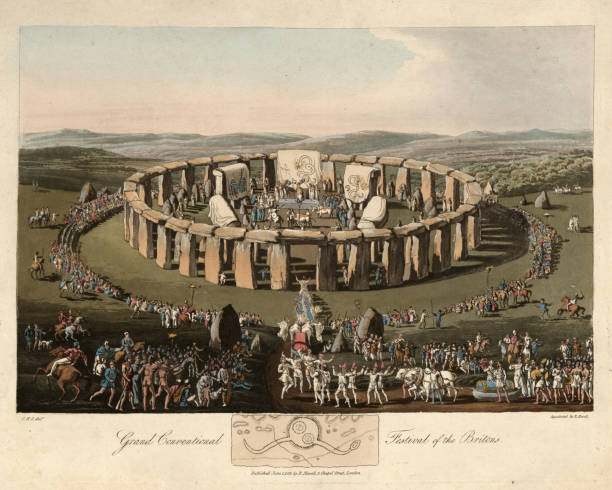
Vintage engraving of Festival of the Britons, Ancient Stonehenge. 1815, The Costume of the Original Inhabitants of the British Islands, by MEYRICK, Samuel Rush and SMITH Charles Hamilton.

This image is a vector illustration and can be scaled to any size without loss of resolution.

The sun begins to set on the Pinnacles of the Nambung National Park, in Western Australia. Composite image.

Callanish stones in sunset light, Lewis, Scotland

Rear view of a woman at the Stones of Stenness on the Orkney islands of Scotland just before dawn.

Well preserved stone age cromlech of Almendres near Evora, Portugal

Avebury Henge, Wiltshire, England, UK. This free-to-enter ancient stone circle site dates from Neolithic times and its purpose is debatable. It is constructed from a large outer circle of stones with two smaller inner circles, all surrounded by earthworks and a ditch. Abandoned by the Iron Age it nevertheless remains a significant Henge in the landscape of ancient Wiltshire, England
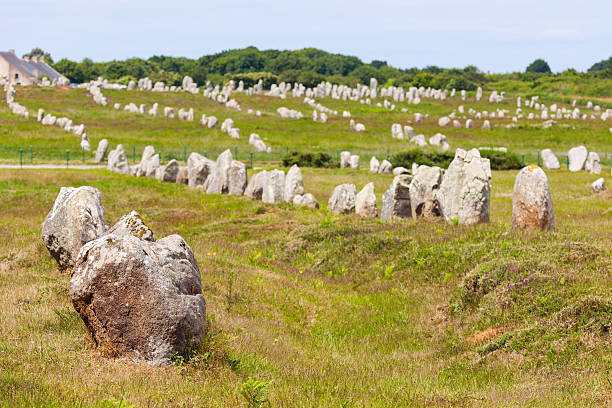
Carnac stones in France. Carnac, Brittany, France